
Generative Engine Optimization Posts
Scribblers India AI Visibility Scorecard
AI search visibility is changing how customers discover, compare and trust brands. Search is no longer limited to blue links, featured snippets and organic rankings. Buyers now ask Google AI Overviews, AI Mode, ChatGPT, Perplexity, Gemini and Copilot for recommendations, summaries and shortlists. Google said in 2026 that AI Overviews had crossed 2.5 billion monthly active users, while AI Mode had crossed 1 billion monthly active users. This matters because AI systems do not simply “rank” websites. They interpret entities, compare sources, retrieve supporting evidence and generate answers. A brand can rank on Google and remain invisible inside AI-generated recommendations. The Scribblers India AI Visibility Scorecard helps founders, marketing teams, consultants, agencies and B2B service firms evaluate whether their brand is ready for AI-led discovery. You will learn how to assess entity clarity, content depth, answer readiness, third-party trust, expert authority and conversion infrastructure. At Scribblers India, we use this framework to integrate SEO, AEO, GEO, thought leadership, ghostwriting, and personal branding into a single measurable visibility system. TL;DR AI visibility now extends beyond Google rankings. LLMs need clear, consistent brand entities. Thin content weakens answer engine inclusion chances. Third-party validation improves brand citation readiness. Founder authority supports trust and recommendation signals. Structured answers improve AEO and GEO performance. Measurement must include prompts, mentions and citations. Scorecard gaps should guide content priorities. Executive Summary AI search has created a new layer of visibility between brands and buyers. Traditional SEO still matters, but it no longer explains the full discovery journey. A brand must now be findable, understandable, and trustworthy across search engines, AI answer engines, and generative assistants. This shift is already visible. OpenAI reported that ChatGPT had 700 million weekly active users by mid-2025, based on a privacy-preserving analysis of 1.5 million conversations. The same study found that three-quarters of ChatGPT conversations focus on practical guidance, information seeking and writing. For businesses, this means prospects may form opinions before visiting the website. They may ask AI search visibility tools which agency, consultant, SaaS platform, service provider or expert they should consider. If the brand lacks structured content, credible proof and external validation, AI systems may ignore it. This resource provides a practical scoring model for AI visibility readiness. It does not claim to predict exact LLM rankings. Instead, it helps teams identify where their brand is weak across the signals that commonly support AI discovery. Scribblers India recommends that brands move from “keyword-first SEO” to “entity-first authority building.” This means clear positioning, answer-led pages, expert authorship, original insights, comparison assets, third-party mentions and measurable prompt testing. The scorecard can support content planning, AEO audits, GEO strategy, personal branding, founder-led visibility and lead-generation campaigns. Why does AI search visibility matter now? AI search visibility matters because buyers increasingly receive answers before they reach a website. Brands must now influence what AI systems understand, summarize and recommend, not only where their pages rank in search results. McKinsey’s 2025 global AI survey found that nearly nine out of ten respondents said their organizations regularly use AI, although adoption depth remains uneven. [McKinsey, 2025] HubSpot reported that more than 92% of marketers plan to use or already use SEO optimization for traditional and AI-powered search engines. [HubSpot, 2026] Statcounter’s May 2026 AI chatbot market share showed ChatGPT at 79.08%, Perplexity at 7.67%, Gemini at 7.03%, Copilot at 3.23% and Claude at 2.98%. [Statcounter, 2026] Key Finding: AI visibility is not a future SEO trend. It is already part of how customers ask, compare, and shortlist. How is AI search visibility different from traditional SEO? AI search visibility differs from traditional SEO because it retrieves, compares and synthesizes information across multiple sources. A brand does not win only by ranking. It wins by being easy to understand, verify and cite. Google says AI Overviews and AI Mode may use query fan-out, in which multiple related searches are run across subtopics and data sources to develop a response. [Google Search Central, 2026] Semrush analyzed more than 10 million keywords and found that AI Overviews appeared for 6.49% of keywords in January 2025, peaked near 25% in July and stood at 15.69% in November. [Semrush, 2025] Semrush also found that informational queries fell from 91.3% of AI Overview-triggering queries in January to 57.1% by October, while commercial and transactional AI Overviews increased. [Semrush, 2025] Ahrefs re-ran its AI Overview CTR study using December 2025 data and found a 58% lower average click-through rate for the top-ranking page when an AI Overview appeared. [Ahrefs, 2026] Scribblers India Takeaway: SEO still forms the foundation, but AEO and GEO determine whether a brand is visible within answer-led environments. Brands need content that answers sharply, cites credible sources, builds entity confidence and gives AI systems enough context to describe them correctly. What do LLMs need to trust a brand? LLMs need consistent brand identity, expert authorship, clear service pages, credible third-party mentions and source-backed content. If a brand appears differently across its website, social profiles and external mentions, AI systems may struggle to classify it. Google’s structured data guidance says structured data gives explicit clues about the meaning of a page and helps Google understand people, companies and content. [Google Search Central, 2026] Google’s helpful content guidance says ranking systems prioritize reliable, people-first content created for users, not content created mainly to manipulate rankings. [Google Search Central, 2026] Similarweb launched AI chatbot traffic as a distinct analytics source in 2025, covering traffic from platforms such as ChatGPT, Perplexity and Claude. [Similarweb, 2025] LinkedIn Ads says the platform reaches more than 1 billion professionals worldwide. [LinkedIn, 2026] What LLMs Need to Trust a Brand AI systems need repeated, verifiable signals. These include a clear organization entity, expert profiles, detailed service pages, structured answers, external mentions, source-backed articles, public reviews, case studies and consistent language across platforms. Which content assets improve AI search visibility? The strongest AI search visibility assets answer buyer questions, define category expertise, compare options and show proof.
AI search visibility is changing how customers discover, compare and trust brands. Search is no longer limited to blue links, featured snippets and organic rankings. Buyers now ask Google AI Overviews, AI Mode, ChatGPT, Perplexity, Gemini and Copilot for recommendations, summaries and shortlists. Google said in 2026 that AI Overviews had crossed 2.5 billion monthly active users, while AI Mode had crossed 1 billion monthly active users. This matters because AI systems do not simply “rank” websites. They interpret entities, compare sources, retrieve supporting evidence and generate answers. A brand can rank on Google and remain invisible inside AI-generated recommendations. The Scribblers India AI Visibility Scorecard helps founders, marketing teams, consultants, agencies and B2B service firms evaluate whether their brand is ready for AI-led discovery. You will learn how to assess entity clarity, content depth, answer readiness, third-party trust, expert authority and conversion infrastructure. At Scribblers India, we use this framework to integrate SEO, AEO, GEO, thought leadership, ghostwriting, and personal branding into a single measurable visibility system. TL;DR AI visibility now extends beyond Google rankings. LLMs need clear, consistent brand entities. Thin content weakens answer engine inclusion chances. Third-party validation improves brand citation readiness. Founder authority supports trust and recommendation signals. Structured answers improve AEO and GEO performance. Measurement must include prompts, mentions and citations. Scorecard gaps should guide content priorities. Executive Summary AI search has created a new layer of visibility between brands and buyers. Traditional SEO still matters, but it no longer explains the full discovery journey. A brand must now be findable, understandable, and trustworthy across search engines, AI answer engines, and generative assistants. This shift is already visible. OpenAI reported that ChatGPT had 700 million weekly active users by mid-2025, based on a privacy-preserving analysis of 1.5 million conversations. The same study found that three-quarters of ChatGPT conversations focus on practical guidance, information seeking and writing. For businesses, this means prospects may form opinions before visiting the website. They may ask AI search visibility tools which agency, consultant, SaaS platform, service provider or expert they should consider. If the brand lacks structured content, credible proof and external validation, AI systems may ignore it. This resource provides a practical scoring model for AI visibility readiness. It does not claim to predict exact LLM rankings. Instead, it helps teams identify where their brand is weak across the signals that commonly support AI discovery. Scribblers India recommends that brands move from “keyword-first SEO” to “entity-first authority building.” This means clear positioning, answer-led pages, expert authorship, original insights, comparison assets, third-party mentions and measurable prompt testing. The scorecard can support content planning, AEO audits, GEO strategy, personal branding, founder-led visibility and lead-generation campaigns. Why does AI search visibility matter now? AI search visibility matters because buyers increasingly receive answers before they reach a website. Brands must now influence what AI systems understand, summarize and recommend, not only where their pages rank in search results. McKinsey’s 2025 global AI survey found that nearly nine out of ten respondents said their organizations regularly use AI, although adoption depth remains uneven. [McKinsey, 2025] HubSpot reported that more than 92% of marketers plan to use or already use SEO optimization for traditional and AI-powered search engines. [HubSpot, 2026] Statcounter’s May 2026 AI chatbot market share showed ChatGPT at 79.08%, Perplexity at 7.67%, Gemini at 7.03%, Copilot at 3.23% and Claude at 2.98%. [Statcounter, 2026] Key Finding: AI visibility is not a future SEO trend. It is already part of how customers ask, compare, and shortlist. How is AI search visibility different from traditional SEO? AI search visibility differs from traditional SEO because it retrieves, compares and synthesizes information across multiple sources. A brand does not win only by ranking. It wins by being easy to understand, verify and cite. Google says AI Overviews and AI Mode may use query fan-out, in which multiple related searches are run across subtopics and data sources to develop a response. [Google Search Central, 2026] Semrush analyzed more than 10 million keywords and found that AI Overviews appeared for 6.49% of keywords in January 2025, peaked near 25% in July and stood at 15.69% in November. [Semrush, 2025] Semrush also found that informational queries fell from 91.3% of AI Overview-triggering queries in January to 57.1% by October, while commercial and transactional AI Overviews increased. [Semrush, 2025] Ahrefs re-ran its AI Overview CTR study using December 2025 data and found a 58% lower average click-through rate for the top-ranking page when an AI Overview appeared. [Ahrefs, 2026] Scribblers India Takeaway: SEO still forms the foundation, but AEO and GEO determine whether a brand is visible within answer-led environments. Brands need content that answers sharply, cites credible sources, builds entity confidence and gives AI systems enough context to describe them correctly. What do LLMs need to trust a brand? LLMs need consistent brand identity, expert authorship, clear service pages, credible third-party mentions and source-backed content. If a brand appears differently across its website, social profiles and external mentions, AI systems may struggle to classify it. Google’s structured data guidance says structured data gives explicit clues about the meaning of a page and helps Google understand people, companies and content. [Google Search Central, 2026] Google’s helpful content guidance says ranking systems prioritize reliable, people-first content created for users, not content created mainly to manipulate rankings. [Google Search Central, 2026] Similarweb launched AI chatbot traffic as a distinct analytics source in 2025, covering traffic from platforms such as ChatGPT, Perplexity and Claude. [Similarweb, 2025] LinkedIn Ads says the platform reaches more than 1 billion professionals worldwide. [LinkedIn, 2026] What LLMs Need to Trust a Brand AI systems need repeated, verifiable signals. These include a clear organization entity, expert profiles, detailed service pages, structured answers, external mentions, source-backed articles, public reviews, case studies and consistent language across platforms. Which content assets improve AI search visibility? The strongest AI search visibility assets answer buyer questions, define category expertise, compare options and show proof.
How to Feature in ChatGPT, Gemini and Perplexity: 11 Tips to Optimize Content for AI Answers
AI search is changing how buyers discover, compare and shortlist brands. Users now ask ChatGPT, Gemini, Perplexity and Google AI Overviews for direct recommendations, summaries and buying guidance before they visit a website. That is why brands need to optimize content for AI-generated answers if they want to stay visible across the platforms that shape modern search behavior. Google AI Overviews had already reached over 2 billion monthly users across more than 200 countries and territories by July 2025. This scale shows why brands need to optimize content for AI answers through a clear Generative Engine Optimization framework. GEO combines answer-first writing, entity clarity, authorship signals, structured data, technical accessibility and cross-platform authority building. At Scribblers India, AI search visibility is no longer a future-facing content experiment. It is now a practical requirement for content marketing for brands that want to stay visible across ChatGPT, Gemini, Perplexity, AI Overviews, and future answer engines. This blog covers 11 expert tips to help you optimize content for AI answers across four connected areas: content structure, authority signals, technical accessibility, and multi-platform presence. TL;DR Lead sections with direct, standalone answers. Use question-based headings matching user prompts. Define concepts before examples and context. Add FAQs with clear answer blocks. Use named authors with credible bios. Publish original research and expert frameworks. Earn mentions across trusted external platforms. Apply schema across all priority pages. Keep search and AI crawlers unblocked. Refresh high-value content on schedule. Build consistent multi-platform brand presence. Track AI citations across major platforms. How Can Content Structure Help You Optimize Content for AI Answers? Content structure helps AI platforms extract, summarize and cite your information with greater confidence. When every section starts with a direct answer, a question-based heading, and clear supporting context, ChatGPT, Gemini, and Perplexity can understand the page faster and use it more reliably in their generated responses. A strong content structure is the foundation of every GEO strategy. AI platforms scan pages for answer units, topical completeness and source clarity. If the answer appears after a long build-up, generic introduction, or loosely connected explanation, the page becomes harder to cite. A 2026 longitudinal study of Google AI Overviews found that AI Overviews appeared for 13.7% of all tested queries, rising to 64.7% for question-form queries. This makes question-led headings and direct answer blocks especially important for brands building AI visibility. The following structural practices help improve content optimization for AI answers across major generative search platforms. Tip 1: Use Answer-First Structure on Every Page Answer-first structure means placing the clearest possible response within the first few lines of every section. This makes your content easier for AI platforms to extract, summarize and cite when users ask direct questions across ChatGPT, Gemini, Perplexity or Google AI Overviews. Traditional blog writing often delays the answer. It starts with context, market background or broad observations before reaching the actual point. That approach works poorly for AI search because generative systems need concise answer blocks that resolve the user’s query immediately. A better structure follows this order: Question-based heading Direct answer in the opening paragraph Short explanation with context Example, data point or comparison Practical takeaway This format works especially well for commercial and informational pages. For example, instead of opening a section with “In today’s digital landscape, AI search has become important,” start with the exact answer: “To optimize content for ChatGPT, structure every section around a direct answer, verified source signals and clear entity context.” This gives the AI system a clean response unit it can reuse. It also helps human readers find the answer faster, improving readability and engagement Tip 2: Use Question-Based Headings That Mirror User Prompts Question-based headings help AI systems connect your content with natural user queries. When your H2s and H3s mirror the way people ask questions in ChatGPT, Gemini or Perplexity, your page becomes easier to retrieve for answer-led search experiences. Any content targeting AI search should avoid vague headings such as “Importance,” “Benefits,” or “Best Practices.” These headings provide weak semantic signals. Instead, use complete questions that reflect how users search. For example: What Is Content Optimization for AI Answers? How Can You Optimize Content for ChatGPT? How Can You Optimize Content for Gemini? How Can You Optimize Content for Perplexity? What Schema Helps AI Platforms Understand Your Content? These headings create a direct match between user intent and page structure. They also improve passage-level relevance because each section clearly answers one query. For Scribblers India blogs, question-led headings work especially well because they support SEO, AEO and GEO at the same time. They make the article easier to scan, extract, and repurpose into FAQs, LinkedIn posts, or sales enablement assets. Tip 3: Add Definitions, Examples, and Use Cases Within Each Section Definitions, examples and use cases make your content more useful for AI answers because they add clarity and information gain. AI platforms prefer sections that explain a concept, then support it with practical context. This helps readers understand the topic more quickly and gives AI systems stronger material to extract with greater confidence. Start with a clear definition before expanding the idea. A section on GEO for ChatGPT should first explain what the term means, then move into how it affects content visibility across AI-generated answers. Add examples that show how the concept works. If you explain content optimization for AI answers, include a sample section structure, heading format or answer-first paragraph that readers can understand and apply. Use real scenarios to build practical relevance. For example, explain how a SaaS brand can optimize content for Perplexity by publishing comparison pages, expert guides and source-friendly answer sections. Answer the next logical question within the same section. After defining the concept, explain why it matters, how it works in practice and what the reader should do next. Avoid generic explanations that repeat common information. Add original framing, brand-specific examples or expert observations so your content gives AI platforms something more useful than a standard summary.
AI search is changing how buyers discover, compare and shortlist brands. Users now ask ChatGPT, Gemini, Perplexity and Google AI Overviews for direct recommendations, summaries and buying guidance before they visit a website. That is why brands need to optimize content for AI-generated answers if they want to stay visible across the platforms that shape modern search behavior. Google AI Overviews had already reached over 2 billion monthly users across more than 200 countries and territories by July 2025. This scale shows why brands need to optimize content for AI answers through a clear Generative Engine Optimization framework. GEO combines answer-first writing, entity clarity, authorship signals, structured data, technical accessibility and cross-platform authority building. At Scribblers India, AI search visibility is no longer a future-facing content experiment. It is now a practical requirement for content marketing for brands that want to stay visible across ChatGPT, Gemini, Perplexity, AI Overviews, and future answer engines. This blog covers 11 expert tips to help you optimize content for AI answers across four connected areas: content structure, authority signals, technical accessibility, and multi-platform presence. TL;DR Lead sections with direct, standalone answers. Use question-based headings matching user prompts. Define concepts before examples and context. Add FAQs with clear answer blocks. Use named authors with credible bios. Publish original research and expert frameworks. Earn mentions across trusted external platforms. Apply schema across all priority pages. Keep search and AI crawlers unblocked. Refresh high-value content on schedule. Build consistent multi-platform brand presence. Track AI citations across major platforms. How Can Content Structure Help You Optimize Content for AI Answers? Content structure helps AI platforms extract, summarize and cite your information with greater confidence. When every section starts with a direct answer, a question-based heading, and clear supporting context, ChatGPT, Gemini, and Perplexity can understand the page faster and use it more reliably in their generated responses. A strong content structure is the foundation of every GEO strategy. AI platforms scan pages for answer units, topical completeness and source clarity. If the answer appears after a long build-up, generic introduction, or loosely connected explanation, the page becomes harder to cite. A 2026 longitudinal study of Google AI Overviews found that AI Overviews appeared for 13.7% of all tested queries, rising to 64.7% for question-form queries. This makes question-led headings and direct answer blocks especially important for brands building AI visibility. The following structural practices help improve content optimization for AI answers across major generative search platforms. Tip 1: Use Answer-First Structure on Every Page Answer-first structure means placing the clearest possible response within the first few lines of every section. This makes your content easier for AI platforms to extract, summarize and cite when users ask direct questions across ChatGPT, Gemini, Perplexity or Google AI Overviews. Traditional blog writing often delays the answer. It starts with context, market background or broad observations before reaching the actual point. That approach works poorly for AI search because generative systems need concise answer blocks that resolve the user’s query immediately. A better structure follows this order: Question-based heading Direct answer in the opening paragraph Short explanation with context Example, data point or comparison Practical takeaway This format works especially well for commercial and informational pages. For example, instead of opening a section with “In today’s digital landscape, AI search has become important,” start with the exact answer: “To optimize content for ChatGPT, structure every section around a direct answer, verified source signals and clear entity context.” This gives the AI system a clean response unit it can reuse. It also helps human readers find the answer faster, improving readability and engagement Tip 2: Use Question-Based Headings That Mirror User Prompts Question-based headings help AI systems connect your content with natural user queries. When your H2s and H3s mirror the way people ask questions in ChatGPT, Gemini or Perplexity, your page becomes easier to retrieve for answer-led search experiences. Any content targeting AI search should avoid vague headings such as “Importance,” “Benefits,” or “Best Practices.” These headings provide weak semantic signals. Instead, use complete questions that reflect how users search. For example: What Is Content Optimization for AI Answers? How Can You Optimize Content for ChatGPT? How Can You Optimize Content for Gemini? How Can You Optimize Content for Perplexity? What Schema Helps AI Platforms Understand Your Content? These headings create a direct match between user intent and page structure. They also improve passage-level relevance because each section clearly answers one query. For Scribblers India blogs, question-led headings work especially well because they support SEO, AEO and GEO at the same time. They make the article easier to scan, extract, and repurpose into FAQs, LinkedIn posts, or sales enablement assets. Tip 3: Add Definitions, Examples, and Use Cases Within Each Section Definitions, examples and use cases make your content more useful for AI answers because they add clarity and information gain. AI platforms prefer sections that explain a concept, then support it with practical context. This helps readers understand the topic more quickly and gives AI systems stronger material to extract with greater confidence. Start with a clear definition before expanding the idea. A section on GEO for ChatGPT should first explain what the term means, then move into how it affects content visibility across AI-generated answers. Add examples that show how the concept works. If you explain content optimization for AI answers, include a sample section structure, heading format or answer-first paragraph that readers can understand and apply. Use real scenarios to build practical relevance. For example, explain how a SaaS brand can optimize content for Perplexity by publishing comparison pages, expert guides and source-friendly answer sections. Answer the next logical question within the same section. After defining the concept, explain why it matters, how it works in practice and what the reader should do next. Avoid generic explanations that repeat common information. Add original framing, brand-specific examples or expert observations so your content gives AI platforms something more useful than a standard summary.
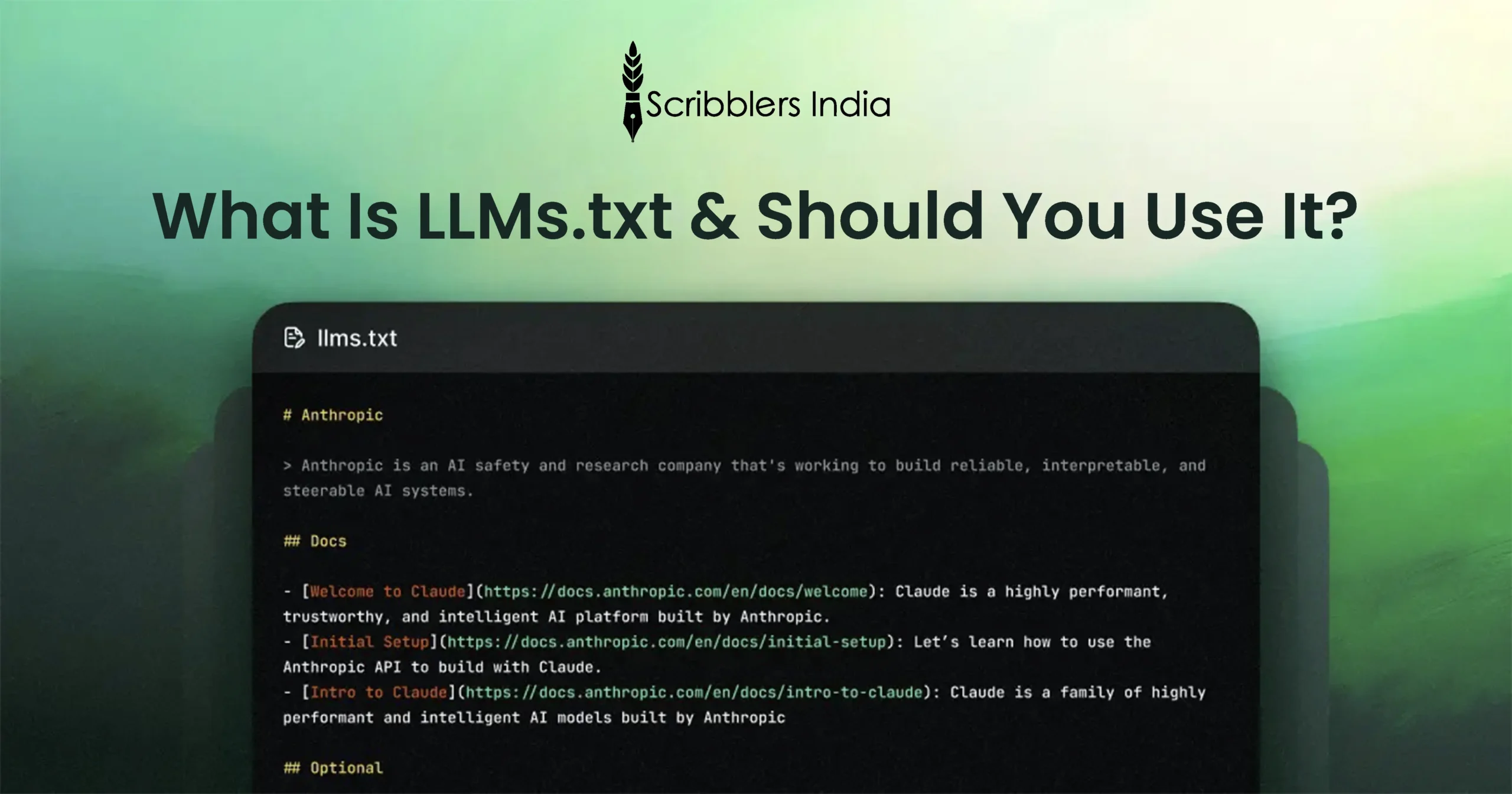
What Is llms.txt and Why It Matters for GEO
Your website was built for human visitors. Every design decision, from the navigation layout to the hero image, serves a person who sees, scrolls, and clicks through a visual experience. A different class of visitor is now reading your site, and they experience it in an entirely different way. This brings new considerations, such as managing llms.txt for GEO and how these visitors interact with website content. AI agents powering ChatGPT, Claude, Perplexity, and Gemini do not see your design. They process raw code. When an AI crawler visits a modern website, it must parse through kilobytes of JavaScript and CSS, navigation menus, and footer content before it reaches the required information. This friction in the processing creates a barrier to accurate retrieval, which is precisely the problem that llms.txt for GEO is designed to solve. Understanding what this file does and how to implement it correctly is becoming a crucial step in any serious Generative Engine Optimization strategy for 2026. TL;DR llms.txt is a Markdown file at your website’s root directory. It gives AI crawlers a clean, structured map of your content. The file was proposed by Jeremy Howard on September 3, 2024. It is fundamentally different from robots.txt in purpose and format. llms.txt for GEO reduces AI hallucinations about your brand content. Early adopters include Anthropic, Vercel, Stripe, and Hugging Face. Creating the file takes under 60 minutes and costs nothing. The file works best alongside strong schema markup and content authority. Update the file quarterly to maintain AI retrieval accuracy over time. What Is llms.txt and Why Does It Matter for GEO? LLMs.txt is a simple Markdown-formatted file placed at the root of your website. It gives AI language models a clean and curated summary of your most important content. It tells AI systems what your site is, who it serves, and where to find its most relevant pages without parsing through HTML noise. llms.txt for GEO matters because Generative Engine Optimization targets citations in AI-generated answers rather than ranking positions in traditional search results. AI crawlers reading cluttered HTML pages face significant computational friction. A well-structured llms.txt file removes that friction. It improves the probability that the AI accurately retrieves and cites your content. AI crawlers now play a measurable role in how websites are discovered and accessed. Latest report from Cloudflare found that AI bots accounted for 4.2% of HTML request traffic in 2025, while Googlebot alone accounted for 4.5%. For brands investing in AI visibility, llms.txt is a simple technical addition that can help AI systems better understand website content. It costs nothing to implement and can usually be created in less than an hour. How llms.txt Supports AI Search Visibility A detailed llms.txt file gives brands greater control over how their information is discovered, interpreted, and surfaced across AI-generated answers. As AI search platforms increasingly rely on structured retrieval methods, a well-maintained llms.txt file can improve content accessibility and strengthen citation opportunities. Functions as a sitemap for AI language models: XML sitemaps help search engines like Googlebot find and understand important website pages. An llms.txt file plays a similar role for AI models. It directs them to your most reliable and citation-worthy pages without requiring them to scan the complete website. Establishes a machine-readable brand identity: The file explains what your company does, who it serves, and how AI systems should understand your content. This clarity helps AI platforms describe your business accurately in generated answers. It also reduces the chances of incorrect or misleading descriptions of your services. Gives you content control in the AI retrieval environment: You can choose which pages to include in the llms.txt file. This helps you guide AI systems toward your strongest and most reliable content. It also keeps them away from duplicate, outdated, or less useful pages that may misrepresent your brand. How Is llms.txt Different from robots.txt on Your Website? llms.txt and robots.txt are both text files located at your site’s root. They both communicate with automated systems visiting your domain. They serve opposite purposes and use different formats to achieve desired outcomes for varied audiences. Understanding the distinction between these two files is crucial. It will help you seamlessly implement llms.txt for GEO as part of your broader AI crawler optimization website strategy. robots.txt controls access by telling crawlers where to avoid: It uses directives like User-agent, Allow, and Disallow to manage crawler access to specific URL paths. It acts as a gatekeeper, indicating to search crawlers which pages they can access or avoid. AI crawlers like GPTBot, ClaudeBot, and PerplexityBot may also follow robots.txt when configured correctly. llms.txt provides context by showing AI models your best content: It uses Markdown formatting instead of directive syntax and focuses on guidance rather than restriction. It does not block access to any page. Instead, it creates a curated list of important and authoritative pages that AI systems can retrieve and cite when generating answers about your brand or category. The two files work together rather than against each other: Your robots.txt file should allow the AI crawlers you want to access your content. Your llms.txt for GEO then guides those permitted crawlers to the pages that best represent your brand. Using both correctly creates a stronger technical foundation for websites optimizing for AI search visibility. robots.txt is established, while llms.txt is still emerging: Every major search engine recognizes robots.txt as a long-standing web standard. llms.txt for GEO is newer, voluntary, and still gaining adoption. Tech-forward companies such as Anthropic, Vercel, Stripe, and Hugging Face have already added it to their website infrastructure. How Does llms.txt for GEO Work with AI Crawlers in Practice? AI crawlers process websites under strict token limitations, making full-site parsing inefficient and often inaccurate for content retrieval. An llms.txt file simplifies this process by presenting clean, structured Markdown content without unnecessary scripts or navigation clutter. This improves retrieval efficiency and reduces parsing overhead. It helps AI systems represent brands accurately across GEO and AI-driven search experiences. Reduced
Your website was built for human visitors. Every design decision, from the navigation layout to the hero image, serves a person who sees, scrolls, and clicks through a visual experience. A different class of visitor is now reading your site, and they experience it in an entirely different way. This brings new considerations, such as managing llms.txt for GEO and how these visitors interact with website content. AI agents powering ChatGPT, Claude, Perplexity, and Gemini do not see your design. They process raw code. When an AI crawler visits a modern website, it must parse through kilobytes of JavaScript and CSS, navigation menus, and footer content before it reaches the required information. This friction in the processing creates a barrier to accurate retrieval, which is precisely the problem that llms.txt for GEO is designed to solve. Understanding what this file does and how to implement it correctly is becoming a crucial step in any serious Generative Engine Optimization strategy for 2026. TL;DR llms.txt is a Markdown file at your website’s root directory. It gives AI crawlers a clean, structured map of your content. The file was proposed by Jeremy Howard on September 3, 2024. It is fundamentally different from robots.txt in purpose and format. llms.txt for GEO reduces AI hallucinations about your brand content. Early adopters include Anthropic, Vercel, Stripe, and Hugging Face. Creating the file takes under 60 minutes and costs nothing. The file works best alongside strong schema markup and content authority. Update the file quarterly to maintain AI retrieval accuracy over time. What Is llms.txt and Why Does It Matter for GEO? LLMs.txt is a simple Markdown-formatted file placed at the root of your website. It gives AI language models a clean and curated summary of your most important content. It tells AI systems what your site is, who it serves, and where to find its most relevant pages without parsing through HTML noise. llms.txt for GEO matters because Generative Engine Optimization targets citations in AI-generated answers rather than ranking positions in traditional search results. AI crawlers reading cluttered HTML pages face significant computational friction. A well-structured llms.txt file removes that friction. It improves the probability that the AI accurately retrieves and cites your content. AI crawlers now play a measurable role in how websites are discovered and accessed. Latest report from Cloudflare found that AI bots accounted for 4.2% of HTML request traffic in 2025, while Googlebot alone accounted for 4.5%. For brands investing in AI visibility, llms.txt is a simple technical addition that can help AI systems better understand website content. It costs nothing to implement and can usually be created in less than an hour. How llms.txt Supports AI Search Visibility A detailed llms.txt file gives brands greater control over how their information is discovered, interpreted, and surfaced across AI-generated answers. As AI search platforms increasingly rely on structured retrieval methods, a well-maintained llms.txt file can improve content accessibility and strengthen citation opportunities. Functions as a sitemap for AI language models: XML sitemaps help search engines like Googlebot find and understand important website pages. An llms.txt file plays a similar role for AI models. It directs them to your most reliable and citation-worthy pages without requiring them to scan the complete website. Establishes a machine-readable brand identity: The file explains what your company does, who it serves, and how AI systems should understand your content. This clarity helps AI platforms describe your business accurately in generated answers. It also reduces the chances of incorrect or misleading descriptions of your services. Gives you content control in the AI retrieval environment: You can choose which pages to include in the llms.txt file. This helps you guide AI systems toward your strongest and most reliable content. It also keeps them away from duplicate, outdated, or less useful pages that may misrepresent your brand. How Is llms.txt Different from robots.txt on Your Website? llms.txt and robots.txt are both text files located at your site’s root. They both communicate with automated systems visiting your domain. They serve opposite purposes and use different formats to achieve desired outcomes for varied audiences. Understanding the distinction between these two files is crucial. It will help you seamlessly implement llms.txt for GEO as part of your broader AI crawler optimization website strategy. robots.txt controls access by telling crawlers where to avoid: It uses directives like User-agent, Allow, and Disallow to manage crawler access to specific URL paths. It acts as a gatekeeper, indicating to search crawlers which pages they can access or avoid. AI crawlers like GPTBot, ClaudeBot, and PerplexityBot may also follow robots.txt when configured correctly. llms.txt provides context by showing AI models your best content: It uses Markdown formatting instead of directive syntax and focuses on guidance rather than restriction. It does not block access to any page. Instead, it creates a curated list of important and authoritative pages that AI systems can retrieve and cite when generating answers about your brand or category. The two files work together rather than against each other: Your robots.txt file should allow the AI crawlers you want to access your content. Your llms.txt for GEO then guides those permitted crawlers to the pages that best represent your brand. Using both correctly creates a stronger technical foundation for websites optimizing for AI search visibility. robots.txt is established, while llms.txt is still emerging: Every major search engine recognizes robots.txt as a long-standing web standard. llms.txt for GEO is newer, voluntary, and still gaining adoption. Tech-forward companies such as Anthropic, Vercel, Stripe, and Hugging Face have already added it to their website infrastructure. How Does llms.txt for GEO Work with AI Crawlers in Practice? AI crawlers process websites under strict token limitations, making full-site parsing inefficient and often inaccurate for content retrieval. An llms.txt file simplifies this process by presenting clean, structured Markdown content without unnecessary scripts or navigation clutter. This improves retrieval efficiency and reduces parsing overhead. It helps AI systems represent brands accurately across GEO and AI-driven search experiences. Reduced
How Are AEO and GEO Changing Content Marketing in the Zero-Click Search Era?
AEO and GEO are becoming essential for brands that want to stay visible as search moves away from traditional clicks. Your content may rank on the first page, your keyword tracking tool may show steady impressions, yet your traffic report may tell a completely different story. This scenario is playing out across industries, and the cause has a specific name: Zero-click search. Zero-click search occurs when users find the answer directly in the search results without visiting a website. Google AI Overviews, featured snippets, knowledge panels, and direct answer widgets now resolve more queries directly in the search interface. A recent industry analysis found that nearly 80% of searches triggering AI Overview results end without a click, showing how AI-led search is accelerating zero-click behavior. For marketers, this changes how search visibility works. Traffic alone no longer reflects content performance. Brands now need AEO and GEO strategies that earn citations, answer visibility, and authority across AI-led search experiences. TL;DR: How AEO and GEO are Leading Transition to Zero-Click Search? Search visibility now extends beyond website clicks. AI answers reshape how audiences discover brands. AEO helps content earn answer-layer visibility. GEO improves citations across generative AI platforms. Question-led headings support direct content extraction. Original insights make content more citation-worthy. Brand mentions now matter alongside organic traffic. A strong content strategy must serve AI search. Why Do AEO and GEO Matter as Zero-Click Search Grows Zero-click search occurs when users get the answer directly in the search results without visiting a website. This no-click search method is becoming popular as search engines now resolve more queries through AI Overviews, featured snippets, knowledge panels, and direct answer boxes before users reach any organic results. Earlier, zero-click behavior was limited to simple queries such as weather updates, currency conversions, definitions, and sports scores. The shift became more disruptive when AI search started handling layered questions. Users can now compare options, understand concepts, review summaries, and gather recommendations directly in the search interface. This changes the value of ranking on page one. A page can still earn impressions, appear below an AI-generated answer, and lose the click because the user already has enough information. According to a 2025 study, AI Overviews reduced clicks to top-ranking pages by 34.5% for informational keywords. For content teams, the real issue is no longer visibility alone. The challenge is earning a place inside the answer layer. Content now needs clear questions, direct answers, expert-backed insights, and original value that search engines can cite rather than summarize without attribution. How Does Zero-Click Search Affect Content Marketing Performance? Zero-click search affects content marketing by separating search exposure from website visits. Your brand may appear in AI Overviews, featured snippets, answer boxes, and People Also Ask results while analytics records fewer sessions. This means performance must be judged through citations, branded demand, assisted conversions, and answer visibility. A focused AEO and GEO strategy helps content teams respond to this shift by treating search visibility as a citation, extraction, and brand recall challenge rather than a traffic-only goal. Traffic Metrics No Longer Capture Full Visibility Most content dashboards still measure what happens after the click. They track sessions, rankings, conversions, and pageviews. Zero-click search shifts much of audience exposure to the search results page, where standard analytics tools capture limited evidence of brand discovery. This creates a measurement blind spot for content teams. A user may read your cited answer, remember your brand, compare you later, and convert through another channel. Search visibility now needs impression analysis, branded search growth, assisted pipeline tracking, and citation monitoring alongside organic traffic. Informational Content Faces the Highest Disruption Risk Informational content carries the highest zero-click risk because it often answers questions that AI systems can summarise inside the results page. Definitions, comparisons, process guides, basic explainers, and FAQ-led pages are easier to compress. Experts found that keywords with AI Overviews had a zero-click rate between 35% and 46%, depending on whether an AI Overview appeared. This does not mean informational content has lost value. It means generic information has become easier to replace. Content needs sharper experience, original examples, practical frameworks, expert input, and brand-owned viewpoints. This is something that AI systems can cite rather than blending into a single summary. Citation Visibility Becomes the New Performance Indicator Citation visibility measures whether your brand appears inside the answer layer, not only below it. This matters because users increasingly treat AI-generated summaries as the first layer of trust. Seer Interactive found that brands cited in AI Overviews earned 35% higher organic CTR than uncited brands. The deeper insight is behavioral. A citation serves as a pre-click trust signal, even when the user does not visit immediately. Content teams should monitor which pages, authors, brand entities, and expert profiles AI systems cite across priority topics. Audience Discovery Shifts to Multi-Platform Behavior Google is still important, yet discovery now happens across ChatGPT, Perplexity, Gemini, Claude, LinkedIn, YouTube, and industry communities. Each platform uses different signals to decide which brands deserve visibility. Traditional rankings alone cannot explain why one brand appears in AI answers while another disappears. This shift changes the content strategy. Publishing on your website is no longer enough for modern search visibility. Brands need consistent entity signals across owned content, expert profiles, third-party publications, social conversations, and digital PR so AI systems can connect the brand with specific areas of authority. How Does AEO Address Zero-Click Search for Content Teams? AEO helps content teams win visibility where users now get answers without clicking. Answer Engine Optimization structures content so search engines can identify, extract, and display the most useful response inside AI Overviews, featured snippets, People Also Ask results, and voice-led search surfaces. In a zero-click environment, the goal is not limited to ranking below the answer. The stronger goal is to become part of the answer itself. When Google cites a brand inside an AI Overview or featured result, that brand earns authority before the user reaches any website. This
AEO and GEO are becoming essential for brands that want to stay visible as search moves away from traditional clicks. Your content may rank on the first page, your keyword tracking tool may show steady impressions, yet your traffic report may tell a completely different story. This scenario is playing out across industries, and the cause has a specific name: Zero-click search. Zero-click search occurs when users find the answer directly in the search results without visiting a website. Google AI Overviews, featured snippets, knowledge panels, and direct answer widgets now resolve more queries directly in the search interface. A recent industry analysis found that nearly 80% of searches triggering AI Overview results end without a click, showing how AI-led search is accelerating zero-click behavior. For marketers, this changes how search visibility works. Traffic alone no longer reflects content performance. Brands now need AEO and GEO strategies that earn citations, answer visibility, and authority across AI-led search experiences. TL;DR: How AEO and GEO are Leading Transition to Zero-Click Search? Search visibility now extends beyond website clicks. AI answers reshape how audiences discover brands. AEO helps content earn answer-layer visibility. GEO improves citations across generative AI platforms. Question-led headings support direct content extraction. Original insights make content more citation-worthy. Brand mentions now matter alongside organic traffic. A strong content strategy must serve AI search. Why Do AEO and GEO Matter as Zero-Click Search Grows Zero-click search occurs when users get the answer directly in the search results without visiting a website. This no-click search method is becoming popular as search engines now resolve more queries through AI Overviews, featured snippets, knowledge panels, and direct answer boxes before users reach any organic results. Earlier, zero-click behavior was limited to simple queries such as weather updates, currency conversions, definitions, and sports scores. The shift became more disruptive when AI search started handling layered questions. Users can now compare options, understand concepts, review summaries, and gather recommendations directly in the search interface. This changes the value of ranking on page one. A page can still earn impressions, appear below an AI-generated answer, and lose the click because the user already has enough information. According to a 2025 study, AI Overviews reduced clicks to top-ranking pages by 34.5% for informational keywords. For content teams, the real issue is no longer visibility alone. The challenge is earning a place inside the answer layer. Content now needs clear questions, direct answers, expert-backed insights, and original value that search engines can cite rather than summarize without attribution. How Does Zero-Click Search Affect Content Marketing Performance? Zero-click search affects content marketing by separating search exposure from website visits. Your brand may appear in AI Overviews, featured snippets, answer boxes, and People Also Ask results while analytics records fewer sessions. This means performance must be judged through citations, branded demand, assisted conversions, and answer visibility. A focused AEO and GEO strategy helps content teams respond to this shift by treating search visibility as a citation, extraction, and brand recall challenge rather than a traffic-only goal. Traffic Metrics No Longer Capture Full Visibility Most content dashboards still measure what happens after the click. They track sessions, rankings, conversions, and pageviews. Zero-click search shifts much of audience exposure to the search results page, where standard analytics tools capture limited evidence of brand discovery. This creates a measurement blind spot for content teams. A user may read your cited answer, remember your brand, compare you later, and convert through another channel. Search visibility now needs impression analysis, branded search growth, assisted pipeline tracking, and citation monitoring alongside organic traffic. Informational Content Faces the Highest Disruption Risk Informational content carries the highest zero-click risk because it often answers questions that AI systems can summarise inside the results page. Definitions, comparisons, process guides, basic explainers, and FAQ-led pages are easier to compress. Experts found that keywords with AI Overviews had a zero-click rate between 35% and 46%, depending on whether an AI Overview appeared. This does not mean informational content has lost value. It means generic information has become easier to replace. Content needs sharper experience, original examples, practical frameworks, expert input, and brand-owned viewpoints. This is something that AI systems can cite rather than blending into a single summary. Citation Visibility Becomes the New Performance Indicator Citation visibility measures whether your brand appears inside the answer layer, not only below it. This matters because users increasingly treat AI-generated summaries as the first layer of trust. Seer Interactive found that brands cited in AI Overviews earned 35% higher organic CTR than uncited brands. The deeper insight is behavioral. A citation serves as a pre-click trust signal, even when the user does not visit immediately. Content teams should monitor which pages, authors, brand entities, and expert profiles AI systems cite across priority topics. Audience Discovery Shifts to Multi-Platform Behavior Google is still important, yet discovery now happens across ChatGPT, Perplexity, Gemini, Claude, LinkedIn, YouTube, and industry communities. Each platform uses different signals to decide which brands deserve visibility. Traditional rankings alone cannot explain why one brand appears in AI answers while another disappears. This shift changes the content strategy. Publishing on your website is no longer enough for modern search visibility. Brands need consistent entity signals across owned content, expert profiles, third-party publications, social conversations, and digital PR so AI systems can connect the brand with specific areas of authority. How Does AEO Address Zero-Click Search for Content Teams? AEO helps content teams win visibility where users now get answers without clicking. Answer Engine Optimization structures content so search engines can identify, extract, and display the most useful response inside AI Overviews, featured snippets, People Also Ask results, and voice-led search surfaces. In a zero-click environment, the goal is not limited to ranking below the answer. The stronger goal is to become part of the answer itself. When Google cites a brand inside an AI Overview or featured result, that brand earns authority before the user reaches any website. This
What Is the Difference Between GEO, SEO, and AEO?
Online search has now transitioned into three disciplines, each targeting a different layer of how people now discover information. Ranking on Google is no longer the only form of search visibility that drives business outcomes. The GEO vs AEO vs SEO comparison represents three separate optimization strategies that together cover the full scope of modern search. Search Engine Optimization (SEO) gets your content ranked in traditional search results. Answer Engine Optimization (AEO) gets your content surfaced as a direct answer in structured features like featured snippets. Generative Engine Optimization (GEO) gets your content cited inside the synthesized responses that AI platforms like ChatGPT, Perplexity, and Google AI Overviews generate for users. Each discipline targets a different output, platform, and user behavior. Understanding all three is how modern content teams build search visibility that does not collapse when one layer shifts. TL;DR: Understanding Core Differences Between GEO vs AEO vs SEO SEO targets traditional search rankings and drives organic website clicks. AEO optimizes for direct answers in structured search features and voice. GEO ensures AI platforms cite your content in synthesized generated responses. ChatGPT processes over one billion queries daily as of 2026. The GEO market is projected to reach $33.7 billion by 2034. Statistics in content improve AI citation rates by up to 41 percent. All three strategies share the same authority and accuracy signals at base. GEO requires earned media, original data, and entity clarity above all. Strong SEO is the technical prerequisite that enables effective GEO performance. Running all three together captures the full spectrum of modern search visibility. What is the Importance of GEO in Digital Marketing: Why Is It Growing So Fast? Generative Engine Optimization (GEO) is the practice of structuring content so that AI-powered platforms like ChatGPT, Perplexity, Gemini, and Google AI Overviews retrieve and cite it within the responses they generate for users. The growth of this discipline reflects a key shift in search behavior. ChatGPT now processes over one billion queries daily and has reached 900 million weekly active users globally. That scale makes AI platforms a discovery channel that brands can no longer treat as secondary. The GEO market was valued at $848 million in 2026 and is projected to reach $33.7 billion by 2034, growing at a 50.5% CAGR. These numbers reflect how rapidly organizations are recognizing that appearing inside AI-generated answers carries commercial value comparable to appearing on the first page of traditional search results. When GEO is compared to traditional SEO, it operates on a fundamentally different principle. Traditional SEO competes for a ranked position that a user clicks. GEO competes to become the trusted source that an AI system selects when synthesizing a response. The user may never visit the site, yet the brand earns authority and recognition with every citation. For businesses investing in content marketing, GEO represents the next layer of return on that investment. What Is the Core Difference Between GEO and SEO? The difference between GEO vs SEO comes down to target output and optimization signals. SEO optimizes content so that search engines rank it highly. In practice, GEO vs SEO means one targets click-through traffic, while the other targets AI citation authority. Here is how the GEO vs AEO vs SEO framework distinguishes the three disciplines across the dimensions that content strategy depends on: Target Output and Platform SEO targets a ranked link on Google or Bing that users click to reach a website. AEO targets a direct answer extracted from a single source and displayed in a featured snippet, People Also Ask box, or voice search response. GEO targets inclusion in a synthesized, multi-source response that an AI platform generates for a user who may never see a traditional list of links. Content Format and Structure SEO rewards comprehensive, keyword-rich content that covers a topic with enough depth to satisfy a range of related queries. AEO rewards concise, directly answerable paragraphs of 40 to 60 words positioned immediately after a question-based heading. GEO vs AEO comparison at the content level reveals that GEO additionally rewards original data, expert citations, and earned media mentions. These are signals that go well beyond format and structure into genuine information authority. Authority Signals SEO authority is built through backlinks, domain rating, internal linking, and on-page optimization signals. AEO authority is built through E-E-A-T signals of Experience, Expertise, Authoritativeness, and Trustworthiness that signal to Google that a source is credible enough to surface as a direct answer. GEO authority additionally depends on how frequently a brand is cited across third-party, authoritative publications. Research shows that brands are 6.5 times more likely to be cited by AI platforms via third-party sources than on their own domains. This means earned media and thought leadership content placements are direct GEO investments. Success Metrics SEO success is measured through keyword rankings, organic traffic volume, and click-through rates. On comparing SEO vs AEO, you will understand that AEO success is measured through featured snippet wins, voice search inclusion, and People Also Ask appearances. GEO vs AEO comparison on measurement reveals that GEO success is measured through AI citation frequency, brand mention volume across AI platforms, share of voice in generated responses, and the downstream branded search volume that AI citations produce over time. Relationship to Click Traffic SEO and AEO both produce measurable website traffic, though AEO increasingly operates in a zero-click environment where the answer resolves the query without a visit. GEO operates almost entirely outside the click economy. A brand cited inside a ChatGPT or Perplexity response earns authority and audience recognition without generating a trackable click in most cases. The value accumulates in brand trust, direct search behavior, and the purchasing decisions that AI recommendations influence before a user ever visits any website. Comparing GEO vs AEO vs SEO Here is a comparative analysis of GEO vs AEO vs SEO strategies for informed decision making: Category SEO AEO GEO Primary Target Targets ranked links and clicks Targets direct structured answer features Targets AI-generated synthesized citations
Online search has now transitioned into three disciplines, each targeting a different layer of how people now discover information. Ranking on Google is no longer the only form of search visibility that drives business outcomes. The GEO vs AEO vs SEO comparison represents three separate optimization strategies that together cover the full scope of modern search. Search Engine Optimization (SEO) gets your content ranked in traditional search results. Answer Engine Optimization (AEO) gets your content surfaced as a direct answer in structured features like featured snippets. Generative Engine Optimization (GEO) gets your content cited inside the synthesized responses that AI platforms like ChatGPT, Perplexity, and Google AI Overviews generate for users. Each discipline targets a different output, platform, and user behavior. Understanding all three is how modern content teams build search visibility that does not collapse when one layer shifts. TL;DR: Understanding Core Differences Between GEO vs AEO vs SEO SEO targets traditional search rankings and drives organic website clicks. AEO optimizes for direct answers in structured search features and voice. GEO ensures AI platforms cite your content in synthesized generated responses. ChatGPT processes over one billion queries daily as of 2026. The GEO market is projected to reach $33.7 billion by 2034. Statistics in content improve AI citation rates by up to 41 percent. All three strategies share the same authority and accuracy signals at base. GEO requires earned media, original data, and entity clarity above all. Strong SEO is the technical prerequisite that enables effective GEO performance. Running all three together captures the full spectrum of modern search visibility. What is the Importance of GEO in Digital Marketing: Why Is It Growing So Fast? Generative Engine Optimization (GEO) is the practice of structuring content so that AI-powered platforms like ChatGPT, Perplexity, Gemini, and Google AI Overviews retrieve and cite it within the responses they generate for users. The growth of this discipline reflects a key shift in search behavior. ChatGPT now processes over one billion queries daily and has reached 900 million weekly active users globally. That scale makes AI platforms a discovery channel that brands can no longer treat as secondary. The GEO market was valued at $848 million in 2026 and is projected to reach $33.7 billion by 2034, growing at a 50.5% CAGR. These numbers reflect how rapidly organizations are recognizing that appearing inside AI-generated answers carries commercial value comparable to appearing on the first page of traditional search results. When GEO is compared to traditional SEO, it operates on a fundamentally different principle. Traditional SEO competes for a ranked position that a user clicks. GEO competes to become the trusted source that an AI system selects when synthesizing a response. The user may never visit the site, yet the brand earns authority and recognition with every citation. For businesses investing in content marketing, GEO represents the next layer of return on that investment. What Is the Core Difference Between GEO and SEO? The difference between GEO vs SEO comes down to target output and optimization signals. SEO optimizes content so that search engines rank it highly. In practice, GEO vs SEO means one targets click-through traffic, while the other targets AI citation authority. Here is how the GEO vs AEO vs SEO framework distinguishes the three disciplines across the dimensions that content strategy depends on: Target Output and Platform SEO targets a ranked link on Google or Bing that users click to reach a website. AEO targets a direct answer extracted from a single source and displayed in a featured snippet, People Also Ask box, or voice search response. GEO targets inclusion in a synthesized, multi-source response that an AI platform generates for a user who may never see a traditional list of links. Content Format and Structure SEO rewards comprehensive, keyword-rich content that covers a topic with enough depth to satisfy a range of related queries. AEO rewards concise, directly answerable paragraphs of 40 to 60 words positioned immediately after a question-based heading. GEO vs AEO comparison at the content level reveals that GEO additionally rewards original data, expert citations, and earned media mentions. These are signals that go well beyond format and structure into genuine information authority. Authority Signals SEO authority is built through backlinks, domain rating, internal linking, and on-page optimization signals. AEO authority is built through E-E-A-T signals of Experience, Expertise, Authoritativeness, and Trustworthiness that signal to Google that a source is credible enough to surface as a direct answer. GEO authority additionally depends on how frequently a brand is cited across third-party, authoritative publications. Research shows that brands are 6.5 times more likely to be cited by AI platforms via third-party sources than on their own domains. This means earned media and thought leadership content placements are direct GEO investments. Success Metrics SEO success is measured through keyword rankings, organic traffic volume, and click-through rates. On comparing SEO vs AEO, you will understand that AEO success is measured through featured snippet wins, voice search inclusion, and People Also Ask appearances. GEO vs AEO comparison on measurement reveals that GEO success is measured through AI citation frequency, brand mention volume across AI platforms, share of voice in generated responses, and the downstream branded search volume that AI citations produce over time. Relationship to Click Traffic SEO and AEO both produce measurable website traffic, though AEO increasingly operates in a zero-click environment where the answer resolves the query without a visit. GEO operates almost entirely outside the click economy. A brand cited inside a ChatGPT or Perplexity response earns authority and audience recognition without generating a trackable click in most cases. The value accumulates in brand trust, direct search behavior, and the purchasing decisions that AI recommendations influence before a user ever visits any website. Comparing GEO vs AEO vs SEO Here is a comparative analysis of GEO vs AEO vs SEO strategies for informed decision making: Category SEO AEO GEO Primary Target Targets ranked links and clicks Targets direct structured answer features Targets AI-generated synthesized citations
What Is Generative Engine Optimization (GEO): Can GEO Boost Your AI Visibility?
Your next customer is asking ChatGPT for a vendor recommendation. Your ideal B2B prospect is running a Perplexity research query about solutions in your category. Google AI Overviews are now reaching over 2 billion users globally. In this new landscape, GEO services can help your business be found where these conversations are happening. The brand that gets cited in those answers earns the discovery, the trust, and often the deal before a competitor’s website is ever opened. This is the environment where generative engine optimization services have become a strategic priority. GEO is the discipline that determines whether AI platforms cite your brand or your competitor’s when users ask questions you should own. The GEO market was valued at $848 million in 2025 and is projected to reach $33.7 billion by 2034, a 50.5% compound annual growth rate. This guide explains what is GEO, how it works across every major AI platform, and what a proven GEO optimization strategy looks like for your business. What Is Generative Engine Optimization (GEO) in Digital Marketing? Generative engine optimization is the practice of structuring your content, brand signals, and technical setup so that AI-powered platforms select, extract, and cite your brand when generating answers to user queries. Unlike traditional SEO, which earns a ranked position in a list of links, what is GEO in SEO comes down to one outcome: your brand becomes part of the answer itself. The distinction matters because AI platforms like ChatGPT, Perplexity, and Google AI Overviews do not display a list of results. They synthesize information from multiple sources into a single conversational response and attribute specific claims to the sources they trust most. GEO services are the structured process of ensuring your content consistently meets the criteria those platforms use to select citation sources. The Technology Behind GEO: How RAG Works Most major AI search platforms use Retrieval-Augmented Generation, or RAG. The system retrieves relevant content from its index, evaluates it for factual accuracy and structural clarity, and then generates a human-readable answer incorporating cited claims. GEO for AI search works by making your content easy to retrieve, easy to evaluate, and easy to incorporate into the generated response. Content that leads with a direct answer, includes verifiable statistics, and uses question-format headings is far more likely to pass the RAG evaluation stage than content buried behind lengthy preambles. The Scale of the Opportunity AI-referred web sessions grew 527% year-over-year through mid-2025, according to industry reports. Yet only 20% of brands have begun implementing generative engine optimization. This gap is the first-mover advantage that well-structured GEO services in India can help you capture before the competitive window closes. Why GEO Is Not a Replacement for SEO What is GEO in SEO is one of the most frequently misunderstood questions in digital marketing today. Generative engine optimization extends and future-proofs your SEO investment. It does not replace it. Research confirms that 99.5% of Google AI Overview citations come from pages already ranking in the top ten organic results. This means your SEO foundation directly enables your GEO performance. The brands that win in AI search are almost always the ones with strong traditional SEO underpinning their content authority. How Is Generative Engine Optimization (GEO) Different from SEO and AEO? Generative engine optimization differs from SEO and AEO in what it optimizes for, how it measures success, and which signals it prioritizes. SEO earns a ranked position on a results page. AEO earns extraction into a featured snippet or direct answer box. GEO for AI search earns a citation inside an AI-generated response, where your brand’s data, definition, or expertise becomes part of the answer a user receives without clicking anywhere. Three Distinct Layers of Modern Visibility Think of these disciplines as three layers working together. SEO builds the infrastructure that makes content discoverable and authoritative. AEO formats content for quick extraction in answer boxes and voice responses. GEO services add a third layer: making content citable, quotable, and trustworthy for AI systems synthesizing information from thousands of user queries every minute. Removing any one layer weakens the other two. How GEO Measures Success Differently? Traditional SEO teams report on keyword rankings, organic traffic, and click-through rates. GEO optimization strategy requires a different measurement framework. The core metrics are: Citation frequency (how often AI platforms mention your brand) Share of voice (your citation rate compared to competitors) Citation sentiment (whether AI platforms describe your brand positively or neutrally) AI-referred traffic in Google Analytics 4. Brands cited in AI answers convert at 4.4 times the rate of standard organic visitors, according to Frase’s 2025 research, making this a high-value channel despite lower raw traffic volume. The Competitive Urgency Between 40% and 60% of cited sources rotate monthly across Google AI Mode and ChatGPT, according to 2026 industry analysis. This volatility creates continuous opportunity for brands that publish consistent, high-quality, structured content. The GEO services agency that helps you build topical authority and maintain content freshness is the one that gives you durable citation share even as platform algorithms evolve. How Do You Optimize Your Content to Appear in ChatGPT Search Results and Answers? Optimizing for ChatGPT requires a different approach from traditional SEO because ChatGPT evaluates content for encyclopedic depth, factual reliability, and entity recognition rather than keyword density or link profiles. Generative AI optimization for ChatGPT centers on creating comprehensive, self-contained answer passages that the platform can extract and synthesize with confidence. The Answer-First Content Structure ChatGPT uses Retrieval-Augmented Generation, which processes the opening content of any page first. The first 200 words of every article must answer the primary question directly and completely. This BLUF structure (Bottom Line Up Front) mirrors how AI systems parse content during the retrieval stage. A blog post that spends its first three paragraphs building context before reaching the answer will consistently lose citations to a competitor whose opening sentence states the answer plainly. Entity Authority and Brand Recognition ChatGPT drives 87.4% of all AI referral traffic
Your next customer is asking ChatGPT for a vendor recommendation. Your ideal B2B prospect is running a Perplexity research query about solutions in your category. Google AI Overviews are now reaching over 2 billion users globally. In this new landscape, GEO services can help your business be found where these conversations are happening. The brand that gets cited in those answers earns the discovery, the trust, and often the deal before a competitor’s website is ever opened. This is the environment where generative engine optimization services have become a strategic priority. GEO is the discipline that determines whether AI platforms cite your brand or your competitor’s when users ask questions you should own. The GEO market was valued at $848 million in 2025 and is projected to reach $33.7 billion by 2034, a 50.5% compound annual growth rate. This guide explains what is GEO, how it works across every major AI platform, and what a proven GEO optimization strategy looks like for your business. What Is Generative Engine Optimization (GEO) in Digital Marketing? Generative engine optimization is the practice of structuring your content, brand signals, and technical setup so that AI-powered platforms select, extract, and cite your brand when generating answers to user queries. Unlike traditional SEO, which earns a ranked position in a list of links, what is GEO in SEO comes down to one outcome: your brand becomes part of the answer itself. The distinction matters because AI platforms like ChatGPT, Perplexity, and Google AI Overviews do not display a list of results. They synthesize information from multiple sources into a single conversational response and attribute specific claims to the sources they trust most. GEO services are the structured process of ensuring your content consistently meets the criteria those platforms use to select citation sources. The Technology Behind GEO: How RAG Works Most major AI search platforms use Retrieval-Augmented Generation, or RAG. The system retrieves relevant content from its index, evaluates it for factual accuracy and structural clarity, and then generates a human-readable answer incorporating cited claims. GEO for AI search works by making your content easy to retrieve, easy to evaluate, and easy to incorporate into the generated response. Content that leads with a direct answer, includes verifiable statistics, and uses question-format headings is far more likely to pass the RAG evaluation stage than content buried behind lengthy preambles. The Scale of the Opportunity AI-referred web sessions grew 527% year-over-year through mid-2025, according to industry reports. Yet only 20% of brands have begun implementing generative engine optimization. This gap is the first-mover advantage that well-structured GEO services in India can help you capture before the competitive window closes. Why GEO Is Not a Replacement for SEO What is GEO in SEO is one of the most frequently misunderstood questions in digital marketing today. Generative engine optimization extends and future-proofs your SEO investment. It does not replace it. Research confirms that 99.5% of Google AI Overview citations come from pages already ranking in the top ten organic results. This means your SEO foundation directly enables your GEO performance. The brands that win in AI search are almost always the ones with strong traditional SEO underpinning their content authority. How Is Generative Engine Optimization (GEO) Different from SEO and AEO? Generative engine optimization differs from SEO and AEO in what it optimizes for, how it measures success, and which signals it prioritizes. SEO earns a ranked position on a results page. AEO earns extraction into a featured snippet or direct answer box. GEO for AI search earns a citation inside an AI-generated response, where your brand’s data, definition, or expertise becomes part of the answer a user receives without clicking anywhere. Three Distinct Layers of Modern Visibility Think of these disciplines as three layers working together. SEO builds the infrastructure that makes content discoverable and authoritative. AEO formats content for quick extraction in answer boxes and voice responses. GEO services add a third layer: making content citable, quotable, and trustworthy for AI systems synthesizing information from thousands of user queries every minute. Removing any one layer weakens the other two. How GEO Measures Success Differently? Traditional SEO teams report on keyword rankings, organic traffic, and click-through rates. GEO optimization strategy requires a different measurement framework. The core metrics are: Citation frequency (how often AI platforms mention your brand) Share of voice (your citation rate compared to competitors) Citation sentiment (whether AI platforms describe your brand positively or neutrally) AI-referred traffic in Google Analytics 4. Brands cited in AI answers convert at 4.4 times the rate of standard organic visitors, according to Frase’s 2025 research, making this a high-value channel despite lower raw traffic volume. The Competitive Urgency Between 40% and 60% of cited sources rotate monthly across Google AI Mode and ChatGPT, according to 2026 industry analysis. This volatility creates continuous opportunity for brands that publish consistent, high-quality, structured content. The GEO services agency that helps you build topical authority and maintain content freshness is the one that gives you durable citation share even as platform algorithms evolve. How Do You Optimize Your Content to Appear in ChatGPT Search Results and Answers? Optimizing for ChatGPT requires a different approach from traditional SEO because ChatGPT evaluates content for encyclopedic depth, factual reliability, and entity recognition rather than keyword density or link profiles. Generative AI optimization for ChatGPT centers on creating comprehensive, self-contained answer passages that the platform can extract and synthesize with confidence. The Answer-First Content Structure ChatGPT uses Retrieval-Augmented Generation, which processes the opening content of any page first. The first 200 words of every article must answer the primary question directly and completely. This BLUF structure (Bottom Line Up Front) mirrors how AI systems parse content during the retrieval stage. A blog post that spends its first three paragraphs building context before reaching the answer will consistently lose citations to a competitor whose opening sentence states the answer plainly. Entity Authority and Brand Recognition ChatGPT drives 87.4% of all AI referral traffic
Generative Engine Optimization (GEO)
Search has changed fundamentally. Millions of users today turn to AI-powered platforms like ChatGPT, Perplexity, and Google AI Overviews to get direct answers rather than scrolling through a list of links. Brands that want to stay visible in this environment need a sharper strategy. Generative Engine Optimization (GEO) is exactly that strategy. It focuses on structuring content so that AI platforms can retrieve, understand, and cite it when synthesizing answers for users. For digital marketers and content creators, GEO has become a core pillar of any serious, future-ready visibility strategy. What Is Generative Engine Optimization and How Does It Use RAG? Generative Engine Optimization (GEO) is the practice of creating and structuring content so that AI-driven platforms can surface and cite it within their generated responses. The goal is not a ranking position but inclusion in the AI’s authored answer. Most AI search platforms rely on a process called Retrieval-Augmented Generation, or RAG. The system first retrieves relevant documents from an index or the live web, then passes those documents to a Large Language Model (LLM) to generate a synthesized, coherent response for the user. Content that is authoritative, clearly structured, and information-rich scores higher during that retrieval stage. This means a brand does not need to hold the top organic ranking; it needs to be credible and useful enough for an AI system to select it as a trusted reference source. Why Is GEO Important for Your Digital Presence? AI search platforms are permanently reshaping how audiences discover brands, and businesses that do not adapt stand to lose meaningful visibility across the channels that matter most. It creates reach beyond traditional search results: AI platforms like ChatGPT now serve hundreds of millions of users every week. A brand that gets cited in AI-generated responses gains exposure to audiences who may never interact with a conventional search results page, opening entirely new discovery channels. It attracts high-intent, conversion-ready audiences: Visitors who arrive through AI referrals tend to convert at significantly higher rates than standard organic traffic. These users have already received a recommendation from a trusted AI system, which means they arrive with a much stronger intent to engage or purchase. It strengthens brand authority across platforms: When AI systems consistently cite a brand as a reliable source, that pattern compounds over time. It reinforces the brand’s authority with audiences across multiple platforms and positions it as a recognized expert in its category. It future-proofs content marketing investments: As AI-generated summaries replace traditional search results for a growing share of queries, brands with a strong GEO foundation will maintain their visibility. Brands that delay this transition risk watching their organic reach erode, with limited options to recover it quickly. What Are the Key Components of Generative Engine Optimization (GEO)? GEO is a system of interconnected signals that, together, tell AI platforms whether a brand is worth citing. Here are the key components of Generative Engine Optimization: Content authority and information gain: AI platforms prioritize sources that offer original, verifiable insights. Proprietary data, expert perspectives, cited statistics, and first-hand analysis give an AI system a specific, citable reason to reference a particular source over a competitor that publishes only generic information. Semantic clarity and logical structure: Content must be written in direct, natural language with well-organized formatting. Clear headings, concise paragraphs, and specific answers enable AI systems to accurately extract and reassemble information during synthesis without distortion. Entity and sentiment accuracy: AI platforms build associations between brands, products, and attributes based on how content is written across the web. Ensuring that a brand’s content reinforces accurate, positive attributes helps AI systems characterize the brand correctly in generated responses. Technical accessibility for AI crawlers: GEO cannot function if AI systems cannot access a website’s content. Clean site architecture, proper robots.txt configuration, schema markup, and fast page load times all contribute to a site’s retrievability by AI-powered crawlers and indexing systems. Multi-platform brand presence: AI models draw from a wide range of sources like websites, review platforms, forums, social media, and third-party publications. A consistent, authoritative brand presence across all of these channels strengthens the overall signal that an AI system uses to evaluate credibility. How Does Generative Engine Optimization (GEO) Work in Digital Marketing? Generative Engine Optimization follows a retrieve-then-synthesize workflow that is fundamentally different from that of traditional search engines. Understanding this process is what separates a well-executed GEO strategy from one that simply borrows SEO tactics and relabels them. When a user poses a question to an AI platform, the system scans its index or the live web for the most semantically relevant documents. This is not keyword matching; it is concept matching. A piece of content about content strategy for SaaS brands may surface in a response about B2B digital marketing even if that exact phrase does not appear in the article. Relevance is determined by meaning, not by a specific string of words. Once the AI retrieves its candidate sources, it evaluates each one for authority, recency, factual accuracy, and structural quality. Sources that are clear, well-cited, and information-dense score higher in this evaluation. This is the stage where optimized content earns its advantage: it gets selected, while generic, thin, or poorly structured content is excluded from the synthesis pool entirely. In the final stage, the AI generates a unified response and attributes portions of it to specific sources via citations or footnotes. Brands whose content is structured for extraction with strong opening statements, clear entity definitions, and original data points are likely to receive an explicit citation in that final response, which is the primary visibility goal of an effective GEO strategy. What Are the Benefits and Challenges of GEO in Content Marketing? GEO presents a significant opportunity for brands willing to invest in it, though the path forward comes with real challenges that require careful navigation. Here are the key benefits of GEO in content marketing: Benefits Brands cited in AI-generated responses gain visibility in a discovery channel that
Search has changed fundamentally. Millions of users today turn to AI-powered platforms like ChatGPT, Perplexity, and Google AI Overviews to get direct answers rather than scrolling through a list of links. Brands that want to stay visible in this environment need a sharper strategy. Generative Engine Optimization (GEO) is exactly that strategy. It focuses on structuring content so that AI platforms can retrieve, understand, and cite it when synthesizing answers for users. For digital marketers and content creators, GEO has become a core pillar of any serious, future-ready visibility strategy. What Is Generative Engine Optimization and How Does It Use RAG? Generative Engine Optimization (GEO) is the practice of creating and structuring content so that AI-driven platforms can surface and cite it within their generated responses. The goal is not a ranking position but inclusion in the AI’s authored answer. Most AI search platforms rely on a process called Retrieval-Augmented Generation, or RAG. The system first retrieves relevant documents from an index or the live web, then passes those documents to a Large Language Model (LLM) to generate a synthesized, coherent response for the user. Content that is authoritative, clearly structured, and information-rich scores higher during that retrieval stage. This means a brand does not need to hold the top organic ranking; it needs to be credible and useful enough for an AI system to select it as a trusted reference source. Why Is GEO Important for Your Digital Presence? AI search platforms are permanently reshaping how audiences discover brands, and businesses that do not adapt stand to lose meaningful visibility across the channels that matter most. It creates reach beyond traditional search results: AI platforms like ChatGPT now serve hundreds of millions of users every week. A brand that gets cited in AI-generated responses gains exposure to audiences who may never interact with a conventional search results page, opening entirely new discovery channels. It attracts high-intent, conversion-ready audiences: Visitors who arrive through AI referrals tend to convert at significantly higher rates than standard organic traffic. These users have already received a recommendation from a trusted AI system, which means they arrive with a much stronger intent to engage or purchase. It strengthens brand authority across platforms: When AI systems consistently cite a brand as a reliable source, that pattern compounds over time. It reinforces the brand’s authority with audiences across multiple platforms and positions it as a recognized expert in its category. It future-proofs content marketing investments: As AI-generated summaries replace traditional search results for a growing share of queries, brands with a strong GEO foundation will maintain their visibility. Brands that delay this transition risk watching their organic reach erode, with limited options to recover it quickly. What Are the Key Components of Generative Engine Optimization (GEO)? GEO is a system of interconnected signals that, together, tell AI platforms whether a brand is worth citing. Here are the key components of Generative Engine Optimization: Content authority and information gain: AI platforms prioritize sources that offer original, verifiable insights. Proprietary data, expert perspectives, cited statistics, and first-hand analysis give an AI system a specific, citable reason to reference a particular source over a competitor that publishes only generic information. Semantic clarity and logical structure: Content must be written in direct, natural language with well-organized formatting. Clear headings, concise paragraphs, and specific answers enable AI systems to accurately extract and reassemble information during synthesis without distortion. Entity and sentiment accuracy: AI platforms build associations between brands, products, and attributes based on how content is written across the web. Ensuring that a brand’s content reinforces accurate, positive attributes helps AI systems characterize the brand correctly in generated responses. Technical accessibility for AI crawlers: GEO cannot function if AI systems cannot access a website’s content. Clean site architecture, proper robots.txt configuration, schema markup, and fast page load times all contribute to a site’s retrievability by AI-powered crawlers and indexing systems. Multi-platform brand presence: AI models draw from a wide range of sources like websites, review platforms, forums, social media, and third-party publications. A consistent, authoritative brand presence across all of these channels strengthens the overall signal that an AI system uses to evaluate credibility. How Does Generative Engine Optimization (GEO) Work in Digital Marketing? Generative Engine Optimization follows a retrieve-then-synthesize workflow that is fundamentally different from that of traditional search engines. Understanding this process is what separates a well-executed GEO strategy from one that simply borrows SEO tactics and relabels them. When a user poses a question to an AI platform, the system scans its index or the live web for the most semantically relevant documents. This is not keyword matching; it is concept matching. A piece of content about content strategy for SaaS brands may surface in a response about B2B digital marketing even if that exact phrase does not appear in the article. Relevance is determined by meaning, not by a specific string of words. Once the AI retrieves its candidate sources, it evaluates each one for authority, recency, factual accuracy, and structural quality. Sources that are clear, well-cited, and information-dense score higher in this evaluation. This is the stage where optimized content earns its advantage: it gets selected, while generic, thin, or poorly structured content is excluded from the synthesis pool entirely. In the final stage, the AI generates a unified response and attributes portions of it to specific sources via citations or footnotes. Brands whose content is structured for extraction with strong opening statements, clear entity definitions, and original data points are likely to receive an explicit citation in that final response, which is the primary visibility goal of an effective GEO strategy. What Are the Benefits and Challenges of GEO in Content Marketing? GEO presents a significant opportunity for brands willing to invest in it, though the path forward comes with real challenges that require careful navigation. Here are the key benefits of GEO in content marketing: Benefits Brands cited in AI-generated responses gain visibility in a discovery channel that