
Geo Strategy Posts
Scribblers India AI Search Discovery Benchmark 2026
AI search discovery is becoming a new competitive layer for Indian brands. Buyers no longer rely only on blue links, paid ads, or traditional rankings. They now ask Google AI Overviews, Google AI Mode, ChatGPT, Perplexity, Gemini, and other answer engines to summarize options, compare vendors, explain categories, and recommend next steps. This report is a secondary research benchmark for founders, marketers, SEO teams, content leaders, and B2B service businesses in India. It explains how AI search is changing visibility, what signals matter, and how brands can prepare content for SEO, AEO, and GEO together. McKinsey reported in 2025 that half of consumers already use AI-powered search, and that AI search could influence $750 billion in revenue by 2028. This makes AI search discovery a business priority, not a technical side project. Scribblers India created this report to help Indian brands understand the shift without hype. The focus is simple: how to build content that is useful for readers, clear for search engines, and credible enough for AI systems to mention, summarize, and cite. TL;DR AI search is reshaping discovery and consideration. Google AI Mode is already live in India. SEO still matters, but needs AEO and GEO. AI citations do not always mirror rankings. Cited brands can earn stronger click outcomes. AI search discovery needs recurring measurement. Entity clarity improves brand understanding across systems. Indian language content is a long-term opportunity. Executive Summary AI search discovery is changing what visibility means. Ranking on Google still matters, but it is no longer the full picture. Brands now need to appear inside summaries, citations, generated answers, comparison responses, and prompt-led journeys. These surfaces compress research and influence buyer perception before a website visit happens. The central finding is clear. AI search discovery depends on a connected system of SEO strength, answer-first structure, source quality, entity clarity, original expertise, and ongoing measurement. Brands that treat AI search as a separate trick will struggle. Brands that integrate SEO, AEO, and GEO into a single content strategy will be better positioned. For Indian businesses, the opportunity is immediate. Google rolled out AI Mode to everyone in India in July 2025, making prompt-led search part of the mainstream Google experience. Google also said AI Overviews drive more than 10% growth in usage for query types where they appear in major markets such as the US and India. Scribblers India recommends a practical approach. Audit current content, map buyer prompts, strengthen important pages, add direct answers, improve source depth, clarify brand entities, and measure AI visibility across platforms. The goal is not more content. The goal is more trusted, extractable, citation-ready content. How Is AI Search Changing Discovery in India? AI search is changing discovery because users can now ask complex questions and receive synthesized answers before reviewing multiple websites. In India, this shift matters because Google AI Mode is already available, enterprise AI adoption is accelerating, and decision-makers are becoming more comfortable with AI-assisted research. India is not waiting for AI search discovery to mature elsewhere. Google started rolling out AI Mode to everyone in India in July 2025, giving users a more conversational Search experience with follow-up questions and AI-powered responses. Google said AI Mode is its most powerful AI search experience, with advanced reasoning, multimodality, follow-up questions, and helpful web links. (Google, 2025) Google stated that AI Overviews had over 2 billion monthly users across more than 200 countries and territories by Q2 2025. (Alphabet Q2 earnings, 2025) Gartner predicted that traditional search engine volume would drop 25% by 2026 because of AI chatbots and virtual agents. (Gartner, 2024) Scribblers India Takeaway: Indian brands should not wait for AI search to become a separate category in analytics dashboards. Search behavior is already moving toward longer questions, summaries, and AI-assisted journeys. Content must answer specific buyer prompts and help search systems understand why a brand deserves inclusion. Key Finding: AI search changes the first point of brand discovery. A buyer may form an opinion before clicking any website. Why Does AI Search Discovery Matter for Indian Businesses? AI search discovery matters because AI-generated answers can shape which brands buyers notice, trust, and compare. For Indian businesses in SaaS, fintech, HR tech, education, consulting, and professional services, early absence from AI answers can reduce consideration before sales teams enter the conversation. This shift is especially important because AI adoption in India is moving from experimentation to enterprise planning. Marketing teams need to understand how AI-assisted research may influence vendor discovery, category education, and trust-building. Microsoft’s India Work Trend Index reported that 90% of Indian business leaders see 2025 as a pivotal year to rethink strategy and operations, while 93% expect to use digital agents to expand workforce capacity in the next 12 to 18 months. (Microsoft, 2025) Deloitte India reported that over 80% of Indian organizations were exploring autonomous agents, according to its State of GenAI India perspective. (Deloitte India, 2025) Zinnov, Z47, and OpenAI reported in 2026 that 46% of Indian enterprises were early adopters still scaling pilots, while only 5% had not started. (Zinnov, Z47 and OpenAI, 2026) Scribblers India Takeaway: AI search discovery is not only about appearing in ChatGPT or Perplexity. It is about being discoverable in the research environment decision-makers are learning to trust. Brands that clearly explain their expertise now will have greater visibility as AI-assisted buying behavior grows. AI Discovery Risk: If AI systems cannot understand your brand category, they may instead mention better-structured competitors. How Are AI Overviews Changing Organic Search Visibility? AI Overviews are changing organic visibility because they summarize information above traditional results and cite selected sources. SEO remains important, but ranking alone does not guarantee inclusion. Brands now need answer-first content, credible sources, clear entities, and sections that AI systems can extract without confusion. Google says AI features such as AI Overviews and AI Mode are part of Search experiences, and site owners should focus on content inclusion through helpful, reliable content and standard Search best practices.
AI search discovery is becoming a new competitive layer for Indian brands. Buyers no longer rely only on blue links, paid ads, or traditional rankings. They now ask Google AI Overviews, Google AI Mode, ChatGPT, Perplexity, Gemini, and other answer engines to summarize options, compare vendors, explain categories, and recommend next steps. This report is a secondary research benchmark for founders, marketers, SEO teams, content leaders, and B2B service businesses in India. It explains how AI search is changing visibility, what signals matter, and how brands can prepare content for SEO, AEO, and GEO together. McKinsey reported in 2025 that half of consumers already use AI-powered search, and that AI search could influence $750 billion in revenue by 2028. This makes AI search discovery a business priority, not a technical side project. Scribblers India created this report to help Indian brands understand the shift without hype. The focus is simple: how to build content that is useful for readers, clear for search engines, and credible enough for AI systems to mention, summarize, and cite. TL;DR AI search is reshaping discovery and consideration. Google AI Mode is already live in India. SEO still matters, but needs AEO and GEO. AI citations do not always mirror rankings. Cited brands can earn stronger click outcomes. AI search discovery needs recurring measurement. Entity clarity improves brand understanding across systems. Indian language content is a long-term opportunity. Executive Summary AI search discovery is changing what visibility means. Ranking on Google still matters, but it is no longer the full picture. Brands now need to appear inside summaries, citations, generated answers, comparison responses, and prompt-led journeys. These surfaces compress research and influence buyer perception before a website visit happens. The central finding is clear. AI search discovery depends on a connected system of SEO strength, answer-first structure, source quality, entity clarity, original expertise, and ongoing measurement. Brands that treat AI search as a separate trick will struggle. Brands that integrate SEO, AEO, and GEO into a single content strategy will be better positioned. For Indian businesses, the opportunity is immediate. Google rolled out AI Mode to everyone in India in July 2025, making prompt-led search part of the mainstream Google experience. Google also said AI Overviews drive more than 10% growth in usage for query types where they appear in major markets such as the US and India. Scribblers India recommends a practical approach. Audit current content, map buyer prompts, strengthen important pages, add direct answers, improve source depth, clarify brand entities, and measure AI visibility across platforms. The goal is not more content. The goal is more trusted, extractable, citation-ready content. How Is AI Search Changing Discovery in India? AI search is changing discovery because users can now ask complex questions and receive synthesized answers before reviewing multiple websites. In India, this shift matters because Google AI Mode is already available, enterprise AI adoption is accelerating, and decision-makers are becoming more comfortable with AI-assisted research. India is not waiting for AI search discovery to mature elsewhere. Google started rolling out AI Mode to everyone in India in July 2025, giving users a more conversational Search experience with follow-up questions and AI-powered responses. Google said AI Mode is its most powerful AI search experience, with advanced reasoning, multimodality, follow-up questions, and helpful web links. (Google, 2025) Google stated that AI Overviews had over 2 billion monthly users across more than 200 countries and territories by Q2 2025. (Alphabet Q2 earnings, 2025) Gartner predicted that traditional search engine volume would drop 25% by 2026 because of AI chatbots and virtual agents. (Gartner, 2024) Scribblers India Takeaway: Indian brands should not wait for AI search to become a separate category in analytics dashboards. Search behavior is already moving toward longer questions, summaries, and AI-assisted journeys. Content must answer specific buyer prompts and help search systems understand why a brand deserves inclusion. Key Finding: AI search changes the first point of brand discovery. A buyer may form an opinion before clicking any website. Why Does AI Search Discovery Matter for Indian Businesses? AI search discovery matters because AI-generated answers can shape which brands buyers notice, trust, and compare. For Indian businesses in SaaS, fintech, HR tech, education, consulting, and professional services, early absence from AI answers can reduce consideration before sales teams enter the conversation. This shift is especially important because AI adoption in India is moving from experimentation to enterprise planning. Marketing teams need to understand how AI-assisted research may influence vendor discovery, category education, and trust-building. Microsoft’s India Work Trend Index reported that 90% of Indian business leaders see 2025 as a pivotal year to rethink strategy and operations, while 93% expect to use digital agents to expand workforce capacity in the next 12 to 18 months. (Microsoft, 2025) Deloitte India reported that over 80% of Indian organizations were exploring autonomous agents, according to its State of GenAI India perspective. (Deloitte India, 2025) Zinnov, Z47, and OpenAI reported in 2026 that 46% of Indian enterprises were early adopters still scaling pilots, while only 5% had not started. (Zinnov, Z47 and OpenAI, 2026) Scribblers India Takeaway: AI search discovery is not only about appearing in ChatGPT or Perplexity. It is about being discoverable in the research environment decision-makers are learning to trust. Brands that clearly explain their expertise now will have greater visibility as AI-assisted buying behavior grows. AI Discovery Risk: If AI systems cannot understand your brand category, they may instead mention better-structured competitors. How Are AI Overviews Changing Organic Search Visibility? AI Overviews are changing organic visibility because they summarize information above traditional results and cite selected sources. SEO remains important, but ranking alone does not guarantee inclusion. Brands now need answer-first content, credible sources, clear entities, and sections that AI systems can extract without confusion. Google says AI features such as AI Overviews and AI Mode are part of Search experiences, and site owners should focus on content inclusion through helpful, reliable content and standard Search best practices.
Scribblers India AI Visibility Scorecard
AI search visibility is changing how customers discover, compare and trust brands. Search is no longer limited to blue links, featured snippets and organic rankings. Buyers now ask Google AI Overviews, AI Mode, ChatGPT, Perplexity, Gemini and Copilot for recommendations, summaries and shortlists. Google said in 2026 that AI Overviews had crossed 2.5 billion monthly active users, while AI Mode had crossed 1 billion monthly active users. This matters because AI systems do not simply “rank” websites. They interpret entities, compare sources, retrieve supporting evidence and generate answers. A brand can rank on Google and remain invisible inside AI-generated recommendations. The Scribblers India AI Visibility Scorecard helps founders, marketing teams, consultants, agencies and B2B service firms evaluate whether their brand is ready for AI-led discovery. You will learn how to assess entity clarity, content depth, answer readiness, third-party trust, expert authority and conversion infrastructure. At Scribblers India, we use this framework to integrate SEO, AEO, GEO, thought leadership, ghostwriting, and personal branding into a single measurable visibility system. TL;DR AI visibility now extends beyond Google rankings. LLMs need clear, consistent brand entities. Thin content weakens answer engine inclusion chances. Third-party validation improves brand citation readiness. Founder authority supports trust and recommendation signals. Structured answers improve AEO and GEO performance. Measurement must include prompts, mentions and citations. Scorecard gaps should guide content priorities. Executive Summary AI search has created a new layer of visibility between brands and buyers. Traditional SEO still matters, but it no longer explains the full discovery journey. A brand must now be findable, understandable, and trustworthy across search engines, AI answer engines, and generative assistants. This shift is already visible. OpenAI reported that ChatGPT had 700 million weekly active users by mid-2025, based on a privacy-preserving analysis of 1.5 million conversations. The same study found that three-quarters of ChatGPT conversations focus on practical guidance, information seeking and writing. For businesses, this means prospects may form opinions before visiting the website. They may ask AI search visibility tools which agency, consultant, SaaS platform, service provider or expert they should consider. If the brand lacks structured content, credible proof and external validation, AI systems may ignore it. This resource provides a practical scoring model for AI visibility readiness. It does not claim to predict exact LLM rankings. Instead, it helps teams identify where their brand is weak across the signals that commonly support AI discovery. Scribblers India recommends that brands move from “keyword-first SEO” to “entity-first authority building.” This means clear positioning, answer-led pages, expert authorship, original insights, comparison assets, third-party mentions and measurable prompt testing. The scorecard can support content planning, AEO audits, GEO strategy, personal branding, founder-led visibility and lead-generation campaigns. Why does AI search visibility matter now? AI search visibility matters because buyers increasingly receive answers before they reach a website. Brands must now influence what AI systems understand, summarize and recommend, not only where their pages rank in search results. McKinsey’s 2025 global AI survey found that nearly nine out of ten respondents said their organizations regularly use AI, although adoption depth remains uneven. [McKinsey, 2025] HubSpot reported that more than 92% of marketers plan to use or already use SEO optimization for traditional and AI-powered search engines. [HubSpot, 2026] Statcounter’s May 2026 AI chatbot market share showed ChatGPT at 79.08%, Perplexity at 7.67%, Gemini at 7.03%, Copilot at 3.23% and Claude at 2.98%. [Statcounter, 2026] Key Finding: AI visibility is not a future SEO trend. It is already part of how customers ask, compare, and shortlist. How is AI search visibility different from traditional SEO? AI search visibility differs from traditional SEO because it retrieves, compares and synthesizes information across multiple sources. A brand does not win only by ranking. It wins by being easy to understand, verify and cite. Google says AI Overviews and AI Mode may use query fan-out, in which multiple related searches are run across subtopics and data sources to develop a response. [Google Search Central, 2026] Semrush analyzed more than 10 million keywords and found that AI Overviews appeared for 6.49% of keywords in January 2025, peaked near 25% in July and stood at 15.69% in November. [Semrush, 2025] Semrush also found that informational queries fell from 91.3% of AI Overview-triggering queries in January to 57.1% by October, while commercial and transactional AI Overviews increased. [Semrush, 2025] Ahrefs re-ran its AI Overview CTR study using December 2025 data and found a 58% lower average click-through rate for the top-ranking page when an AI Overview appeared. [Ahrefs, 2026] Scribblers India Takeaway: SEO still forms the foundation, but AEO and GEO determine whether a brand is visible within answer-led environments. Brands need content that answers sharply, cites credible sources, builds entity confidence and gives AI systems enough context to describe them correctly. What do LLMs need to trust a brand? LLMs need consistent brand identity, expert authorship, clear service pages, credible third-party mentions and source-backed content. If a brand appears differently across its website, social profiles and external mentions, AI systems may struggle to classify it. Google’s structured data guidance says structured data gives explicit clues about the meaning of a page and helps Google understand people, companies and content. [Google Search Central, 2026] Google’s helpful content guidance says ranking systems prioritize reliable, people-first content created for users, not content created mainly to manipulate rankings. [Google Search Central, 2026] Similarweb launched AI chatbot traffic as a distinct analytics source in 2025, covering traffic from platforms such as ChatGPT, Perplexity and Claude. [Similarweb, 2025] LinkedIn Ads says the platform reaches more than 1 billion professionals worldwide. [LinkedIn, 2026] What LLMs Need to Trust a Brand AI systems need repeated, verifiable signals. These include a clear organization entity, expert profiles, detailed service pages, structured answers, external mentions, source-backed articles, public reviews, case studies and consistent language across platforms. Which content assets improve AI search visibility? The strongest AI search visibility assets answer buyer questions, define category expertise, compare options and show proof.
AI search visibility is changing how customers discover, compare and trust brands. Search is no longer limited to blue links, featured snippets and organic rankings. Buyers now ask Google AI Overviews, AI Mode, ChatGPT, Perplexity, Gemini and Copilot for recommendations, summaries and shortlists. Google said in 2026 that AI Overviews had crossed 2.5 billion monthly active users, while AI Mode had crossed 1 billion monthly active users. This matters because AI systems do not simply “rank” websites. They interpret entities, compare sources, retrieve supporting evidence and generate answers. A brand can rank on Google and remain invisible inside AI-generated recommendations. The Scribblers India AI Visibility Scorecard helps founders, marketing teams, consultants, agencies and B2B service firms evaluate whether their brand is ready for AI-led discovery. You will learn how to assess entity clarity, content depth, answer readiness, third-party trust, expert authority and conversion infrastructure. At Scribblers India, we use this framework to integrate SEO, AEO, GEO, thought leadership, ghostwriting, and personal branding into a single measurable visibility system. TL;DR AI visibility now extends beyond Google rankings. LLMs need clear, consistent brand entities. Thin content weakens answer engine inclusion chances. Third-party validation improves brand citation readiness. Founder authority supports trust and recommendation signals. Structured answers improve AEO and GEO performance. Measurement must include prompts, mentions and citations. Scorecard gaps should guide content priorities. Executive Summary AI search has created a new layer of visibility between brands and buyers. Traditional SEO still matters, but it no longer explains the full discovery journey. A brand must now be findable, understandable, and trustworthy across search engines, AI answer engines, and generative assistants. This shift is already visible. OpenAI reported that ChatGPT had 700 million weekly active users by mid-2025, based on a privacy-preserving analysis of 1.5 million conversations. The same study found that three-quarters of ChatGPT conversations focus on practical guidance, information seeking and writing. For businesses, this means prospects may form opinions before visiting the website. They may ask AI search visibility tools which agency, consultant, SaaS platform, service provider or expert they should consider. If the brand lacks structured content, credible proof and external validation, AI systems may ignore it. This resource provides a practical scoring model for AI visibility readiness. It does not claim to predict exact LLM rankings. Instead, it helps teams identify where their brand is weak across the signals that commonly support AI discovery. Scribblers India recommends that brands move from “keyword-first SEO” to “entity-first authority building.” This means clear positioning, answer-led pages, expert authorship, original insights, comparison assets, third-party mentions and measurable prompt testing. The scorecard can support content planning, AEO audits, GEO strategy, personal branding, founder-led visibility and lead-generation campaigns. Why does AI search visibility matter now? AI search visibility matters because buyers increasingly receive answers before they reach a website. Brands must now influence what AI systems understand, summarize and recommend, not only where their pages rank in search results. McKinsey’s 2025 global AI survey found that nearly nine out of ten respondents said their organizations regularly use AI, although adoption depth remains uneven. [McKinsey, 2025] HubSpot reported that more than 92% of marketers plan to use or already use SEO optimization for traditional and AI-powered search engines. [HubSpot, 2026] Statcounter’s May 2026 AI chatbot market share showed ChatGPT at 79.08%, Perplexity at 7.67%, Gemini at 7.03%, Copilot at 3.23% and Claude at 2.98%. [Statcounter, 2026] Key Finding: AI visibility is not a future SEO trend. It is already part of how customers ask, compare, and shortlist. How is AI search visibility different from traditional SEO? AI search visibility differs from traditional SEO because it retrieves, compares and synthesizes information across multiple sources. A brand does not win only by ranking. It wins by being easy to understand, verify and cite. Google says AI Overviews and AI Mode may use query fan-out, in which multiple related searches are run across subtopics and data sources to develop a response. [Google Search Central, 2026] Semrush analyzed more than 10 million keywords and found that AI Overviews appeared for 6.49% of keywords in January 2025, peaked near 25% in July and stood at 15.69% in November. [Semrush, 2025] Semrush also found that informational queries fell from 91.3% of AI Overview-triggering queries in January to 57.1% by October, while commercial and transactional AI Overviews increased. [Semrush, 2025] Ahrefs re-ran its AI Overview CTR study using December 2025 data and found a 58% lower average click-through rate for the top-ranking page when an AI Overview appeared. [Ahrefs, 2026] Scribblers India Takeaway: SEO still forms the foundation, but AEO and GEO determine whether a brand is visible within answer-led environments. Brands need content that answers sharply, cites credible sources, builds entity confidence and gives AI systems enough context to describe them correctly. What do LLMs need to trust a brand? LLMs need consistent brand identity, expert authorship, clear service pages, credible third-party mentions and source-backed content. If a brand appears differently across its website, social profiles and external mentions, AI systems may struggle to classify it. Google’s structured data guidance says structured data gives explicit clues about the meaning of a page and helps Google understand people, companies and content. [Google Search Central, 2026] Google’s helpful content guidance says ranking systems prioritize reliable, people-first content created for users, not content created mainly to manipulate rankings. [Google Search Central, 2026] Similarweb launched AI chatbot traffic as a distinct analytics source in 2025, covering traffic from platforms such as ChatGPT, Perplexity and Claude. [Similarweb, 2025] LinkedIn Ads says the platform reaches more than 1 billion professionals worldwide. [LinkedIn, 2026] What LLMs Need to Trust a Brand AI systems need repeated, verifiable signals. These include a clear organization entity, expert profiles, detailed service pages, structured answers, external mentions, source-backed articles, public reviews, case studies and consistent language across platforms. Which content assets improve AI search visibility? The strongest AI search visibility assets answer buyer questions, define category expertise, compare options and show proof.
How to Feature in ChatGPT, Gemini and Perplexity: 11 Tips to Optimize Content for AI Answers
AI search is changing how buyers discover, compare and shortlist brands. Users now ask ChatGPT, Gemini, Perplexity and Google AI Overviews for direct recommendations, summaries and buying guidance before they visit a website. That is why brands need to optimize content for AI-generated answers if they want to stay visible across the platforms that shape modern search behavior. Google AI Overviews had already reached over 2 billion monthly users across more than 200 countries and territories by July 2025. This scale shows why brands need to optimize content for AI answers through a clear Generative Engine Optimization framework. GEO combines answer-first writing, entity clarity, authorship signals, structured data, technical accessibility and cross-platform authority building. At Scribblers India, AI search visibility is no longer a future-facing content experiment. It is now a practical requirement for content marketing for brands that want to stay visible across ChatGPT, Gemini, Perplexity, AI Overviews, and future answer engines. This blog covers 11 expert tips to help you optimize content for AI answers across four connected areas: content structure, authority signals, technical accessibility, and multi-platform presence. TL;DR Lead sections with direct, standalone answers. Use question-based headings matching user prompts. Define concepts before examples and context. Add FAQs with clear answer blocks. Use named authors with credible bios. Publish original research and expert frameworks. Earn mentions across trusted external platforms. Apply schema across all priority pages. Keep search and AI crawlers unblocked. Refresh high-value content on schedule. Build consistent multi-platform brand presence. Track AI citations across major platforms. How Can Content Structure Help You Optimize Content for AI Answers? Content structure helps AI platforms extract, summarize and cite your information with greater confidence. When every section starts with a direct answer, a question-based heading, and clear supporting context, ChatGPT, Gemini, and Perplexity can understand the page faster and use it more reliably in their generated responses. A strong content structure is the foundation of every GEO strategy. AI platforms scan pages for answer units, topical completeness and source clarity. If the answer appears after a long build-up, generic introduction, or loosely connected explanation, the page becomes harder to cite. A 2026 longitudinal study of Google AI Overviews found that AI Overviews appeared for 13.7% of all tested queries, rising to 64.7% for question-form queries. This makes question-led headings and direct answer blocks especially important for brands building AI visibility. The following structural practices help improve content optimization for AI answers across major generative search platforms. Tip 1: Use Answer-First Structure on Every Page Answer-first structure means placing the clearest possible response within the first few lines of every section. This makes your content easier for AI platforms to extract, summarize and cite when users ask direct questions across ChatGPT, Gemini, Perplexity or Google AI Overviews. Traditional blog writing often delays the answer. It starts with context, market background or broad observations before reaching the actual point. That approach works poorly for AI search because generative systems need concise answer blocks that resolve the user’s query immediately. A better structure follows this order: Question-based heading Direct answer in the opening paragraph Short explanation with context Example, data point or comparison Practical takeaway This format works especially well for commercial and informational pages. For example, instead of opening a section with “In today’s digital landscape, AI search has become important,” start with the exact answer: “To optimize content for ChatGPT, structure every section around a direct answer, verified source signals and clear entity context.” This gives the AI system a clean response unit it can reuse. It also helps human readers find the answer faster, improving readability and engagement Tip 2: Use Question-Based Headings That Mirror User Prompts Question-based headings help AI systems connect your content with natural user queries. When your H2s and H3s mirror the way people ask questions in ChatGPT, Gemini or Perplexity, your page becomes easier to retrieve for answer-led search experiences. Any content targeting AI search should avoid vague headings such as “Importance,” “Benefits,” or “Best Practices.” These headings provide weak semantic signals. Instead, use complete questions that reflect how users search. For example: What Is Content Optimization for AI Answers? How Can You Optimize Content for ChatGPT? How Can You Optimize Content for Gemini? How Can You Optimize Content for Perplexity? What Schema Helps AI Platforms Understand Your Content? These headings create a direct match between user intent and page structure. They also improve passage-level relevance because each section clearly answers one query. For Scribblers India blogs, question-led headings work especially well because they support SEO, AEO and GEO at the same time. They make the article easier to scan, extract, and repurpose into FAQs, LinkedIn posts, or sales enablement assets. Tip 3: Add Definitions, Examples, and Use Cases Within Each Section Definitions, examples and use cases make your content more useful for AI answers because they add clarity and information gain. AI platforms prefer sections that explain a concept, then support it with practical context. This helps readers understand the topic more quickly and gives AI systems stronger material to extract with greater confidence. Start with a clear definition before expanding the idea. A section on GEO for ChatGPT should first explain what the term means, then move into how it affects content visibility across AI-generated answers. Add examples that show how the concept works. If you explain content optimization for AI answers, include a sample section structure, heading format or answer-first paragraph that readers can understand and apply. Use real scenarios to build practical relevance. For example, explain how a SaaS brand can optimize content for Perplexity by publishing comparison pages, expert guides and source-friendly answer sections. Answer the next logical question within the same section. After defining the concept, explain why it matters, how it works in practice and what the reader should do next. Avoid generic explanations that repeat common information. Add original framing, brand-specific examples or expert observations so your content gives AI platforms something more useful than a standard summary.
AI search is changing how buyers discover, compare and shortlist brands. Users now ask ChatGPT, Gemini, Perplexity and Google AI Overviews for direct recommendations, summaries and buying guidance before they visit a website. That is why brands need to optimize content for AI-generated answers if they want to stay visible across the platforms that shape modern search behavior. Google AI Overviews had already reached over 2 billion monthly users across more than 200 countries and territories by July 2025. This scale shows why brands need to optimize content for AI answers through a clear Generative Engine Optimization framework. GEO combines answer-first writing, entity clarity, authorship signals, structured data, technical accessibility and cross-platform authority building. At Scribblers India, AI search visibility is no longer a future-facing content experiment. It is now a practical requirement for content marketing for brands that want to stay visible across ChatGPT, Gemini, Perplexity, AI Overviews, and future answer engines. This blog covers 11 expert tips to help you optimize content for AI answers across four connected areas: content structure, authority signals, technical accessibility, and multi-platform presence. TL;DR Lead sections with direct, standalone answers. Use question-based headings matching user prompts. Define concepts before examples and context. Add FAQs with clear answer blocks. Use named authors with credible bios. Publish original research and expert frameworks. Earn mentions across trusted external platforms. Apply schema across all priority pages. Keep search and AI crawlers unblocked. Refresh high-value content on schedule. Build consistent multi-platform brand presence. Track AI citations across major platforms. How Can Content Structure Help You Optimize Content for AI Answers? Content structure helps AI platforms extract, summarize and cite your information with greater confidence. When every section starts with a direct answer, a question-based heading, and clear supporting context, ChatGPT, Gemini, and Perplexity can understand the page faster and use it more reliably in their generated responses. A strong content structure is the foundation of every GEO strategy. AI platforms scan pages for answer units, topical completeness and source clarity. If the answer appears after a long build-up, generic introduction, or loosely connected explanation, the page becomes harder to cite. A 2026 longitudinal study of Google AI Overviews found that AI Overviews appeared for 13.7% of all tested queries, rising to 64.7% for question-form queries. This makes question-led headings and direct answer blocks especially important for brands building AI visibility. The following structural practices help improve content optimization for AI answers across major generative search platforms. Tip 1: Use Answer-First Structure on Every Page Answer-first structure means placing the clearest possible response within the first few lines of every section. This makes your content easier for AI platforms to extract, summarize and cite when users ask direct questions across ChatGPT, Gemini, Perplexity or Google AI Overviews. Traditional blog writing often delays the answer. It starts with context, market background or broad observations before reaching the actual point. That approach works poorly for AI search because generative systems need concise answer blocks that resolve the user’s query immediately. A better structure follows this order: Question-based heading Direct answer in the opening paragraph Short explanation with context Example, data point or comparison Practical takeaway This format works especially well for commercial and informational pages. For example, instead of opening a section with “In today’s digital landscape, AI search has become important,” start with the exact answer: “To optimize content for ChatGPT, structure every section around a direct answer, verified source signals and clear entity context.” This gives the AI system a clean response unit it can reuse. It also helps human readers find the answer faster, improving readability and engagement Tip 2: Use Question-Based Headings That Mirror User Prompts Question-based headings help AI systems connect your content with natural user queries. When your H2s and H3s mirror the way people ask questions in ChatGPT, Gemini or Perplexity, your page becomes easier to retrieve for answer-led search experiences. Any content targeting AI search should avoid vague headings such as “Importance,” “Benefits,” or “Best Practices.” These headings provide weak semantic signals. Instead, use complete questions that reflect how users search. For example: What Is Content Optimization for AI Answers? How Can You Optimize Content for ChatGPT? How Can You Optimize Content for Gemini? How Can You Optimize Content for Perplexity? What Schema Helps AI Platforms Understand Your Content? These headings create a direct match between user intent and page structure. They also improve passage-level relevance because each section clearly answers one query. For Scribblers India blogs, question-led headings work especially well because they support SEO, AEO and GEO at the same time. They make the article easier to scan, extract, and repurpose into FAQs, LinkedIn posts, or sales enablement assets. Tip 3: Add Definitions, Examples, and Use Cases Within Each Section Definitions, examples and use cases make your content more useful for AI answers because they add clarity and information gain. AI platforms prefer sections that explain a concept, then support it with practical context. This helps readers understand the topic more quickly and gives AI systems stronger material to extract with greater confidence. Start with a clear definition before expanding the idea. A section on GEO for ChatGPT should first explain what the term means, then move into how it affects content visibility across AI-generated answers. Add examples that show how the concept works. If you explain content optimization for AI answers, include a sample section structure, heading format or answer-first paragraph that readers can understand and apply. Use real scenarios to build practical relevance. For example, explain how a SaaS brand can optimize content for Perplexity by publishing comparison pages, expert guides and source-friendly answer sections. Answer the next logical question within the same section. After defining the concept, explain why it matters, how it works in practice and what the reader should do next. Avoid generic explanations that repeat common information. Add original framing, brand-specific examples or expert observations so your content gives AI platforms something more useful than a standard summary.
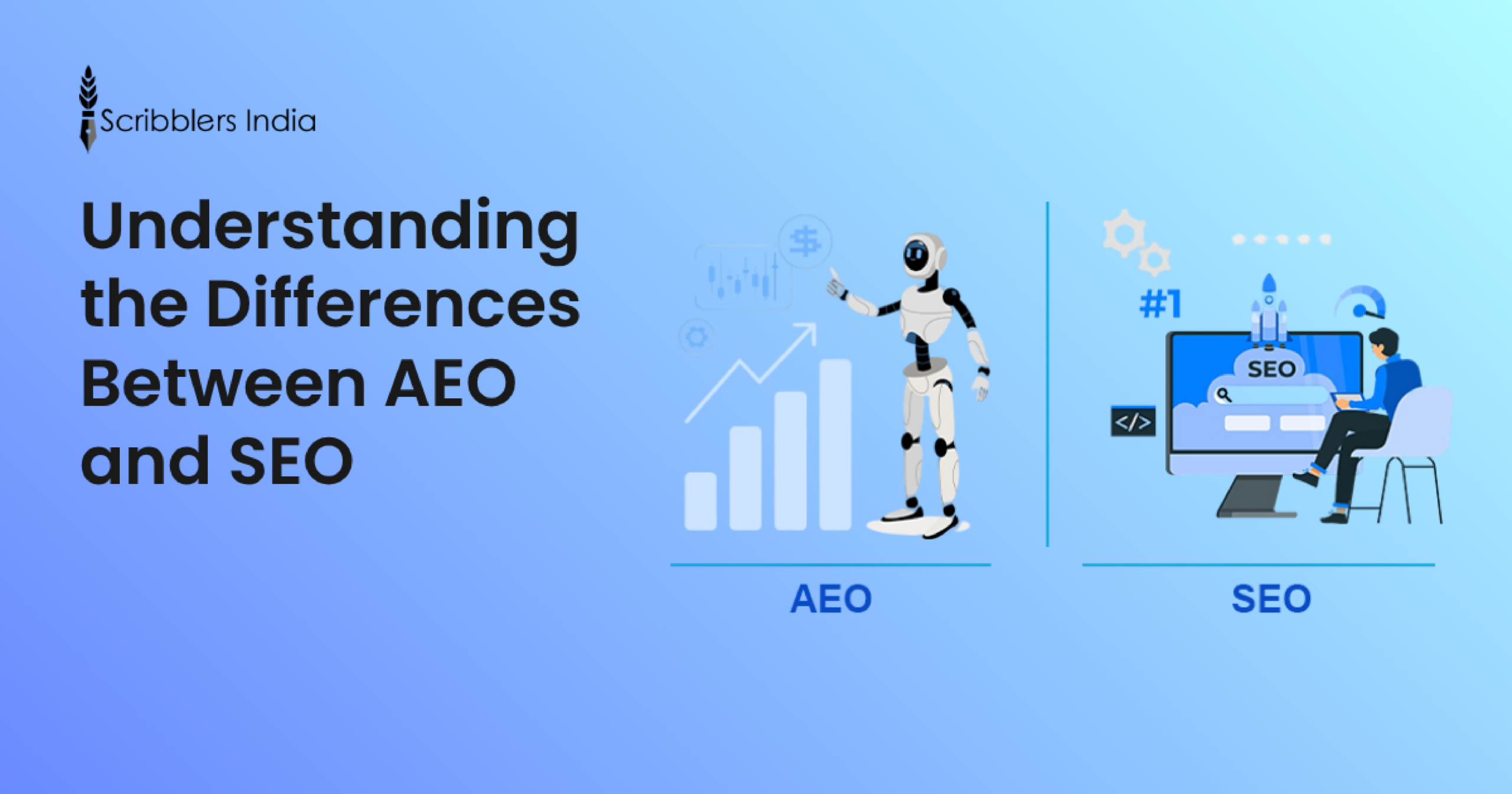
What are the Differences Between AEO vs SEO? (or Do You Need Both?)
Your website ranks on page one of Google. Traffic is solid. Then something shifts. Rankings hold, yet organic clicks drop. You investigate and find that Google is answering your audience’s questions before they ever reach your site. This scenario is playing out across industries in 2026, and it describes why the AEO vs SEO conversation has moved from theoretical to urgent. According to industry reports, 69% of Google searches now end without a click, up from 56% just 12 months earlier. This 13-point jump correlates directly with the expansion of Google AI Overviews, which extracts answers from multiple sources and delivers them at the top of the results page. For every 1,000 searches, only 360 clicks reach the open web. Traditional search engine optimization gets your content into the index. Answer engine optimization helps your content appear in the answer. The difference between AEO vs SEO is not about choosing one over the other. It is about understanding how each works, where they overlap, and how to run both to capture visibility across every layer of modern search. What Is AEO and What Does It Mean in Digital Marketing? Answer Engine Optimization (AEO) refers to the practice of structuring content so that AI-powered platforms, voice assistants, and AI-generated search features can extract, synthesize, and deliver it as a direct response to a user’s query. AEO in digital marketing emerged as a direct response to the rise of platforms like Google AI Overviews, ChatGPT, Perplexity, and voice assistants that answer user questions without displaying a ranked list of links. Rather than competing for a position on a results page, brands optimizing for AEO compete to become the cited, trusted source within the answer itself. The core objective of answer engine optimization vs search engine optimization comes down to this distinction: SEO optimizes for being found through a link. AEO optimizes for being used as the answer. Both forms of visibility have commercial value, but they operate through fundamentally different mechanisms and require different content structures to achieve. What Is the Difference Between AEO and SEO in Practice? The difference between AEO and SEO lies in their target output, success metrics, content format requirements, and the platforms they optimize for. SEO aims to rank a page. AEO aims to become the answer that a platform generates when a user asks a relevant question. Here is how the AEO vs SEO distinction plays out across the five dimensions that matter most to a content strategy: Target Platform and Output SEO targets traditional search engines, primarily Google and Bing, where the output is a ranked list of links that users browse and click. AEO vs SEO in terms of platform: AEO targets AI-powered answer surfaces, including Google AI Overviews, ChatGPT, Perplexity, Amazon Alexa, and Apple Siri. Here, the output is a synthesized response that may or may not include a clickable attribution. A business that appears in an AI Overview earns visibility even when the user never clicks through to the site. Success Metrics SEO success is measured through ranking positions, organic traffic volume, click-through rates, and keyword visibility scores. AEO success is measured through: Featured snippet wins AI Overview citation frequency Voice search answer inclusion People Also Ask appearances Brand mention volume across AI-generated responses Businesses moving into AEO need a measurement framework that captures answer-layer visibility rather than relying on website traffic as the sole indicator of search performance. Content Format Requirements SEO rewards comprehensive, keyword-rich, long-form content that covers a topic with enough depth and breadth to satisfy a range of search queries. The difference between AEO and SEO in content format is significant. AEO rewards concise, direct, question-answering paragraphs of 40 to 60 words that allow an AI system to extract a complete answer from a single content block. The structure that works best for AEO uses question-based headings followed immediately by a complete, standalone answer. This is the exact format that AI Overviews and voice assistants extract and deliver. Optimization Signals SEO optimization relies on keyword research, backlink building, metadata refinement, internal linking, site speed, and Core Web Vitals. The answer engine optimization vs search engine optimization comparison on signals indicates that AEO optimization relies on: Structured data markup (FAQPage, HowTo, Organization schema) E-E-A-T signals, including author credentials and citing original research Entity clarity that allows AI systems to understand exactly what a brand is, what it does, and who it serves. Relationship to Click-Through Traffic SEO is fundamentally traffic-oriented. Its commercial logic depends on users clicking through to the website where conversion opportunities exist. When it comes to AEO vs SEO on traffic indicates that AEO operates partly outside the click economy. When a brand’s content is cited in an AI Overview or read aloud by a voice assistant, it earns brand awareness and authority with an audience that may never visit the site during that session. This awareness-level visibility influences direct search behavior, branded queries, and offline purchase decisions in ways that click-based analytics do not capture. How Does SEO Work in 2026? SEO helps search engines discover, index, and rank your content for relevant queries. It remains essential in 2026 because the majority of commercial, transactional, and navigational queries continue to drive website clicks, and because strong SEO is the technical foundation AEO builds on. SEO operates across three interconnected disciplines. Technical SEO ensures that search engines can crawl, index, and understand your site structure. It is done through fast load times, clean URL architecture, proper robots.txt configuration, and schema markup. On-page SEO aligns your content with the specific queries your audience uses through keyword research, heading structure, meta descriptions, and internal linking. Off-page SEO builds domain authority, which signals to search engines that your site is a credible, trusted source through backlink acquisition and brand mentions across the web. Is SEO Still Relevant in 2026? The commercial case for continued SEO investment is clear. According to a recent analysis, 36% of searches still result in clicks. For transactional queries, where someone
Your website ranks on page one of Google. Traffic is solid. Then something shifts. Rankings hold, yet organic clicks drop. You investigate and find that Google is answering your audience’s questions before they ever reach your site. This scenario is playing out across industries in 2026, and it describes why the AEO vs SEO conversation has moved from theoretical to urgent. According to industry reports, 69% of Google searches now end without a click, up from 56% just 12 months earlier. This 13-point jump correlates directly with the expansion of Google AI Overviews, which extracts answers from multiple sources and delivers them at the top of the results page. For every 1,000 searches, only 360 clicks reach the open web. Traditional search engine optimization gets your content into the index. Answer engine optimization helps your content appear in the answer. The difference between AEO vs SEO is not about choosing one over the other. It is about understanding how each works, where they overlap, and how to run both to capture visibility across every layer of modern search. What Is AEO and What Does It Mean in Digital Marketing? Answer Engine Optimization (AEO) refers to the practice of structuring content so that AI-powered platforms, voice assistants, and AI-generated search features can extract, synthesize, and deliver it as a direct response to a user’s query. AEO in digital marketing emerged as a direct response to the rise of platforms like Google AI Overviews, ChatGPT, Perplexity, and voice assistants that answer user questions without displaying a ranked list of links. Rather than competing for a position on a results page, brands optimizing for AEO compete to become the cited, trusted source within the answer itself. The core objective of answer engine optimization vs search engine optimization comes down to this distinction: SEO optimizes for being found through a link. AEO optimizes for being used as the answer. Both forms of visibility have commercial value, but they operate through fundamentally different mechanisms and require different content structures to achieve. What Is the Difference Between AEO and SEO in Practice? The difference between AEO and SEO lies in their target output, success metrics, content format requirements, and the platforms they optimize for. SEO aims to rank a page. AEO aims to become the answer that a platform generates when a user asks a relevant question. Here is how the AEO vs SEO distinction plays out across the five dimensions that matter most to a content strategy: Target Platform and Output SEO targets traditional search engines, primarily Google and Bing, where the output is a ranked list of links that users browse and click. AEO vs SEO in terms of platform: AEO targets AI-powered answer surfaces, including Google AI Overviews, ChatGPT, Perplexity, Amazon Alexa, and Apple Siri. Here, the output is a synthesized response that may or may not include a clickable attribution. A business that appears in an AI Overview earns visibility even when the user never clicks through to the site. Success Metrics SEO success is measured through ranking positions, organic traffic volume, click-through rates, and keyword visibility scores. AEO success is measured through: Featured snippet wins AI Overview citation frequency Voice search answer inclusion People Also Ask appearances Brand mention volume across AI-generated responses Businesses moving into AEO need a measurement framework that captures answer-layer visibility rather than relying on website traffic as the sole indicator of search performance. Content Format Requirements SEO rewards comprehensive, keyword-rich, long-form content that covers a topic with enough depth and breadth to satisfy a range of search queries. The difference between AEO and SEO in content format is significant. AEO rewards concise, direct, question-answering paragraphs of 40 to 60 words that allow an AI system to extract a complete answer from a single content block. The structure that works best for AEO uses question-based headings followed immediately by a complete, standalone answer. This is the exact format that AI Overviews and voice assistants extract and deliver. Optimization Signals SEO optimization relies on keyword research, backlink building, metadata refinement, internal linking, site speed, and Core Web Vitals. The answer engine optimization vs search engine optimization comparison on signals indicates that AEO optimization relies on: Structured data markup (FAQPage, HowTo, Organization schema) E-E-A-T signals, including author credentials and citing original research Entity clarity that allows AI systems to understand exactly what a brand is, what it does, and who it serves. Relationship to Click-Through Traffic SEO is fundamentally traffic-oriented. Its commercial logic depends on users clicking through to the website where conversion opportunities exist. When it comes to AEO vs SEO on traffic indicates that AEO operates partly outside the click economy. When a brand’s content is cited in an AI Overview or read aloud by a voice assistant, it earns brand awareness and authority with an audience that may never visit the site during that session. This awareness-level visibility influences direct search behavior, branded queries, and offline purchase decisions in ways that click-based analytics do not capture. How Does SEO Work in 2026? SEO helps search engines discover, index, and rank your content for relevant queries. It remains essential in 2026 because the majority of commercial, transactional, and navigational queries continue to drive website clicks, and because strong SEO is the technical foundation AEO builds on. SEO operates across three interconnected disciplines. Technical SEO ensures that search engines can crawl, index, and understand your site structure. It is done through fast load times, clean URL architecture, proper robots.txt configuration, and schema markup. On-page SEO aligns your content with the specific queries your audience uses through keyword research, heading structure, meta descriptions, and internal linking. Off-page SEO builds domain authority, which signals to search engines that your site is a credible, trusted source through backlink acquisition and brand mentions across the web. Is SEO Still Relevant in 2026? The commercial case for continued SEO investment is clear. According to a recent analysis, 36% of searches still result in clicks. For transactional queries, where someone