
Personal Branding Posts
Is Your Image Ready for the Future? The Ultimate Personal Branding Strategy for 2026
Have you noticed that the era of the ‘perfect’ influencer is officially over? The perfectly curated feeds, the studio lighting, and the generic motivational quotes are vanishing from your screen. In their place, a messy, raw, and undeniable shift is happening right before your eyes. If you have been scrolling lately, you know that the polished aesthetic of 2024 is dead. The landscape has shifted, and now developing your personal branding strategy in 2026 will require a new approach. We are entering the age of radical authenticity & AI integration. It is no longer about looking good; it is about being trustworthy in an era of deepfakes and algorithmic noise. In 2026, your personal brand is not a vanity project; it is your ultimate career insurance policy. Whether you are a CEO or a freelancer, your digital reputation is your new resume. This guide moves beyond the basic advice of ‘post more content.’ We will cover the real personal branding strategy in 2026 that matters: building micro-communities, owning your data, and mastering the human-AI hybrid model to ensure you stay relevant. You will learn how to navigate the changing algorithms and build a reputation that withstands the test of technology. Why Is Authenticity the New Currency for Personal Branding in 2026? Audiences now reject high-production polish in favor of ‘lo-fi’ content because perfection feels artificial. Your personal branding strategy in 2026 must prioritize raw, handheld footage and honest storytelling to prove you are human. Trust is now built through vulnerability and imperfection rather than through curated success reels. The Lo-Fi Movement: Handheld camera videos and unedited audio are outperforming studio productions because they signal real-time honesty to skeptical viewers. You should film content in your car or walking down the street to show that you are prioritizing the message over the production value. Vulnerability vs. Oversharing: Authenticity means sharing the ‘struggle behind the success’ to build relatable authority, not just airing personal grievances. You need to strategically share business failures or learning moments that humanize your success without making you look incompetent to your potential clients. The 80/20 Reality Rule: You should aim for 80% value-driven expertise and 20% personal struggle to maintain professional respect while being relatable. This balance ensures that your audience respects your knowledge while feeling connected to your journey as a real person. Building in Public: Documenting your journey as it happens, including the failures, builds deeper loyalty than sharing a polished ‘after’ photo. You invite your audience to be part of the process, which creates emotional investment in your eventual success and long-term growth. Client Success Story: We recently worked with a fintech founder who was hesitant to share his struggles. We advised him to document the loss of a major client. The post received 10x times his average engagement because it was real. By showcasing his resilience, he attracted three new partners who valued transparency, validating that a raw personal branding strategy in 2026 drives real connection. How Will AI Change Your Personal Branding Strategy in 2026? You should not use AI to write your opinions, but you must use it to scale your output. A successful personal branding strategy in 2026 uses AI for personal branding to handle data analysis and formatting while keeping the core messaging 100% human to avoid the ‘generic’ trap. You cannot ignore AI, but you also cannot let it be your voice. The winning strategy involves using AI as a staffer, not a creator. AI for Data Analysis: Use tools to analyze audience sentiment and predict what topics will resonate before you even write a single word. You can scan thousands of comments in seconds to find the exact pain points your audience is facing right now. Scaling Content Output: You can record one video and use AI to transcribe, resize, and format it into newsletters and tweets instantly. This allows you to be present on multiple platforms without spending your entire day editing or writing captions manually. The Generic Content Trap: If you copy-paste ChatGPT outputs, you will destroy your reputation because audiences can smell synthetic thought leadership instantly. You must use AI only for structure and ideation, ensuring that the final output is dripping with your unique perspective. Preserving Your Voice: You must ensure that every piece of content retains your unique idioms, opinions, and tone to prove it was written by a human. You should train your AI tools on your previous writing so they learn to mimic your specific style. Which Social Media Platforms Should You Prioritize for Personal Branding? You cannot be everywhere without burning out, so you must focus on high-impact channels. Personal branding strategy in 2026 dictates prioritizing LinkedIn for B2B authority and video-first platforms like YouTube Shorts for reach. The real value, however, is shifting to ‘Dark Social’ communities where deep trust is built. The days of being famous everywhere are gone. You require a strategy that masters one platform before expanding to others. LinkedIn 3.0 Evolution: It is no longer just a resume site; how to build a personal brand on LinkedIn is now about video, newsletters, and community. You need to treat your profile like a media channel where you broadcast industry news and personal insights daily. The Rise of Dark Social: The most important conversations happen in private DMs, WhatsApp Channels, and Discord servers where you cannot buy ads. You must create content that is so valuable that people privately share it with their colleagues and friends in closed groups. Video-First Strategy: You need a ‘face-to-camera’ presence on YouTube or Instagram to prove you are a real person in an AI world. Static text posts are easy to fake, but a video of you speaking builds immediate trust and credibility. Depth Over Width: It is better to have 1,000 raving fans on one platform than 10,000 passive followers scattered across five different apps. You should focus your energy on the platform where your specific target audience spends their money and time.
Have you noticed that the era of the ‘perfect’ influencer is officially over? The perfectly curated feeds, the studio lighting, and the generic motivational quotes are vanishing from your screen. In their place, a messy, raw, and undeniable shift is happening right before your eyes. If you have been scrolling lately, you know that the polished aesthetic of 2024 is dead. The landscape has shifted, and now developing your personal branding strategy in 2026 will require a new approach. We are entering the age of radical authenticity & AI integration. It is no longer about looking good; it is about being trustworthy in an era of deepfakes and algorithmic noise. In 2026, your personal brand is not a vanity project; it is your ultimate career insurance policy. Whether you are a CEO or a freelancer, your digital reputation is your new resume. This guide moves beyond the basic advice of ‘post more content.’ We will cover the real personal branding strategy in 2026 that matters: building micro-communities, owning your data, and mastering the human-AI hybrid model to ensure you stay relevant. You will learn how to navigate the changing algorithms and build a reputation that withstands the test of technology. Why Is Authenticity the New Currency for Personal Branding in 2026? Audiences now reject high-production polish in favor of ‘lo-fi’ content because perfection feels artificial. Your personal branding strategy in 2026 must prioritize raw, handheld footage and honest storytelling to prove you are human. Trust is now built through vulnerability and imperfection rather than through curated success reels. The Lo-Fi Movement: Handheld camera videos and unedited audio are outperforming studio productions because they signal real-time honesty to skeptical viewers. You should film content in your car or walking down the street to show that you are prioritizing the message over the production value. Vulnerability vs. Oversharing: Authenticity means sharing the ‘struggle behind the success’ to build relatable authority, not just airing personal grievances. You need to strategically share business failures or learning moments that humanize your success without making you look incompetent to your potential clients. The 80/20 Reality Rule: You should aim for 80% value-driven expertise and 20% personal struggle to maintain professional respect while being relatable. This balance ensures that your audience respects your knowledge while feeling connected to your journey as a real person. Building in Public: Documenting your journey as it happens, including the failures, builds deeper loyalty than sharing a polished ‘after’ photo. You invite your audience to be part of the process, which creates emotional investment in your eventual success and long-term growth. Client Success Story: We recently worked with a fintech founder who was hesitant to share his struggles. We advised him to document the loss of a major client. The post received 10x times his average engagement because it was real. By showcasing his resilience, he attracted three new partners who valued transparency, validating that a raw personal branding strategy in 2026 drives real connection. How Will AI Change Your Personal Branding Strategy in 2026? You should not use AI to write your opinions, but you must use it to scale your output. A successful personal branding strategy in 2026 uses AI for personal branding to handle data analysis and formatting while keeping the core messaging 100% human to avoid the ‘generic’ trap. You cannot ignore AI, but you also cannot let it be your voice. The winning strategy involves using AI as a staffer, not a creator. AI for Data Analysis: Use tools to analyze audience sentiment and predict what topics will resonate before you even write a single word. You can scan thousands of comments in seconds to find the exact pain points your audience is facing right now. Scaling Content Output: You can record one video and use AI to transcribe, resize, and format it into newsletters and tweets instantly. This allows you to be present on multiple platforms without spending your entire day editing or writing captions manually. The Generic Content Trap: If you copy-paste ChatGPT outputs, you will destroy your reputation because audiences can smell synthetic thought leadership instantly. You must use AI only for structure and ideation, ensuring that the final output is dripping with your unique perspective. Preserving Your Voice: You must ensure that every piece of content retains your unique idioms, opinions, and tone to prove it was written by a human. You should train your AI tools on your previous writing so they learn to mimic your specific style. Which Social Media Platforms Should You Prioritize for Personal Branding? You cannot be everywhere without burning out, so you must focus on high-impact channels. Personal branding strategy in 2026 dictates prioritizing LinkedIn for B2B authority and video-first platforms like YouTube Shorts for reach. The real value, however, is shifting to ‘Dark Social’ communities where deep trust is built. The days of being famous everywhere are gone. You require a strategy that masters one platform before expanding to others. LinkedIn 3.0 Evolution: It is no longer just a resume site; how to build a personal brand on LinkedIn is now about video, newsletters, and community. You need to treat your profile like a media channel where you broadcast industry news and personal insights daily. The Rise of Dark Social: The most important conversations happen in private DMs, WhatsApp Channels, and Discord servers where you cannot buy ads. You must create content that is so valuable that people privately share it with their colleagues and friends in closed groups. Video-First Strategy: You need a ‘face-to-camera’ presence on YouTube or Instagram to prove you are a real person in an AI world. Static text posts are easy to fake, but a video of you speaking builds immediate trust and credibility. Depth Over Width: It is better to have 1,000 raving fans on one platform than 10,000 passive followers scattered across five different apps. You should focus your energy on the platform where your specific target audience spends their money and time.
What is the Cost of Personal Branding Services: A Complete Pricing Guide
In today’s competitive digital landscape, your personal brand is your most valuable career asset. It is what people say about you when you are not in the room. While everyone talks about importance of personal branding, few are transparent about the personal branding services cost required to build one professionally. This lack of clarity makes it difficult for professionals and entrepreneurs to budget and make informed decisions about their growth. The truth is, the investment in personal branding can vary wildly. This guide will demystify the personal branding services cost for you. We will break down every factor that influences pricing, provide realistic price ranges, and help you understand how to invest wisely in your professional future. A clear understanding of the potential personal branding services cost is the first step toward building a powerful and authentic professional identity. What Is Personal Branding? Personal branding is the conscious and intentional effort to create and influence the public perception of an individual. It involves positioning yourself as an authority in your industry, elevating your credibility, and differentiating yourself from the competition to advance your career or business goals. A clear brand helps you communicate your unique value effectively. A strong personal brand is a cohesive narrative built from your values, skills, and passions. Research from LinkedIn shows that professionals with a strong online brand are more likely to be contacted by recruiters. It includes your online presence, the content you create, and your professional reputation. Considering the cost of personal branding services is equivalent to making an investment in this powerful asset. What Factors Influence the Cost of Personal Branding? The personal branding services cost is influenced by four main factors: the scope of services, the consultant’s experience, the specific deliverables included, and the project’s duration. There is no single price because every professional’s needs are unique. Understanding these variables will help you assess quotes accurately. A C-suite executive preparing for a board position will have different needs than a recent graduate looking to optimize their LinkedIn profile. Acknowledging this helps clarify why the personal branding services cost fluctuates so much. Let’s break down the key variables that determine the final personal branding services charges. The Scope of Services: The depth of the engagement is the biggest cost driver. A one-time strategy session will be far less expensive than a long-term partnership that includes content creation, media outreach, and ongoing management. A larger scope means a higher personal branding services cost. The Consultant’s Experience: A highly experienced personal branding consultant with a proven track record will command a premium price. A newer consultant may offer more accessible rates. Expertise and past results are significant factors in the overall personal branding services cost. The Specific Deliverables: The tangible assets you receive directly impact the final price. A simple messaging guide is one thing. A full suite of deliverables, like a new website, professional photography, social media content, and AEO and GEO personal branding optimization, will naturally increase the service charges. The Project Duration: The length of the engagement matters. A short-term, three-month brand-building sprint will have a different price structure than a 12-month retainer for ongoing brand management. Longer commitments often affect the monthly personal branding services cost. What Are the Typical Price Ranges for Personal Branding Packages? Personal branding packages vary widely based on the factors we have discussed. Foundational strategy packages can range from $1,500 to $5,000. Comprehensive packages that include implementation often fall between $5,000 and $15,000. Premium, ongoing retainer services typically start at $2,000 per month and can exceed $10,000. To give you a clearer picture, let’s explore what you can generally expect at different investment levels. According to a report, 57% of employers are less likely to interview a candidate they cannot find online. This shows the importance of investing in a professional presence. Remember, these are industry estimates; the final personal branding services cost will vary. Foundational Packages (Strategy & Audit): $1,500 – $5,000: This is often the starting point for professionals who need clarity and a strategic roadmap. These personal branding packages typically include brand discovery sessions, an audit of your current online presence, audience analysis, and the development of core brand messaging. Comprehensive Packages (Strategy & Implementation): $5,000 – $15,000 This level is for those who need both the strategy and the initial assets to bring it to life. It includes everything from the foundational package, plus deliverables like new website copy, complete LinkedIn profile optimization, and a professional bio. Premium Retainer Services (Ongoing Management): $2,000 – $10,000+ per month This is for established leaders or entrepreneurs who want to actively grow their brand over the long term. This service acts as an outsourced marketing team, often including regular content creation, social media management, and PR outreach. This ongoing support reflects a higher personal branding services cost. What Are the Hidden Costs of Personal Branding? Beyond the agency or consultant fees, the total investment in your brand can include other essential costs. These are the tools and assets needed to execute your strategy effectively, for instance, building a community-led personal brand will likely cost more than a thought-leadership personal brand. Factoring these into your budget provides a more realistic picture of the complete personal branding services cost. A powerful personal branding strategy is only as good as its implementation. While your consultant will create the plan, you may need to invest in external assets to bring your brand to life visually and digitally. These additional expenses are an important part of the total personal branding services cost. Professional Photography and Videography: Your online image matters. Using generic stock photos or poor-quality selfies can undermine your brand. Budgeting for a professional photoshoot, including headshots and lifestyle images, as well as video content for social media, is a critical and often separate expense. Website Development and Hosting: Your personal brand needs a home. While a service may provide website copy and design guidance, the costs for domain registration, annual web hosting, and premium website themes
In today’s competitive digital landscape, your personal brand is your most valuable career asset. It is what people say about you when you are not in the room. While everyone talks about importance of personal branding, few are transparent about the personal branding services cost required to build one professionally. This lack of clarity makes it difficult for professionals and entrepreneurs to budget and make informed decisions about their growth. The truth is, the investment in personal branding can vary wildly. This guide will demystify the personal branding services cost for you. We will break down every factor that influences pricing, provide realistic price ranges, and help you understand how to invest wisely in your professional future. A clear understanding of the potential personal branding services cost is the first step toward building a powerful and authentic professional identity. What Is Personal Branding? Personal branding is the conscious and intentional effort to create and influence the public perception of an individual. It involves positioning yourself as an authority in your industry, elevating your credibility, and differentiating yourself from the competition to advance your career or business goals. A clear brand helps you communicate your unique value effectively. A strong personal brand is a cohesive narrative built from your values, skills, and passions. Research from LinkedIn shows that professionals with a strong online brand are more likely to be contacted by recruiters. It includes your online presence, the content you create, and your professional reputation. Considering the cost of personal branding services is equivalent to making an investment in this powerful asset. What Factors Influence the Cost of Personal Branding? The personal branding services cost is influenced by four main factors: the scope of services, the consultant’s experience, the specific deliverables included, and the project’s duration. There is no single price because every professional’s needs are unique. Understanding these variables will help you assess quotes accurately. A C-suite executive preparing for a board position will have different needs than a recent graduate looking to optimize their LinkedIn profile. Acknowledging this helps clarify why the personal branding services cost fluctuates so much. Let’s break down the key variables that determine the final personal branding services charges. The Scope of Services: The depth of the engagement is the biggest cost driver. A one-time strategy session will be far less expensive than a long-term partnership that includes content creation, media outreach, and ongoing management. A larger scope means a higher personal branding services cost. The Consultant’s Experience: A highly experienced personal branding consultant with a proven track record will command a premium price. A newer consultant may offer more accessible rates. Expertise and past results are significant factors in the overall personal branding services cost. The Specific Deliverables: The tangible assets you receive directly impact the final price. A simple messaging guide is one thing. A full suite of deliverables, like a new website, professional photography, social media content, and AEO and GEO personal branding optimization, will naturally increase the service charges. The Project Duration: The length of the engagement matters. A short-term, three-month brand-building sprint will have a different price structure than a 12-month retainer for ongoing brand management. Longer commitments often affect the monthly personal branding services cost. What Are the Typical Price Ranges for Personal Branding Packages? Personal branding packages vary widely based on the factors we have discussed. Foundational strategy packages can range from $1,500 to $5,000. Comprehensive packages that include implementation often fall between $5,000 and $15,000. Premium, ongoing retainer services typically start at $2,000 per month and can exceed $10,000. To give you a clearer picture, let’s explore what you can generally expect at different investment levels. According to a report, 57% of employers are less likely to interview a candidate they cannot find online. This shows the importance of investing in a professional presence. Remember, these are industry estimates; the final personal branding services cost will vary. Foundational Packages (Strategy & Audit): $1,500 – $5,000: This is often the starting point for professionals who need clarity and a strategic roadmap. These personal branding packages typically include brand discovery sessions, an audit of your current online presence, audience analysis, and the development of core brand messaging. Comprehensive Packages (Strategy & Implementation): $5,000 – $15,000 This level is for those who need both the strategy and the initial assets to bring it to life. It includes everything from the foundational package, plus deliverables like new website copy, complete LinkedIn profile optimization, and a professional bio. Premium Retainer Services (Ongoing Management): $2,000 – $10,000+ per month This is for established leaders or entrepreneurs who want to actively grow their brand over the long term. This service acts as an outsourced marketing team, often including regular content creation, social media management, and PR outreach. This ongoing support reflects a higher personal branding services cost. What Are the Hidden Costs of Personal Branding? Beyond the agency or consultant fees, the total investment in your brand can include other essential costs. These are the tools and assets needed to execute your strategy effectively, for instance, building a community-led personal brand will likely cost more than a thought-leadership personal brand. Factoring these into your budget provides a more realistic picture of the complete personal branding services cost. A powerful personal branding strategy is only as good as its implementation. While your consultant will create the plan, you may need to invest in external assets to bring your brand to life visually and digitally. These additional expenses are an important part of the total personal branding services cost. Professional Photography and Videography: Your online image matters. Using generic stock photos or poor-quality selfies can undermine your brand. Budgeting for a professional photoshoot, including headshots and lifestyle images, as well as video content for social media, is a critical and often separate expense. Website Development and Hosting: Your personal brand needs a home. While a service may provide website copy and design guidance, the costs for domain registration, annual web hosting, and premium website themes
Why Must You Optimize Your Personal Brand for AI Search and AI Overview Now?
You have a question, so you turn to Google. Instead of the familiar list of ten blue links, you get a complete, conversational answer at the top. To stay relevant in this landscape, it’s crucial to optimize your personal brand for AI search. The search engine did not simply find sources for you; it became the source. This is the new reality of search. This is Google’s AI Overview, the result of its Search Generative Experience project. This technology represents the most significant shift in how we find information in over a decade. It forces us to ask a critical question. If the search engine provides the answer directly, what happens to your website, content, and personal brand? This guide will demystify the new era of AI search. It will explain what AI Overviews are and how they will impact your visibility. Most importantly, it will provide an actionable roadmap to AI search optimization, enabling you to thrive in the future of discovery. What Is an AI Overview or AI Search? An AI Overview is an AI-generated summary that directly answers a user’s query at the very top of the search results page. It synthesizes information from multiple web sources to provide a single, comprehensive answer, reducing the need for users to click on multiple links. Think of it less like a librarian pointing you to the right books and more like an expert researcher reading those books for you and giving you a complete summary. This conversational, answer-first model is the direction all major tech companies are moving toward. This new approach requires a fresh personal branding strategy. The term “Search Generative Experience” was the original name for Google’s project, and understanding what is Search Generative Experience helps contextualize this evolution. How Will AI Overviews Change How People Find You? AI Overviews will fundamentally alter user behavior by prioritizing direct answers over clickable links. This change means your visibility will depend on your content being used as a source for the AI’s summary, rather than your website simply ranking in the top position. From a List of Links to a Direct Answer: This change represents a shift from a “search and click” model to a “search and done” experience. AI Overviews aim to satisfy a user’s intent immediately within the search results page. This efficiency for the user means a new challenge for brands seeking to attract website traffic. The Rise of “Zero-Click” Searches: A “zero-click” search occurs when the AI summary provides a sufficient answer, so the user never clicks on a website link. The AI Overview impact on SEO is significant, as a large portion of searches could end on the results page itself, making inclusion in the AI summary critical. A New Emphasis on Trust and Verifiable Facts: AI models are designed to pull information from sources they deem authoritative, factual, and trustworthy. The new search prioritizes content from well-established entities with a history of expertise. You must optimize your personal brand for AI search by demonstrating verifiable credibility across the web. Why Is Your Current Personal Brand Strategy at Risk? Your current personal brand strategy is at risk because AI search redefines digital visibility. If your brand is not recognized as a primary, authoritative source by AI models, you risk becoming invisible, losing traffic, and having your reputation shaped by algorithms you do not control. Your Website Traffic Could Disappear A strategy that relies solely on ranking number one for a keyword is now vulnerable. The AI Overview box sits above the top organic result, capturing the user’s initial attention. If your content is not featured in that summary, you could lose a significant amount of traffic. Your Expert Content Might Get Lost AI may use your content to generate a summary without linking back to your site. This process makes your expertise anonymous. It can absorb your carefully crafted insights into a generic answer, stripping you of credit and authority. Your Reputation is Now in the Hands of an AI An AI model will summarize who you are based on the information it finds across the entire web. If it misinterprets your content or pulls from a negative or inaccurate source, it could damage your reputation in a very public and impactful way. You must actively optimize your personal brand for AI search. How Can You Optimize Your Personal Brand for AI Search? You can optimize your personal brand for AI search by transitioning from a keyword focus to an entity focus through the following strategies: Focus on Becoming a Recognized “Entity”: To optimize your personal brand for AI search, you must be seen as a recognized “entity.” An entity is a distinct person, place, or concept that a search engine can identify and understand. The goal is for Google’s Knowledge Graph to know who you are and what you are an expert in. Create Comprehensive, Expert-Driven Content: The new personal branding strategy requires depth. You need to create pillar pages and detailed guides that answer questions so comprehensively that your site becomes an indispensable source. A recent Edelman-LinkedIn report found that 63% of decision-makers will pay a premium to work with organizations that articulate a clear vision, which is achieved through expert content. Prioritize Factual Accuracy and Clear Citations: To be trusted by an AI, your content must be factually verifiable. This means citing your sources, linking to authoritative studies, and maintaining an up-to-date and accurate digital presence. Every claim should be backed by evidence, proving your commitment to truth and accuracy. Build Brand Authority Online Across Multiple Platforms: AI search verifies your expertise across the web. Your authority needs to be visible on your blog, in guest posts, on podcasts, in YouTube videos, and in reputable publications. This creates a network of trust signals that AI algorithms can easily identify and validate. Structure Your Data for Machines: To properly optimize your personal brand for AI search, you should use Schema markup. This is like adding descriptive labels to your website’s code.
You have a question, so you turn to Google. Instead of the familiar list of ten blue links, you get a complete, conversational answer at the top. To stay relevant in this landscape, it’s crucial to optimize your personal brand for AI search. The search engine did not simply find sources for you; it became the source. This is the new reality of search. This is Google’s AI Overview, the result of its Search Generative Experience project. This technology represents the most significant shift in how we find information in over a decade. It forces us to ask a critical question. If the search engine provides the answer directly, what happens to your website, content, and personal brand? This guide will demystify the new era of AI search. It will explain what AI Overviews are and how they will impact your visibility. Most importantly, it will provide an actionable roadmap to AI search optimization, enabling you to thrive in the future of discovery. What Is an AI Overview or AI Search? An AI Overview is an AI-generated summary that directly answers a user’s query at the very top of the search results page. It synthesizes information from multiple web sources to provide a single, comprehensive answer, reducing the need for users to click on multiple links. Think of it less like a librarian pointing you to the right books and more like an expert researcher reading those books for you and giving you a complete summary. This conversational, answer-first model is the direction all major tech companies are moving toward. This new approach requires a fresh personal branding strategy. The term “Search Generative Experience” was the original name for Google’s project, and understanding what is Search Generative Experience helps contextualize this evolution. How Will AI Overviews Change How People Find You? AI Overviews will fundamentally alter user behavior by prioritizing direct answers over clickable links. This change means your visibility will depend on your content being used as a source for the AI’s summary, rather than your website simply ranking in the top position. From a List of Links to a Direct Answer: This change represents a shift from a “search and click” model to a “search and done” experience. AI Overviews aim to satisfy a user’s intent immediately within the search results page. This efficiency for the user means a new challenge for brands seeking to attract website traffic. The Rise of “Zero-Click” Searches: A “zero-click” search occurs when the AI summary provides a sufficient answer, so the user never clicks on a website link. The AI Overview impact on SEO is significant, as a large portion of searches could end on the results page itself, making inclusion in the AI summary critical. A New Emphasis on Trust and Verifiable Facts: AI models are designed to pull information from sources they deem authoritative, factual, and trustworthy. The new search prioritizes content from well-established entities with a history of expertise. You must optimize your personal brand for AI search by demonstrating verifiable credibility across the web. Why Is Your Current Personal Brand Strategy at Risk? Your current personal brand strategy is at risk because AI search redefines digital visibility. If your brand is not recognized as a primary, authoritative source by AI models, you risk becoming invisible, losing traffic, and having your reputation shaped by algorithms you do not control. Your Website Traffic Could Disappear A strategy that relies solely on ranking number one for a keyword is now vulnerable. The AI Overview box sits above the top organic result, capturing the user’s initial attention. If your content is not featured in that summary, you could lose a significant amount of traffic. Your Expert Content Might Get Lost AI may use your content to generate a summary without linking back to your site. This process makes your expertise anonymous. It can absorb your carefully crafted insights into a generic answer, stripping you of credit and authority. Your Reputation is Now in the Hands of an AI An AI model will summarize who you are based on the information it finds across the entire web. If it misinterprets your content or pulls from a negative or inaccurate source, it could damage your reputation in a very public and impactful way. You must actively optimize your personal brand for AI search. How Can You Optimize Your Personal Brand for AI Search? You can optimize your personal brand for AI search by transitioning from a keyword focus to an entity focus through the following strategies: Focus on Becoming a Recognized “Entity”: To optimize your personal brand for AI search, you must be seen as a recognized “entity.” An entity is a distinct person, place, or concept that a search engine can identify and understand. The goal is for Google’s Knowledge Graph to know who you are and what you are an expert in. Create Comprehensive, Expert-Driven Content: The new personal branding strategy requires depth. You need to create pillar pages and detailed guides that answer questions so comprehensively that your site becomes an indispensable source. A recent Edelman-LinkedIn report found that 63% of decision-makers will pay a premium to work with organizations that articulate a clear vision, which is achieved through expert content. Prioritize Factual Accuracy and Clear Citations: To be trusted by an AI, your content must be factually verifiable. This means citing your sources, linking to authoritative studies, and maintaining an up-to-date and accurate digital presence. Every claim should be backed by evidence, proving your commitment to truth and accuracy. Build Brand Authority Online Across Multiple Platforms: AI search verifies your expertise across the web. Your authority needs to be visible on your blog, in guest posts, on podcasts, in YouTube videos, and in reputable publications. This creates a network of trust signals that AI algorithms can easily identify and validate. Structure Your Data for Machines: To properly optimize your personal brand for AI search, you should use Schema markup. This is like adding descriptive labels to your website’s code.
Why Founders Need a Community-Led Personal Brand for Lasting Growth?
Are you tired of shouting into the social media void? You post insightful content, share valuable tips, and engage with your industry, yet it often feels like you are speaking to an empty room. Embracing a community-led personal brand could be the shift you need to break through. This is a common frustration in today’s crowded digital landscape. The old model of personal branding, which involves being a guru on a stage broadcasting to a passive audience, is broken. It is time for a fundamental shift in thinking. The future of personal branding is not about building a bigger megaphone; it is about building a bigger table. You need to transition from simply collecting followers to cultivating a thriving community. This guide will walk you through the what, why, and how of building a powerful personal brand—a brand built with your audience, not for them. Get ready to unlock a more sustainable and rewarding path to growth with your own community-led personal brand. What Is a Community-Led Personal Brand Anyway? A community-led personal brand is an identity and reputation built collaboratively with your audience. Instead of a top-down approach where you publish thought leadership content, this model positions you as a facilitator who brings people together. You unite them around a shared interest, purpose, or identity, fostering a sense of belonging and collective ownership. Building a community-led personal brand is about shared value. Community-Led Personal Brand vs Traditional Brand: Key Differences The primary difference between these two approaches lies in the direction of communication and value creation. A traditionally robust personal brand is a monologue where you broadcast your expertise to a passive audience. A community-led personal brand is a dialogue. It creates a space where members connect with you and, more importantly, with each other. Aspect Traditional Personal Brand Community-Led Personal Brand Communication Style One-way broadcast of expertise to a mostly passive audience Two-way dialogue where members connect with you and each other Core Focus Building an audience that mainly consumes your created content Nurturing a community that actively participates and co-creates value Your Role Seen as the expert standing alone on the stage Act as the host, guiding conversations like at a dinner party Value Creation Content-centric approach with limited interaction beyond your posts Relationship-centric approach that fosters trust, collaboration, and shared growth The Modern Rise of Online Communities The shift towards community is a direct response to the modern digital environment. With organic reach on social media platforms declining and audiences craving authentic connection, community building has become an effective strategy for creating lasting impact. A community-led personal brand is a move from borrowed attention on social media to owned relationships. According to reports, the organic reach for a typical Facebook post is as low as 1.65%. This means over 94% of your followers will not see your content. A community provides a direct line to your most dedicated supporters, bypassing unpredictable algorithms and fostering genuine audience engagement for personal branding. How Can a Community-Led Personal Brand Skyrocket Your Growth? Adopting a community-led strategy directly fuels sustainable growth. It creates a loyal, engaged, and self-perpetuating ecosystem around your brand. It moves beyond fleeting metrics like likes and views to build tangible assets like trust and powerful word-of-mouth marketing. A strong community-led personal brand creates a significant competitive advantage. Building Unbreakable Trust and Loyalty This approach builds deep trust by making people feel seen, heard, and valued. When you create a space for genuine interaction and shared experiences, you move beyond transactional follower relationships. This fosters psychological safety and belonging, turning casual followers into loyal advocates for your community-led personal brand. Creating a Constant Stream of Content Ideas Your community is your ultimate research and development team. By actively listening to their questions, discussions, and challenges, you gain direct insight into their most pressing needs. This feedback loop provides an endless well of relevant content ideas, ensuring your community-led personal brand is always valuable. Turning Followers Into Your Best Marketing Team A vibrant community becomes a powerful engine for organic, word-of-mouth marketing. Happy and engaged members naturally become advocates who share your work and recommend your services. This authentic promotion is far more effective than any paid advertisement, showcasing the true benefits of a strong personal brand. Real-World Networking and Collaboration The value extends beyond your connection with members; it is in the connections they form with each other. You become the central node of a valuable network, which can lead to powerful collaborations and partnerships. Facilitating these connections elevates your status from a content creator to an indispensable industry leader. How Do You Actually Build a Community-Led Personal Brand from Scratch? Building a thriving community-led personal brand is a strategic process that starts with purpose. It is maintained through consistent engagement and co-creation. It involves defining your mission, choosing the right platform, sparking conversations, encouraging participation, and actively listening to your members. Step 1: Define Your Purpose and “Why” Before gathering people, you must give them a compelling reason to come together. Your purpose is your North Star. It is the shared mission or transformation that your community will rally around. This goes deeper than your niche; it is the core belief that unites everyone. Step 2: Choose Your Community’s Home Choosing the right platform is crucial for fostering interaction. You should build your home where your ideal members feel most comfortable and the tools support your community goals. Choose what is right for the culture you want to create, rather than what is simply popular. This is key for your community-led personal brand. For real-time chat & collaboration: Consider Discord or Slack. For structured discussions & courses: Look into platforms like Circle.so or Mighty Networks. For leveraging an existing network: A Facebook Group or LinkedIn Group can be a simple starting point. Step 3: Create Content That Sparks Conversation The key to engagement is shifting from declarative content (“Here is what I know”) to interrogative content (“What do you think?”). Your goal is to
Are you tired of shouting into the social media void? You post insightful content, share valuable tips, and engage with your industry, yet it often feels like you are speaking to an empty room. Embracing a community-led personal brand could be the shift you need to break through. This is a common frustration in today’s crowded digital landscape. The old model of personal branding, which involves being a guru on a stage broadcasting to a passive audience, is broken. It is time for a fundamental shift in thinking. The future of personal branding is not about building a bigger megaphone; it is about building a bigger table. You need to transition from simply collecting followers to cultivating a thriving community. This guide will walk you through the what, why, and how of building a powerful personal brand—a brand built with your audience, not for them. Get ready to unlock a more sustainable and rewarding path to growth with your own community-led personal brand. What Is a Community-Led Personal Brand Anyway? A community-led personal brand is an identity and reputation built collaboratively with your audience. Instead of a top-down approach where you publish thought leadership content, this model positions you as a facilitator who brings people together. You unite them around a shared interest, purpose, or identity, fostering a sense of belonging and collective ownership. Building a community-led personal brand is about shared value. Community-Led Personal Brand vs Traditional Brand: Key Differences The primary difference between these two approaches lies in the direction of communication and value creation. A traditionally robust personal brand is a monologue where you broadcast your expertise to a passive audience. A community-led personal brand is a dialogue. It creates a space where members connect with you and, more importantly, with each other. Aspect Traditional Personal Brand Community-Led Personal Brand Communication Style One-way broadcast of expertise to a mostly passive audience Two-way dialogue where members connect with you and each other Core Focus Building an audience that mainly consumes your created content Nurturing a community that actively participates and co-creates value Your Role Seen as the expert standing alone on the stage Act as the host, guiding conversations like at a dinner party Value Creation Content-centric approach with limited interaction beyond your posts Relationship-centric approach that fosters trust, collaboration, and shared growth The Modern Rise of Online Communities The shift towards community is a direct response to the modern digital environment. With organic reach on social media platforms declining and audiences craving authentic connection, community building has become an effective strategy for creating lasting impact. A community-led personal brand is a move from borrowed attention on social media to owned relationships. According to reports, the organic reach for a typical Facebook post is as low as 1.65%. This means over 94% of your followers will not see your content. A community provides a direct line to your most dedicated supporters, bypassing unpredictable algorithms and fostering genuine audience engagement for personal branding. How Can a Community-Led Personal Brand Skyrocket Your Growth? Adopting a community-led strategy directly fuels sustainable growth. It creates a loyal, engaged, and self-perpetuating ecosystem around your brand. It moves beyond fleeting metrics like likes and views to build tangible assets like trust and powerful word-of-mouth marketing. A strong community-led personal brand creates a significant competitive advantage. Building Unbreakable Trust and Loyalty This approach builds deep trust by making people feel seen, heard, and valued. When you create a space for genuine interaction and shared experiences, you move beyond transactional follower relationships. This fosters psychological safety and belonging, turning casual followers into loyal advocates for your community-led personal brand. Creating a Constant Stream of Content Ideas Your community is your ultimate research and development team. By actively listening to their questions, discussions, and challenges, you gain direct insight into their most pressing needs. This feedback loop provides an endless well of relevant content ideas, ensuring your community-led personal brand is always valuable. Turning Followers Into Your Best Marketing Team A vibrant community becomes a powerful engine for organic, word-of-mouth marketing. Happy and engaged members naturally become advocates who share your work and recommend your services. This authentic promotion is far more effective than any paid advertisement, showcasing the true benefits of a strong personal brand. Real-World Networking and Collaboration The value extends beyond your connection with members; it is in the connections they form with each other. You become the central node of a valuable network, which can lead to powerful collaborations and partnerships. Facilitating these connections elevates your status from a content creator to an indispensable industry leader. How Do You Actually Build a Community-Led Personal Brand from Scratch? Building a thriving community-led personal brand is a strategic process that starts with purpose. It is maintained through consistent engagement and co-creation. It involves defining your mission, choosing the right platform, sparking conversations, encouraging participation, and actively listening to your members. Step 1: Define Your Purpose and “Why” Before gathering people, you must give them a compelling reason to come together. Your purpose is your North Star. It is the shared mission or transformation that your community will rally around. This goes deeper than your niche; it is the core belief that unites everyone. Step 2: Choose Your Community’s Home Choosing the right platform is crucial for fostering interaction. You should build your home where your ideal members feel most comfortable and the tools support your community goals. Choose what is right for the culture you want to create, rather than what is simply popular. This is key for your community-led personal brand. For real-time chat & collaboration: Consider Discord or Slack. For structured discussions & courses: Look into platforms like Circle.so or Mighty Networks. For leveraging an existing network: A Facebook Group or LinkedIn Group can be a simple starting point. Step 3: Create Content That Sparks Conversation The key to engagement is shifting from declarative content (“Here is what I know”) to interrogative content (“What do you think?”). Your goal is to
Can I Use AI for Personal Branding?
Artificial Intelligence is making waves everywhere, and the world of personal branding is no exception. With tools that can write, design, and analyze at superhuman speeds, a compelling question arises: Is the human element of a personal brand becoming obsolete? It is easy to see the appeal of automation, but it is crucial to understand its limitations. The truth is, while technology evolves, the core of what makes a brand influential and trusted remains deeply human. AI will never replace a strong personal brand. Instead, the conversation is shifting toward a more powerful concept: using AI for personal branding as a strategic partner. This approach allows you to harness AI’s efficiency to amplify your most human qualities—your stories, your perspective, and your ability to connect. This blog explores why your humanity is your ultimate asset. We will cover how to use AI for personal branding strategically, the foundational elements AI cannot replicate, and practical ways to build a strong personal brand that is not just relevant but truly irreplaceable in the age of automation. What is AI’s Real Role in Building a Personal Brand? AI is not a replacement for your brand’s soul; it is a powerful engine for its operations. It can significantly enhance your branding efforts by automating repetitive tasks and providing data-driven insights, freeing you to focus on high-impact, human-centric activities. Using AI for personal branding effectively means treating it as a highly capable assistant. In fact, research from Semrush indicates that 65% of companies using AI for content are reporting better ROI. Content Ideation and Drafting: AI tools can brainstorm topics, generate outlines, and write initial drafts, helping you overcome writer’s block and accelerate your content pipeline. Data Analysis and Strategy: AI can analyze market trends and audience engagement data to help you refine your content strategy, ensuring you are creating what your audience wants. Streamlining Operations: From scheduling social media posts to managing email lists, personal branding AI tools can handle the logistical side of your brand, saving you valuable time. Enhancing Visual Content: AI image and video generators can create custom visuals for your brand, providing a cost-effective way to produce high-quality, engaging media. Why a Strong Brand Can’t Be Replaced: Challenges with Using AI for Personal Branding AI falls short where genuine humanity begins; it cannot replicate your unique life experiences, build authentic trust, or show true empathy. These are the cornerstones of a strong personal brand, and they remain exclusively human domains. Lacks Lived Experience AI can access and process information from the internet, but it has not lived your life. It cannot share a story about a lesson learned from a past failure or a moment of personal triumph. This authentic storytelling is the bedrock of a relatable brand. Cannot Build Genuine Trust Trust is built through consistency, vulnerability, and genuine interaction. An audience trusts a person, not an algorithm. The nuances of building relationships are far beyond the current capabilities of AI, making the human element indispensable for a strong personal brand. Has No Real Empathy AI can be programmed to use empathetic language, but it cannot feel empathy. A strong personal brand connects with its audience by understanding their struggles and celebrating their wins on a genuinely emotional level, a core part of human connection. Cannot Possess a Unique Perspective Your worldview is shaped by your unique journey. AI generates content based on existing data, often leading to consensus-driven or generic viewpoints. Your unique, and sometimes unconventional, perspective is what makes your brand stand out. This is why AI for personal branding is a supportive, not a leading, role. Why is Human Connection Necessary for Personal Branding? In a digital world becoming more automated, your humanity is no longer a soft skill, it is your most significant competitive advantage. This is the core of the future of AI and personal branding. Human connection remains the most critical factor in branding because it fosters loyalty, creates community, and drives meaningful engagement in a way that technology alone cannot. People follow people, not just content. An impactful and relevant personal brand is built on this very principle. Authenticity as the Ultimate Differentiator In a sea of polished, AI-generated content, your authentic voice, complete with its quirks and passions, cuts through the noise. This realness is what your audience craves and what builds a lasting, strong personal brand. Storytelling That Resonates Facts inform, but stories connect. Authentic storytelling about your journey—the challenges, the learning moments, the victories—creates an emotional bond that turns casual followers into loyal advocates. This is a skill no AI can master. Building a Real Community A community is not just a list of followers; it is a group of people connected by shared values and interests, led by you. Fostering this requires genuine interaction, active listening, and empathy—all deeply human traits that are central to a strong personal brand. Long-Term Loyalty Over Short-Term Clicks AI might be good at generating content that gets clicks, but human connection is what builds long-term loyalty. When your audience feels genuinely connected to you, they will stick with you far longer than any algorithmically-driven trend. This is the goal of using AI for personal branding smartly. How Can You Use AI to Be More Human, Not Less? You can use AI to become more human by delegating low-level, time-consuming tasks to technology, which frees up your time and energy for high-value human interactions. The strategic use of AI for personal branding is about automation enabling greater authenticity. Automate the Mundane: Use personal branding AI tools to schedule your posts, transcribe your videos, and manage your personal branding analytics. Reinvest Your Time: Take the hours you have saved and pour them into activities that build human connection. Engage More Deeply: Spend more time in your comments section, host live Q&A sessions, or network one-on-one. Think and Create: Use your newfound mental space for deep thinking, developing unique ideas, and crafting the compelling stories that only you can tell. This is the essence
Artificial Intelligence is making waves everywhere, and the world of personal branding is no exception. With tools that can write, design, and analyze at superhuman speeds, a compelling question arises: Is the human element of a personal brand becoming obsolete? It is easy to see the appeal of automation, but it is crucial to understand its limitations. The truth is, while technology evolves, the core of what makes a brand influential and trusted remains deeply human. AI will never replace a strong personal brand. Instead, the conversation is shifting toward a more powerful concept: using AI for personal branding as a strategic partner. This approach allows you to harness AI’s efficiency to amplify your most human qualities—your stories, your perspective, and your ability to connect. This blog explores why your humanity is your ultimate asset. We will cover how to use AI for personal branding strategically, the foundational elements AI cannot replicate, and practical ways to build a strong personal brand that is not just relevant but truly irreplaceable in the age of automation. What is AI’s Real Role in Building a Personal Brand? AI is not a replacement for your brand’s soul; it is a powerful engine for its operations. It can significantly enhance your branding efforts by automating repetitive tasks and providing data-driven insights, freeing you to focus on high-impact, human-centric activities. Using AI for personal branding effectively means treating it as a highly capable assistant. In fact, research from Semrush indicates that 65% of companies using AI for content are reporting better ROI. Content Ideation and Drafting: AI tools can brainstorm topics, generate outlines, and write initial drafts, helping you overcome writer’s block and accelerate your content pipeline. Data Analysis and Strategy: AI can analyze market trends and audience engagement data to help you refine your content strategy, ensuring you are creating what your audience wants. Streamlining Operations: From scheduling social media posts to managing email lists, personal branding AI tools can handle the logistical side of your brand, saving you valuable time. Enhancing Visual Content: AI image and video generators can create custom visuals for your brand, providing a cost-effective way to produce high-quality, engaging media. Why a Strong Brand Can’t Be Replaced: Challenges with Using AI for Personal Branding AI falls short where genuine humanity begins; it cannot replicate your unique life experiences, build authentic trust, or show true empathy. These are the cornerstones of a strong personal brand, and they remain exclusively human domains. Lacks Lived Experience AI can access and process information from the internet, but it has not lived your life. It cannot share a story about a lesson learned from a past failure or a moment of personal triumph. This authentic storytelling is the bedrock of a relatable brand. Cannot Build Genuine Trust Trust is built through consistency, vulnerability, and genuine interaction. An audience trusts a person, not an algorithm. The nuances of building relationships are far beyond the current capabilities of AI, making the human element indispensable for a strong personal brand. Has No Real Empathy AI can be programmed to use empathetic language, but it cannot feel empathy. A strong personal brand connects with its audience by understanding their struggles and celebrating their wins on a genuinely emotional level, a core part of human connection. Cannot Possess a Unique Perspective Your worldview is shaped by your unique journey. AI generates content based on existing data, often leading to consensus-driven or generic viewpoints. Your unique, and sometimes unconventional, perspective is what makes your brand stand out. This is why AI for personal branding is a supportive, not a leading, role. Why is Human Connection Necessary for Personal Branding? In a digital world becoming more automated, your humanity is no longer a soft skill, it is your most significant competitive advantage. This is the core of the future of AI and personal branding. Human connection remains the most critical factor in branding because it fosters loyalty, creates community, and drives meaningful engagement in a way that technology alone cannot. People follow people, not just content. An impactful and relevant personal brand is built on this very principle. Authenticity as the Ultimate Differentiator In a sea of polished, AI-generated content, your authentic voice, complete with its quirks and passions, cuts through the noise. This realness is what your audience craves and what builds a lasting, strong personal brand. Storytelling That Resonates Facts inform, but stories connect. Authentic storytelling about your journey—the challenges, the learning moments, the victories—creates an emotional bond that turns casual followers into loyal advocates. This is a skill no AI can master. Building a Real Community A community is not just a list of followers; it is a group of people connected by shared values and interests, led by you. Fostering this requires genuine interaction, active listening, and empathy—all deeply human traits that are central to a strong personal brand. Long-Term Loyalty Over Short-Term Clicks AI might be good at generating content that gets clicks, but human connection is what builds long-term loyalty. When your audience feels genuinely connected to you, they will stick with you far longer than any algorithmically-driven trend. This is the goal of using AI for personal branding smartly. How Can You Use AI to Be More Human, Not Less? You can use AI to become more human by delegating low-level, time-consuming tasks to technology, which frees up your time and energy for high-value human interactions. The strategic use of AI for personal branding is about automation enabling greater authenticity. Automate the Mundane: Use personal branding AI tools to schedule your posts, transcribe your videos, and manage your personal branding analytics. Reinvest Your Time: Take the hours you have saved and pour them into activities that build human connection. Engage More Deeply: Spend more time in your comments section, host live Q&A sessions, or network one-on-one. Think and Create: Use your newfound mental space for deep thinking, developing unique ideas, and crafting the compelling stories that only you can tell. This is the essence
How To Measure the True ROI of Personal Branding?
You have likely noticed the constant conversation around personal branding. It is no longer a concept reserved for celebrities or CEOs; it is a critical tool for anyone looking to advance their career, grow a business, or build influence in their industry. Its rise is undeniable. In simple terms, your personal brand is your professional reputation. It is the story people tell about your skills, experience, and character when you are not in the room. It is how you are perceived by colleagues, clients, and your industry at large. This all sounds promising, but it leads to a crucial question: “Is the effort really worth it?” You invest significant time and sometimes money into building your presence. How do you know if these actions are actually paying off in a meaningful way? This uncertainty is a common challenge. This guide is designed to demystify this process. We will break down how to measure the ROI of personal branding. We will provide you with a clear framework and actionable metrics to prove the value of your efforts and make smarter strategic decisions for your future. What Does ROI Mean for Your Personal Brand? ROI, or Return on Investment, is the value you receive back from the resources you put in. For a personal brand, your investment includes time spent creating content, money for tools or courses, and consistent networking efforts. The “return,” however, is often more complex than a simple dollar figure. Unlike traditional marketing, where ROI might be a direct sales number, personal branding ROI is a mix of tangible and intangible benefits that unfold over the long term. A strong brand might not lead to a sale today, but it could land you a major promotion or a game-changing client six months from now. According to a recent study, 86% of B2B decision-makers say that thought leadership content has a significant impact on their purchasing decisions, showcasing the indirect but powerful financial return of a strong professional reputation. Why is Measuring ROI of Personal Branding Important? Tracking your progress is not just about numbers; it is about strategy and validation. When you track personal brand metrics, you empower yourself to build a more effective and rewarding professional life. Justify Your Investment: Clearly show yourself, your boss, or your partners that the time and resources you are dedicating are yielding positive results. Optimize Your Strategy: Data reveals what resonates with your audience. You can see which content, platforms, or topics are working and double down on them. Make Smarter Decisions: Your metrics guide your next steps, helping you decide whether to focus on LinkedIn, start a newsletter, or pursue speaking engagements. Attract Better Opportunities: When you can articulate the impact and reach of your brand, you become a more attractive candidate for high-level jobs, clients, and collaborations. What Do You Want Your Personal Brand to Achieve? You cannot measure the ROI of personal branding without first defining what “return” means to you. Your ROI is only meaningful when it is directly connected to clear, specific, and measurable goals. Without a target, you are just collecting data without purpose. Before you look at any metric, you must ask yourself: “What is the primary objective of this effort?” Setting clear personal brand goals transforms your activities from random acts of content into a focused strategy for success. Here are some common goals: Secure a new job, promotion, or career transition. Attract more qualified clients for your freelance or consulting business. Become a recognized thought leader or go-to expert in your niche. Increase your overall earning potential through salary or business revenue. Build a powerful and supportive professional network. Drive sales for a specific product, course, or service you offer. How Do Goals Help Measure Personal Branding Success? Goals provide the context for your metrics. They are the foundation of any effort to measure the ROI of personal branding because they tell you which numbers actually matter. Connect Metrics to Goals: If your goal is to attract more clients, your most important metrics are not just likes and shares, but qualified leads and conversion rates. Tailor Your Measurement: If your goal is to become a thought leader, you will focus more on media mentions, content shares, and speaking invitations rather than direct sales. Different goals require different yardsticks for personal brand success. How Do You Measure Brand Awareness and Visibility of Personal Branding? This is the top of your funnel. It measures how many people know you exist and see your content. Increased brand visibility is the first step toward achieving larger goals and a key indicator of your growing influence. Search Volume for Your Name/Brand: This metric shows how many people are looking for you specifically. You can use tools like Google Trends to see if searches for your name are increasing over time. A rising trend indicates your reputation is growing and people are actively seeking you out. Website Traffic (Organic & Referral): This is the number of visitors to your personal website or blog. Pay close attention to organic traffic (from search engines) and referral traffic (from other sites or social media). An increase shows your content is being discovered and valued. Social Media Reach/Impressions: Reach is the number of unique people who see your content, while impressions are the total number of times it was displayed. Growing reach means you are expanding your audience and getting your message in front of new eyes, which is fundamental to personal branding ROI. Media Mentions & Press: This tracks every time you are featured in articles, quoted by journalists, or appear on podcasts. Each mention acts as a third-party endorsement, significantly boosting your credibility. Set up Google Alerts for your name to track this automatically. Google Search Rankings for Keywords: When you create content, you should target specific keywords related to your expertise. Tracking your rank for these terms (e.g., “B2B marketing consultant”) shows if you are becoming a recognized authority on those topics in the eyes of search engines. How
You have likely noticed the constant conversation around personal branding. It is no longer a concept reserved for celebrities or CEOs; it is a critical tool for anyone looking to advance their career, grow a business, or build influence in their industry. Its rise is undeniable. In simple terms, your personal brand is your professional reputation. It is the story people tell about your skills, experience, and character when you are not in the room. It is how you are perceived by colleagues, clients, and your industry at large. This all sounds promising, but it leads to a crucial question: “Is the effort really worth it?” You invest significant time and sometimes money into building your presence. How do you know if these actions are actually paying off in a meaningful way? This uncertainty is a common challenge. This guide is designed to demystify this process. We will break down how to measure the ROI of personal branding. We will provide you with a clear framework and actionable metrics to prove the value of your efforts and make smarter strategic decisions for your future. What Does ROI Mean for Your Personal Brand? ROI, or Return on Investment, is the value you receive back from the resources you put in. For a personal brand, your investment includes time spent creating content, money for tools or courses, and consistent networking efforts. The “return,” however, is often more complex than a simple dollar figure. Unlike traditional marketing, where ROI might be a direct sales number, personal branding ROI is a mix of tangible and intangible benefits that unfold over the long term. A strong brand might not lead to a sale today, but it could land you a major promotion or a game-changing client six months from now. According to a recent study, 86% of B2B decision-makers say that thought leadership content has a significant impact on their purchasing decisions, showcasing the indirect but powerful financial return of a strong professional reputation. Why is Measuring ROI of Personal Branding Important? Tracking your progress is not just about numbers; it is about strategy and validation. When you track personal brand metrics, you empower yourself to build a more effective and rewarding professional life. Justify Your Investment: Clearly show yourself, your boss, or your partners that the time and resources you are dedicating are yielding positive results. Optimize Your Strategy: Data reveals what resonates with your audience. You can see which content, platforms, or topics are working and double down on them. Make Smarter Decisions: Your metrics guide your next steps, helping you decide whether to focus on LinkedIn, start a newsletter, or pursue speaking engagements. Attract Better Opportunities: When you can articulate the impact and reach of your brand, you become a more attractive candidate for high-level jobs, clients, and collaborations. What Do You Want Your Personal Brand to Achieve? You cannot measure the ROI of personal branding without first defining what “return” means to you. Your ROI is only meaningful when it is directly connected to clear, specific, and measurable goals. Without a target, you are just collecting data without purpose. Before you look at any metric, you must ask yourself: “What is the primary objective of this effort?” Setting clear personal brand goals transforms your activities from random acts of content into a focused strategy for success. Here are some common goals: Secure a new job, promotion, or career transition. Attract more qualified clients for your freelance or consulting business. Become a recognized thought leader or go-to expert in your niche. Increase your overall earning potential through salary or business revenue. Build a powerful and supportive professional network. Drive sales for a specific product, course, or service you offer. How Do Goals Help Measure Personal Branding Success? Goals provide the context for your metrics. They are the foundation of any effort to measure the ROI of personal branding because they tell you which numbers actually matter. Connect Metrics to Goals: If your goal is to attract more clients, your most important metrics are not just likes and shares, but qualified leads and conversion rates. Tailor Your Measurement: If your goal is to become a thought leader, you will focus more on media mentions, content shares, and speaking invitations rather than direct sales. Different goals require different yardsticks for personal brand success. How Do You Measure Brand Awareness and Visibility of Personal Branding? This is the top of your funnel. It measures how many people know you exist and see your content. Increased brand visibility is the first step toward achieving larger goals and a key indicator of your growing influence. Search Volume for Your Name/Brand: This metric shows how many people are looking for you specifically. You can use tools like Google Trends to see if searches for your name are increasing over time. A rising trend indicates your reputation is growing and people are actively seeking you out. Website Traffic (Organic & Referral): This is the number of visitors to your personal website or blog. Pay close attention to organic traffic (from search engines) and referral traffic (from other sites or social media). An increase shows your content is being discovered and valued. Social Media Reach/Impressions: Reach is the number of unique people who see your content, while impressions are the total number of times it was displayed. Growing reach means you are expanding your audience and getting your message in front of new eyes, which is fundamental to personal branding ROI. Media Mentions & Press: This tracks every time you are featured in articles, quoted by journalists, or appear on podcasts. Each mention acts as a third-party endorsement, significantly boosting your credibility. Set up Google Alerts for your name to track this automatically. Google Search Rankings for Keywords: When you create content, you should target specific keywords related to your expertise. Tracking your rank for these terms (e.g., “B2B marketing consultant”) shows if you are becoming a recognized authority on those topics in the eyes of search engines. How
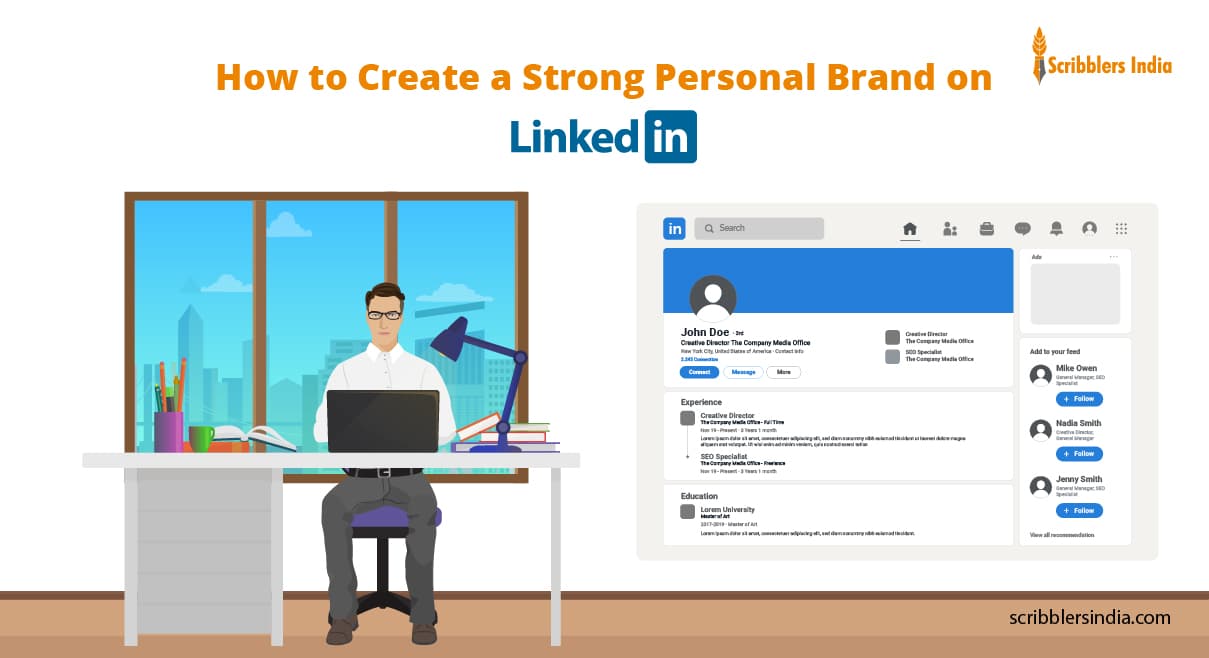
How to Build a Powerful Personal Brand on LinkedIn?
In the modern professional ecosystem, having a LinkedIn profile alone is no longer sufficient. With over a billion professionals on the platform, the real question is: are you truly standing out? Your profile is the cornerstone of your professional reputation and a strong personal brand on LinkedIn is a powerful tool for advancing your career. Personal branding is the conscious effort to shape the public perception of your skills, experience, and values. It is what builds trust, establishes credibility, and sets you apart from others. A strong personal brand on LinkedIn serves as your professional advocate, working on your behalf even when you are not. LinkedIn is the world’s premier platform for professional networking and branding. It provides the perfect ecosystem to showcase your expertise, connect with industry leaders, and unlock new opportunities. This guide will provide you with a step-by-step framework to transform your profile into a powerful branding asset. Why is a Strong Personal Brand Important for Your Career? A strong personal brand on LinkedIn is your career accelerator in dynamic modern markets. It moves you from being a passive participant to an active architect of your professional journey, creating a distinct identity that attracts success. Stand Out from the Crowd: In a job market with millions of talented individuals, a strong personal brand helps you get noticed by recruiters and collaborators for the right reasons. Build Trust and Credibility: A well-maintained profile with consistent, valuable content establishes you as a reliable and knowledgeable professional in your field, fostering trust among your connections. Attract High-Value Opportunities: Your brand works 24/7, drawing in job offers, speaking invitations, client leads, and collaboration requests that align with your career aspirations. Showcase Your Expertise: It provides a platform to demonstrate your skills and insights, positioning you as a go-to expert and a thought leadership figure in your niche. Enable Long-Term Career Growth: A powerful brand on LinkedIn is an asset that grows with you, opening doors for promotions, career pivots, and entrepreneurial ventures throughout your professional life. Amplify Your Networking Power: Networking becomes more effective when people are more likely to connect with and respond to a professional with a clear and compelling brand identity. What Do You Need For a Strong Personal Brand on LinkedIn? A standout LinkedIn profile is a strategic blend of professional presentation and personal storytelling. It immediately communicates your value proposition, making a memorable first impression that encourages viewers to learn more about you and your work. Here are the key elements you need for a strong personal brand on LinkedIn: Professional Headshot & Banner Your profile picture is your digital handshake. Use a high-quality, professional headshot where you appear approachable. Your banner image should be a visual representation of your professional field, brand, or passion, adding another layer of context. Compelling Headline Move beyond just your job title. Your headline is prime real estate to showcase your core value. Use keywords to describe what you do, who you help, and the results you deliver. For example, “Content Strategist helping SaaS startups drive organic growth.” Impactful ‘About’ Section This is your brand’s story. Write in the first person, narrating your professional journey, your mission, and your key achievements. Infuse relevant keywords naturally to enhance your LinkedIn profile optimization and end with a clear call to action. Detailed Experience Section Do not just list your responsibilities. Frame your experience in terms of impact and quantifiable achievements. Use bullet points with action verbs to describe how you added value in each role, like “Increased lead generation by 30% through targeted content campaigns.” Skills & Endorsements List skills that are relevant to your industry and future goals. A profile with at least five skills is viewed up to 17 times more. Endorsements from your network act as social proof, validating your expertise and boosting your credibility. Recommendations and Featured Section Recommendations are powerful testimonials. Request them from colleagues, clients, and managers. Use the ‘Featured’ section to showcase your best work, such as articles you have published, projects you have led, or presentations you have given. This provides tangible proof of your abilities and helps establish a strong personal brand on LinkedIn. How Can a Consistent Content Strategy Build a Strong Personal Brand on LinkedIn? A proactive LinkedIn content strategy transforms your profile from a static resume into a dynamic platform for thought leadership. Sharing valuable content consistently demonstrates your expertise, keeps you top-of-mind, and builds a community around your brand. Let’s understand how a well-planned LinkedIn content strategy helps establish your thought leadership in your niche: Define Your Niche: Identify your area of expertise and your target audience. Ask yourself what unique insights you can offer and who you want to reach. This focus makes your content more impactful. Share Diverse Content Types: Mix your content formats to keep your audience engaged. Share text posts, articles, carousels, infographics, and short videos. Each format serves a different purpose in telling your professional story. Maintain Consistency: Develop a content calendar and post regularly. Whether it is twice a week or five times a week, consistency is crucial for building momentum and staying visible to your network and the LinkedIn algorithm. Provide Genuine Value: Your content should aim to educate, inspire, or solve a problem for your audience. Focus on giving value freely rather than constantly promoting yourself. This approach builds trust and loyalty. Leverage Personal Stories: Authenticity resonates deeply. Share personal career lessons, challenges, and successes. This humanizes your brand and creates a stronger, more relatable connection with your audience. Adapt to the Indian Context: Discuss local market trends, industry challenges, and success stories relevant to India. This contextualization makes your content more relatable and valuable to your primary audience. How Can You Engage and Expand Your Network on LinkedIn for Personal Branding? Effective networking on LinkedIn is about building meaningful relationships, not just collecting connections. A strategic approach to engagement and outreach helps you expand your influence and create a supportive professional community that fosters mutual growth. Here are the
In the modern professional ecosystem, having a LinkedIn profile alone is no longer sufficient. With over a billion professionals on the platform, the real question is: are you truly standing out? Your profile is the cornerstone of your professional reputation and a strong personal brand on LinkedIn is a powerful tool for advancing your career. Personal branding is the conscious effort to shape the public perception of your skills, experience, and values. It is what builds trust, establishes credibility, and sets you apart from others. A strong personal brand on LinkedIn serves as your professional advocate, working on your behalf even when you are not. LinkedIn is the world’s premier platform for professional networking and branding. It provides the perfect ecosystem to showcase your expertise, connect with industry leaders, and unlock new opportunities. This guide will provide you with a step-by-step framework to transform your profile into a powerful branding asset. Why is a Strong Personal Brand Important for Your Career? A strong personal brand on LinkedIn is your career accelerator in dynamic modern markets. It moves you from being a passive participant to an active architect of your professional journey, creating a distinct identity that attracts success. Stand Out from the Crowd: In a job market with millions of talented individuals, a strong personal brand helps you get noticed by recruiters and collaborators for the right reasons. Build Trust and Credibility: A well-maintained profile with consistent, valuable content establishes you as a reliable and knowledgeable professional in your field, fostering trust among your connections. Attract High-Value Opportunities: Your brand works 24/7, drawing in job offers, speaking invitations, client leads, and collaboration requests that align with your career aspirations. Showcase Your Expertise: It provides a platform to demonstrate your skills and insights, positioning you as a go-to expert and a thought leadership figure in your niche. Enable Long-Term Career Growth: A powerful brand on LinkedIn is an asset that grows with you, opening doors for promotions, career pivots, and entrepreneurial ventures throughout your professional life. Amplify Your Networking Power: Networking becomes more effective when people are more likely to connect with and respond to a professional with a clear and compelling brand identity. What Do You Need For a Strong Personal Brand on LinkedIn? A standout LinkedIn profile is a strategic blend of professional presentation and personal storytelling. It immediately communicates your value proposition, making a memorable first impression that encourages viewers to learn more about you and your work. Here are the key elements you need for a strong personal brand on LinkedIn: Professional Headshot & Banner Your profile picture is your digital handshake. Use a high-quality, professional headshot where you appear approachable. Your banner image should be a visual representation of your professional field, brand, or passion, adding another layer of context. Compelling Headline Move beyond just your job title. Your headline is prime real estate to showcase your core value. Use keywords to describe what you do, who you help, and the results you deliver. For example, “Content Strategist helping SaaS startups drive organic growth.” Impactful ‘About’ Section This is your brand’s story. Write in the first person, narrating your professional journey, your mission, and your key achievements. Infuse relevant keywords naturally to enhance your LinkedIn profile optimization and end with a clear call to action. Detailed Experience Section Do not just list your responsibilities. Frame your experience in terms of impact and quantifiable achievements. Use bullet points with action verbs to describe how you added value in each role, like “Increased lead generation by 30% through targeted content campaigns.” Skills & Endorsements List skills that are relevant to your industry and future goals. A profile with at least five skills is viewed up to 17 times more. Endorsements from your network act as social proof, validating your expertise and boosting your credibility. Recommendations and Featured Section Recommendations are powerful testimonials. Request them from colleagues, clients, and managers. Use the ‘Featured’ section to showcase your best work, such as articles you have published, projects you have led, or presentations you have given. This provides tangible proof of your abilities and helps establish a strong personal brand on LinkedIn. How Can a Consistent Content Strategy Build a Strong Personal Brand on LinkedIn? A proactive LinkedIn content strategy transforms your profile from a static resume into a dynamic platform for thought leadership. Sharing valuable content consistently demonstrates your expertise, keeps you top-of-mind, and builds a community around your brand. Let’s understand how a well-planned LinkedIn content strategy helps establish your thought leadership in your niche: Define Your Niche: Identify your area of expertise and your target audience. Ask yourself what unique insights you can offer and who you want to reach. This focus makes your content more impactful. Share Diverse Content Types: Mix your content formats to keep your audience engaged. Share text posts, articles, carousels, infographics, and short videos. Each format serves a different purpose in telling your professional story. Maintain Consistency: Develop a content calendar and post regularly. Whether it is twice a week or five times a week, consistency is crucial for building momentum and staying visible to your network and the LinkedIn algorithm. Provide Genuine Value: Your content should aim to educate, inspire, or solve a problem for your audience. Focus on giving value freely rather than constantly promoting yourself. This approach builds trust and loyalty. Leverage Personal Stories: Authenticity resonates deeply. Share personal career lessons, challenges, and successes. This humanizes your brand and creates a stronger, more relatable connection with your audience. Adapt to the Indian Context: Discuss local market trends, industry challenges, and success stories relevant to India. This contextualization makes your content more relatable and valuable to your primary audience. How Can You Engage and Expand Your Network on LinkedIn for Personal Branding? Effective networking on LinkedIn is about building meaningful relationships, not just collecting connections. A strategic approach to engagement and outreach helps you expand your influence and create a supportive professional community that fosters mutual growth. Here are the
Personal Branding vs. Company Branding: Which One is More Effective?
Is Elon Musk’s brand Tesla’s brand, or is it his own? When you think of Virgin, do you picture the logo or Richard Branson’s adventurous smile? This brings up a common point of confusion in our digital-first world. Many people mix up personal branding and company branding, yet they are two distinct and powerful tools in your strategic arsenal. A personal brand is the unique story and reputation of an individual. A company brand represents the collective identity of an organization. Understanding the difference between a personal and corporate brand is crucial for success. This blog will demystify the personal branding vs company branding debate. We will explore the unique power of each, their symbiotic relationship, and how you can strategically use both. This is especially vital for entrepreneurs, freelancers, and experts who are often both the face of their work and the business itself. What is the Real Difference Between Personal Branding vs Company Branding? The fundamental difference amongst personal branding vs company branding is focus. A personal brand centers on an individual’s unique identity, skills, and values. In contrast, a company brand is built around the organization’s collective mission, its products or services, and its overall corporate identity, designed to exist beyond any one person. Defining Personal Branding Your personal brand is the intentional cultivation of your public reputation. It is how the world perceives your unique combination of skills, experiences, and personality. Your personal brand is your story, expertise, and values rolled into one authentic package. Individual Focus: It is fundamentally about you as a distinct professional entity. Your name is the brand name. Showcases Expertise: It highlights your specific knowledge and authority within a niche. Builds Relationships: It leverages your personality to build direct connections and a loyal following. Prime Examples: This is the realm of thought leaders, coaches, artists, and specialized freelancers. Defining Company Branding A company brand, or corporate brand, is the identity of a business. It encompasses the organization’s mission, vision, and core values. It is communicated through its name, logo, customer service, and the entire customer experience. Organizational Focus: It represents the collective, not a single person’s identity. Promotes Offerings: It is built around the products or services the business provides to the market. Creates Consistency: It ensures a uniform and predictable experience for all customers and stakeholders. Prime Examples: Think of large corporations like Apple, startups like Notion, or any e-commerce business. Key Distinctions at a Glance: Comparing Personal Branding vs Company Branding Distinction Personal Brand Company Brand Primary Focus Individual identity, expertise, and relationships Organizational identity, products/services, and market positioning Target Audience Professional network, followers, and direct clients Customers, investors, partners, and the broader market Communication Style Often more authentic, conversational, and personality-driven Typically more consistent, professional, and strategically crafted Flexibility Can pivot quickly based on individual growth and interests Changes require more strategic planning and stakeholder buy-in Longevity Usually tied to your career lifespan or personal presence Designed for long-term scalability and potential transition of ownership Why Do People Trust Personal Brands More Than Company Brands? People fundamentally trust other people more than they trust faceless corporations. A personal brand cuts through the noise of corporate advertising by creating a genuine, human-to-human connection that feels more authentic and relatable, fostering a deeper level of trust and loyalty. This preference for the personal touch is backed by data. A recent report highlights that 88% of consumers trust recommendations from individuals over branded content, even if they do not know them personally. This statistic reveals a powerful truth about modern consumer psychology. Authenticity and Relatability: Personal brands can share real stories, including struggles and successes. This vulnerability makes them more relatable than a polished corporate message. Direct Engagement: It is easier to have a one-on-one conversation with an individual on social media than it is with a large company, building real relationships. Overcoming Skepticism: In an era saturated with ads, consumers are skeptical. A recommendation from a trusted individual carries more weight than a corporate promise. The Human Connection: We are wired to connect with faces, voices, and stories. A strong personal brand provides a human anchor in a digital world. What are the Main Benefits of Having a Strong Personal Brand? A strong personal brand creates immense opportunities for both individuals and the businesses they lead. Individuals can establish authority and attract better career prospects. Businesses can humanize their company by building a bridge of trust and loyalty with customers through personal connections. For Individuals: Building Your Professional Equity Developing your personal brand is an investment in your own professional future. It separates you from the competition and makes you a magnet for new opportunities. Boosts Visibility: A clear brand makes you more recognizable and memorable in your field. Establishes Authority: You become the go-to expert, building credibility and trust. Attracts Opportunities: This leads to speaking gigs, media features, and collaborations. Enhances Networking: Your brand acts as a conversation starter, drawing like-minded professionals to you. For Businesses: The Human-Centered Advantage The benefits of a personal brand for businesses are significant, especially in a market where consumers crave authenticity. The founder’s or CEO’s personal brand can become a powerful asset. Humanizes the Company: It provides a relatable face and a human story behind the logo. Builds Customer Loyalty: Customers who trust you are more likely to be loyal to your company. Acts as a Marketing Channel: A leader’s influential social media presence can drive significant sales. Attracts Top Talent: People want to work for leaders they admire and respect. Is a Company Brand Still Important if I Have a Strong Personal Brand? Absolutely, when you compare personal branding vs company branding, it becomes clear that a company brand is essential for long-term growth, scalability, and creating an entity that can thrive independently of you. While your personal brand can provide the initial spark, a company brand builds the sustainable fire that can outlast any single individual’s involvement. Relying solely on an individual branding vs business
Is Elon Musk’s brand Tesla’s brand, or is it his own? When you think of Virgin, do you picture the logo or Richard Branson’s adventurous smile? This brings up a common point of confusion in our digital-first world. Many people mix up personal branding and company branding, yet they are two distinct and powerful tools in your strategic arsenal. A personal brand is the unique story and reputation of an individual. A company brand represents the collective identity of an organization. Understanding the difference between a personal and corporate brand is crucial for success. This blog will demystify the personal branding vs company branding debate. We will explore the unique power of each, their symbiotic relationship, and how you can strategically use both. This is especially vital for entrepreneurs, freelancers, and experts who are often both the face of their work and the business itself. What is the Real Difference Between Personal Branding vs Company Branding? The fundamental difference amongst personal branding vs company branding is focus. A personal brand centers on an individual’s unique identity, skills, and values. In contrast, a company brand is built around the organization’s collective mission, its products or services, and its overall corporate identity, designed to exist beyond any one person. Defining Personal Branding Your personal brand is the intentional cultivation of your public reputation. It is how the world perceives your unique combination of skills, experiences, and personality. Your personal brand is your story, expertise, and values rolled into one authentic package. Individual Focus: It is fundamentally about you as a distinct professional entity. Your name is the brand name. Showcases Expertise: It highlights your specific knowledge and authority within a niche. Builds Relationships: It leverages your personality to build direct connections and a loyal following. Prime Examples: This is the realm of thought leaders, coaches, artists, and specialized freelancers. Defining Company Branding A company brand, or corporate brand, is the identity of a business. It encompasses the organization’s mission, vision, and core values. It is communicated through its name, logo, customer service, and the entire customer experience. Organizational Focus: It represents the collective, not a single person’s identity. Promotes Offerings: It is built around the products or services the business provides to the market. Creates Consistency: It ensures a uniform and predictable experience for all customers and stakeholders. Prime Examples: Think of large corporations like Apple, startups like Notion, or any e-commerce business. Key Distinctions at a Glance: Comparing Personal Branding vs Company Branding Distinction Personal Brand Company Brand Primary Focus Individual identity, expertise, and relationships Organizational identity, products/services, and market positioning Target Audience Professional network, followers, and direct clients Customers, investors, partners, and the broader market Communication Style Often more authentic, conversational, and personality-driven Typically more consistent, professional, and strategically crafted Flexibility Can pivot quickly based on individual growth and interests Changes require more strategic planning and stakeholder buy-in Longevity Usually tied to your career lifespan or personal presence Designed for long-term scalability and potential transition of ownership Why Do People Trust Personal Brands More Than Company Brands? People fundamentally trust other people more than they trust faceless corporations. A personal brand cuts through the noise of corporate advertising by creating a genuine, human-to-human connection that feels more authentic and relatable, fostering a deeper level of trust and loyalty. This preference for the personal touch is backed by data. A recent report highlights that 88% of consumers trust recommendations from individuals over branded content, even if they do not know them personally. This statistic reveals a powerful truth about modern consumer psychology. Authenticity and Relatability: Personal brands can share real stories, including struggles and successes. This vulnerability makes them more relatable than a polished corporate message. Direct Engagement: It is easier to have a one-on-one conversation with an individual on social media than it is with a large company, building real relationships. Overcoming Skepticism: In an era saturated with ads, consumers are skeptical. A recommendation from a trusted individual carries more weight than a corporate promise. The Human Connection: We are wired to connect with faces, voices, and stories. A strong personal brand provides a human anchor in a digital world. What are the Main Benefits of Having a Strong Personal Brand? A strong personal brand creates immense opportunities for both individuals and the businesses they lead. Individuals can establish authority and attract better career prospects. Businesses can humanize their company by building a bridge of trust and loyalty with customers through personal connections. For Individuals: Building Your Professional Equity Developing your personal brand is an investment in your own professional future. It separates you from the competition and makes you a magnet for new opportunities. Boosts Visibility: A clear brand makes you more recognizable and memorable in your field. Establishes Authority: You become the go-to expert, building credibility and trust. Attracts Opportunities: This leads to speaking gigs, media features, and collaborations. Enhances Networking: Your brand acts as a conversation starter, drawing like-minded professionals to you. For Businesses: The Human-Centered Advantage The benefits of a personal brand for businesses are significant, especially in a market where consumers crave authenticity. The founder’s or CEO’s personal brand can become a powerful asset. Humanizes the Company: It provides a relatable face and a human story behind the logo. Builds Customer Loyalty: Customers who trust you are more likely to be loyal to your company. Acts as a Marketing Channel: A leader’s influential social media presence can drive significant sales. Attracts Top Talent: People want to work for leaders they admire and respect. Is a Company Brand Still Important if I Have a Strong Personal Brand? Absolutely, when you compare personal branding vs company branding, it becomes clear that a company brand is essential for long-term growth, scalability, and creating an entity that can thrive independently of you. While your personal brand can provide the initial spark, a company brand builds the sustainable fire that can outlast any single individual’s involvement. Relying solely on an individual branding vs business
What are the Benefits of a Wikipedia Page: Does it Help with Personal and Business Branding?
In a digital landscape where over 900 million Indians are now online, establishing trust is more critical than ever. Every day, your customers, partners, and competitors are searching for you online. What they find determines their perception of your brand. While you control your website and social media, there is one platform that stands out as a beacon of neutral and authoritative information: Wikipedia. It is often the first result on Google and the go-to source for millions seeking unbiased facts. This blog examines the numerous benefits of a Wikipedia page for both businesses and individuals seeking to enhance their online presence. We will move beyond simple visibility to uncover the deep strategic advantages it offers. Keep reading to learn more How Does a Wikipedia Page Differ from Other Online Profiles for Businesses? A Wikipedia page is extremely different from any other online platform. Its power comes from rigorous, community-enforced guidelines that prioritize neutrality and verifiable facts over promotion, making it a uniquely trusted digital asset for your brand. Strict Editorial Guidelines: Wikipedia operates on core principles like a Neutral Point of View (NPOV), meaning content must be unbiased. This ensures that the information presented is fair and represents all significant viewpoints on a subject. Verifiable Sources Policy: Every statement of fact on Wikipedia must be backed by a citation from a reliable, independent source. This policy is the bedrock of its Wikipedia page credibility, ensuring accuracy and preventing original research or unverified claims. Lack of Direct Control: Unlike a business directory or a social media profile, you do not control your Wikipedia page. This lack of direct control is precisely what gives it authority and makes it a powerful third-party endorsement. Open-Source Peer Review: The platform’s open-source nature means articles are constantly reviewed and refined by a global community of volunteer editors. This continuous peer review process helps maintain accuracy and neutrality over time. High Public Trust: Because of its strict adherence to neutrality and factual accuracy, Wikipedia has earned immense public trust. For many, if it’s on Wikipedia, it’s considered a verified fact, lending instant legitimacy to any subject. What are the Key Benefits of a Wikipedia Page for Businesses? For a company operating in highly competitive markets, a Wikipedia page is a strategic tool. It provides a foundational layer of credibility that directly influences partners, investors, customers, and even prospective employees, setting you apart from the competition. Let’s have a look at the key benefits of a Wikipedia page for your organization: Enhance Business Credibility and Trust In a marketplace filled with marketing claims, a Wikipedia page offers a neutral, fact-based overview of your company. This third-party validation is invaluable for building the deep-seated trust that fosters long-term business relationships and a strong public image in India. Instant Authority & Legitimacy: A Wikipedia page acts as a powerful signal of notability. It tells the world, including potential B2B partners and investors, that your company is established, significant, and recognized by independent sources. Enhanced Brand Reputation: It provides a credible, centralized source of information that shapes public perception. This helps in building a positive and authoritative brand image, managed by facts rather than just marketing narratives. Crisis Management & Information Control: During challenging times or when misinformation spreads, your Wikipedia page can serve as a source of truth. It allows for the presentation of accurate, verified information to counter inaccuracies (within Wikipedia’s strict guidelines). Third-Party Endorsement: The page itself is an unbiased endorsement. Its existence confirms that your business has garnered enough significant media coverage and attention to be deemed “notable,” a powerful statement in any industry. Impact the SEO Performance The impact of a Wikipedia page on SEO in India is significant and multifaceted. While its links are “nofollow,” the indirect benefits of a Wikipedia page for your search engine presence are immense, directly influencing how visibly and authoritatively you appear on Google. High Domain Authority Backlinks: While Wikipedia links are no-follow (meaning they don’t pass SEO equity directly), they are still immensely valuable. They drive referral traffic and are seen by search engines as strong indicators of authority and trustworthiness. Enhanced Google Knowledge Panel: A Wikipedia entry is a primary source for Google’s Knowledge Panel—the prominent box that appears on the right side of search results. This provides searchers with quick, authoritative information, including your logo and key facts. Dominating Search Results: Having a Wikipedia page helps you control more of the valuable real estate on the first page of Google. It pushes down other, potentially less favorable, results, giving you greater command over your brand’s online narrative. Increased User Trust Signals: When users see a Wikipedia result, they are more likely to trust the brand. This increased trust can lead to higher click-through rates on your official website and other digital properties, indirectly boosting SEO performance. Boost Online Visibility and Reach One of the key benefits of a Wikipedia page is that it exponentially increases your visibility by placing your brand on one of the world’s most visited websites. This exposure goes far beyond your existing audience, reaching researchers, journalists, potential employees, and new customers across India and the globe. Reach a vast global and local audience who use Wikipedia for research. Attract top talent and investors looking for established and credible companies. Gain a significant competitive advantage over rivals without a Wikipedia presence. Increase citations and mentions as media outlets and researchers use it as a source. Drive highly relevant and organic referral traffic to your official website. Is Wikipedia Useful for Personal Branding: Strategic Benefits for Individuals For an individual, creating a Wikipedia page for personal branding can be a powerful career asset. It serves as a definitive record of your achievements and contributions, solidifying your status as an expert and thought leader in your field, accessible to a global audience. How Does a Wikipedia Page Strengthen Personal Branding Online? It transforms your professional narrative from self-promotion to recognized achievement. A Wikipedia page provides an independent, verified account of your career, building
In a digital landscape where over 900 million Indians are now online, establishing trust is more critical than ever. Every day, your customers, partners, and competitors are searching for you online. What they find determines their perception of your brand. While you control your website and social media, there is one platform that stands out as a beacon of neutral and authoritative information: Wikipedia. It is often the first result on Google and the go-to source for millions seeking unbiased facts. This blog examines the numerous benefits of a Wikipedia page for both businesses and individuals seeking to enhance their online presence. We will move beyond simple visibility to uncover the deep strategic advantages it offers. Keep reading to learn more How Does a Wikipedia Page Differ from Other Online Profiles for Businesses? A Wikipedia page is extremely different from any other online platform. Its power comes from rigorous, community-enforced guidelines that prioritize neutrality and verifiable facts over promotion, making it a uniquely trusted digital asset for your brand. Strict Editorial Guidelines: Wikipedia operates on core principles like a Neutral Point of View (NPOV), meaning content must be unbiased. This ensures that the information presented is fair and represents all significant viewpoints on a subject. Verifiable Sources Policy: Every statement of fact on Wikipedia must be backed by a citation from a reliable, independent source. This policy is the bedrock of its Wikipedia page credibility, ensuring accuracy and preventing original research or unverified claims. Lack of Direct Control: Unlike a business directory or a social media profile, you do not control your Wikipedia page. This lack of direct control is precisely what gives it authority and makes it a powerful third-party endorsement. Open-Source Peer Review: The platform’s open-source nature means articles are constantly reviewed and refined by a global community of volunteer editors. This continuous peer review process helps maintain accuracy and neutrality over time. High Public Trust: Because of its strict adherence to neutrality and factual accuracy, Wikipedia has earned immense public trust. For many, if it’s on Wikipedia, it’s considered a verified fact, lending instant legitimacy to any subject. What are the Key Benefits of a Wikipedia Page for Businesses? For a company operating in highly competitive markets, a Wikipedia page is a strategic tool. It provides a foundational layer of credibility that directly influences partners, investors, customers, and even prospective employees, setting you apart from the competition. Let’s have a look at the key benefits of a Wikipedia page for your organization: Enhance Business Credibility and Trust In a marketplace filled with marketing claims, a Wikipedia page offers a neutral, fact-based overview of your company. This third-party validation is invaluable for building the deep-seated trust that fosters long-term business relationships and a strong public image in India. Instant Authority & Legitimacy: A Wikipedia page acts as a powerful signal of notability. It tells the world, including potential B2B partners and investors, that your company is established, significant, and recognized by independent sources. Enhanced Brand Reputation: It provides a credible, centralized source of information that shapes public perception. This helps in building a positive and authoritative brand image, managed by facts rather than just marketing narratives. Crisis Management & Information Control: During challenging times or when misinformation spreads, your Wikipedia page can serve as a source of truth. It allows for the presentation of accurate, verified information to counter inaccuracies (within Wikipedia’s strict guidelines). Third-Party Endorsement: The page itself is an unbiased endorsement. Its existence confirms that your business has garnered enough significant media coverage and attention to be deemed “notable,” a powerful statement in any industry. Impact the SEO Performance The impact of a Wikipedia page on SEO in India is significant and multifaceted. While its links are “nofollow,” the indirect benefits of a Wikipedia page for your search engine presence are immense, directly influencing how visibly and authoritatively you appear on Google. High Domain Authority Backlinks: While Wikipedia links are no-follow (meaning they don’t pass SEO equity directly), they are still immensely valuable. They drive referral traffic and are seen by search engines as strong indicators of authority and trustworthiness. Enhanced Google Knowledge Panel: A Wikipedia entry is a primary source for Google’s Knowledge Panel—the prominent box that appears on the right side of search results. This provides searchers with quick, authoritative information, including your logo and key facts. Dominating Search Results: Having a Wikipedia page helps you control more of the valuable real estate on the first page of Google. It pushes down other, potentially less favorable, results, giving you greater command over your brand’s online narrative. Increased User Trust Signals: When users see a Wikipedia result, they are more likely to trust the brand. This increased trust can lead to higher click-through rates on your official website and other digital properties, indirectly boosting SEO performance. Boost Online Visibility and Reach One of the key benefits of a Wikipedia page is that it exponentially increases your visibility by placing your brand on one of the world’s most visited websites. This exposure goes far beyond your existing audience, reaching researchers, journalists, potential employees, and new customers across India and the globe. Reach a vast global and local audience who use Wikipedia for research. Attract top talent and investors looking for established and credible companies. Gain a significant competitive advantage over rivals without a Wikipedia presence. Increase citations and mentions as media outlets and researchers use it as a source. Drive highly relevant and organic referral traffic to your official website. Is Wikipedia Useful for Personal Branding: Strategic Benefits for Individuals For an individual, creating a Wikipedia page for personal branding can be a powerful career asset. It serves as a definitive record of your achievements and contributions, solidifying your status as an expert and thought leader in your field, accessible to a global audience. How Does a Wikipedia Page Strengthen Personal Branding Online? It transforms your professional narrative from self-promotion to recognized achievement. A Wikipedia page provides an independent, verified account of your career, building
What Are the Key Benefits of a Personal Brand: Your Comprehensive Guide
Did you know that 50% of professionals with a strong personal brand received interest from new employers compared to only 14% of those with a weak personal brand. Your personal brand is your professional reputation. In the modern digital-first world, it is the curated story of your skills, experiences, and values, showcased online and offline. It is how the world perceives your expertise. The benefits of personal brand are not merely metrics; they are transformative forces that can unlock unparalleled growth. Mastering your personal brand is essential for navigating the modern professional ecosystem. This comprehensive guide explores the tangible advantages of a strong personal brand, from enhancing your credibility to unlocking new personal brand opportunities. Keep reading to learn more. What Is a Personal Brand and Why Does It Matter? A personal brand is the unique combination of skills and experiences that make you who you are. It is the deliberate process of shaping the public perception of your professional identity. It goes far beyond having a strong social media presence; it’s about building a reputation that precedes you. In the digital age, personal branding has shifted from handshake networking to creating a dynamic online footprint. Professionals now build relationships and showcase expertise on a global scale through digital platforms. This evolution is critical because 85% of HR professionals state that a candidate’s online reputation influences their hiring decisions. A strong brand ensures you are a recognized voice within it. The impact of personal branding on your career is now more significant than ever. Why Is Personal Branding Important: 10 Key Benefits of Personal Brand Understanding why personal branding is important is the first step toward leveraging its power. Here are ten key benefits of a personal brand that can redefine your professional journey. 1. Enhances Professional Credibility and Authority A strong personal brand establishes you as a thought leader in your field. It provides a platform to consistently demonstrate your knowledge and expertise, which naturally builds trust with your audience, clients, and peers. This credibility becomes a cornerstone of your professional identity. This “trust factor” is essential in all professional relationships. Here’s how it works: Expert Positioning: Your brand allows you to share insights and commentary, positioning you as a go-to expert. Industry Recognition: Leaders like Seth Godin or Brené Brown built their empires on the foundation of a credible personal brand that offers unique value. Trust as a Currency: When people trust your expertise, they are more likely to engage with you, hire you, or buy from you. Opportunity Magnet: This enhanced credibility directly translates into more and better business opportunities, as people seek out trusted voices. 2. Expands Network and Valuable Connections A well-defined personal brand acts as a magnet, attracting like-minded professionals, mentors, and collaborators to your orbit. It moves you beyond actively seeking connections to having valuable contacts seek you out, creating a powerful and authentic professional network. The advantages of a strong personal brand extend your reach significantly. Attracting a Tribe: Your content and professional positioning draw in people who share your values and interests. Unlocking Second-Degree Connections: Your strengthened network opens doors to opportunities you would not otherwise have access to. Focusing on Quality: A strong brand helps you build fewer, more meaningful connections rather than collecting contacts. Leveraging Digital Platforms: Tools like LinkedIn and industry-specific forums become powerful assets for connecting with peers and leaders globally. 3. Greater Career Advancement Opportunities The impact of personal branding on your career is profound, directly influencing recruitment decisions and internal promotions. A visible and respected personal brand makes you a more attractive candidate in a competitive job market and a valuable asset within your current organization. Recruiters actively seek out professionals with a strong digital footprint. Increased Visibility: Over 70% of employers use social media to screen candidates, making your personal brand a key factor in getting hired. Competitive Edge: In a crowded field of applicants, a compelling personal brand helps you stand out and articulate your unique value proposition. Internal Promotions: Employees with strong brands are often seen as leaders and are more likely to be considered for advancement opportunities. Case Study Evidence: Professionals frequently report a significant shift in their career trajectory, with more inbound job offers after investing in their brand. 4. Increases Income Potential and Negotiating Power Yes, a strong personal brand directly correlates with higher income potential and gives you significant leverage in financial negotiations. When you are recognized as an expert, you can command premium rates for your services and justify a higher salary. This is one of the most tangible benefits of a personal brand. Premium Pricing Power: Entrepreneurs and freelancers with strong brands can charge more because clients are paying for proven expertise. Salary Negotiation Leverage: During salary discussions, your established authority and market visibility serve as powerful arguments for better compensation. Attracting High-Value Clients: A respected brand attracts clients who are willing to pay for top-tier talent and results. Long-Term Financial Growth: Consistently building your brand is an investment that yields compounding financial returns over your entire career. 5. Business Growth and Client Attraction For entrepreneurs and business leaders, a personal brand is a powerful engine for growth. It helps attract and retain clients by building a loyal community around your expertise and values, fundamentally shifting your lead generation from outbound to inbound. Personal branding for entrepreneurs is no longer optional; it is essential. Inbound Lead Generation: Your content and reputation attract qualified leads, reducing the need for cold outreach and expensive advertising. Building Client Trust: Clients are more likely to do business with people they know, like, and trust. Your personal brand builds that connection. Enhancing Client Retention: A strong brand fosters loyalty, turning one-time clients into long-term partners who value your ongoing insights. Measurable Business Impact: Track metrics like lead quality, conversion rates, and customer lifetime value to see the direct impact of your brand. 6. Thought Leadership Positioning A personal brand provides the platform to establish yourself as a thought leader. By
Did you know that 50% of professionals with a strong personal brand received interest from new employers compared to only 14% of those with a weak personal brand. Your personal brand is your professional reputation. In the modern digital-first world, it is the curated story of your skills, experiences, and values, showcased online and offline. It is how the world perceives your expertise. The benefits of personal brand are not merely metrics; they are transformative forces that can unlock unparalleled growth. Mastering your personal brand is essential for navigating the modern professional ecosystem. This comprehensive guide explores the tangible advantages of a strong personal brand, from enhancing your credibility to unlocking new personal brand opportunities. Keep reading to learn more. What Is a Personal Brand and Why Does It Matter? A personal brand is the unique combination of skills and experiences that make you who you are. It is the deliberate process of shaping the public perception of your professional identity. It goes far beyond having a strong social media presence; it’s about building a reputation that precedes you. In the digital age, personal branding has shifted from handshake networking to creating a dynamic online footprint. Professionals now build relationships and showcase expertise on a global scale through digital platforms. This evolution is critical because 85% of HR professionals state that a candidate’s online reputation influences their hiring decisions. A strong brand ensures you are a recognized voice within it. The impact of personal branding on your career is now more significant than ever. Why Is Personal Branding Important: 10 Key Benefits of Personal Brand Understanding why personal branding is important is the first step toward leveraging its power. Here are ten key benefits of a personal brand that can redefine your professional journey. 1. Enhances Professional Credibility and Authority A strong personal brand establishes you as a thought leader in your field. It provides a platform to consistently demonstrate your knowledge and expertise, which naturally builds trust with your audience, clients, and peers. This credibility becomes a cornerstone of your professional identity. This “trust factor” is essential in all professional relationships. Here’s how it works: Expert Positioning: Your brand allows you to share insights and commentary, positioning you as a go-to expert. Industry Recognition: Leaders like Seth Godin or Brené Brown built their empires on the foundation of a credible personal brand that offers unique value. Trust as a Currency: When people trust your expertise, they are more likely to engage with you, hire you, or buy from you. Opportunity Magnet: This enhanced credibility directly translates into more and better business opportunities, as people seek out trusted voices. 2. Expands Network and Valuable Connections A well-defined personal brand acts as a magnet, attracting like-minded professionals, mentors, and collaborators to your orbit. It moves you beyond actively seeking connections to having valuable contacts seek you out, creating a powerful and authentic professional network. The advantages of a strong personal brand extend your reach significantly. Attracting a Tribe: Your content and professional positioning draw in people who share your values and interests. Unlocking Second-Degree Connections: Your strengthened network opens doors to opportunities you would not otherwise have access to. Focusing on Quality: A strong brand helps you build fewer, more meaningful connections rather than collecting contacts. Leveraging Digital Platforms: Tools like LinkedIn and industry-specific forums become powerful assets for connecting with peers and leaders globally. 3. Greater Career Advancement Opportunities The impact of personal branding on your career is profound, directly influencing recruitment decisions and internal promotions. A visible and respected personal brand makes you a more attractive candidate in a competitive job market and a valuable asset within your current organization. Recruiters actively seek out professionals with a strong digital footprint. Increased Visibility: Over 70% of employers use social media to screen candidates, making your personal brand a key factor in getting hired. Competitive Edge: In a crowded field of applicants, a compelling personal brand helps you stand out and articulate your unique value proposition. Internal Promotions: Employees with strong brands are often seen as leaders and are more likely to be considered for advancement opportunities. Case Study Evidence: Professionals frequently report a significant shift in their career trajectory, with more inbound job offers after investing in their brand. 4. Increases Income Potential and Negotiating Power Yes, a strong personal brand directly correlates with higher income potential and gives you significant leverage in financial negotiations. When you are recognized as an expert, you can command premium rates for your services and justify a higher salary. This is one of the most tangible benefits of a personal brand. Premium Pricing Power: Entrepreneurs and freelancers with strong brands can charge more because clients are paying for proven expertise. Salary Negotiation Leverage: During salary discussions, your established authority and market visibility serve as powerful arguments for better compensation. Attracting High-Value Clients: A respected brand attracts clients who are willing to pay for top-tier talent and results. Long-Term Financial Growth: Consistently building your brand is an investment that yields compounding financial returns over your entire career. 5. Business Growth and Client Attraction For entrepreneurs and business leaders, a personal brand is a powerful engine for growth. It helps attract and retain clients by building a loyal community around your expertise and values, fundamentally shifting your lead generation from outbound to inbound. Personal branding for entrepreneurs is no longer optional; it is essential. Inbound Lead Generation: Your content and reputation attract qualified leads, reducing the need for cold outreach and expensive advertising. Building Client Trust: Clients are more likely to do business with people they know, like, and trust. Your personal brand builds that connection. Enhancing Client Retention: A strong brand fosters loyalty, turning one-time clients into long-term partners who value your ongoing insights. Measurable Business Impact: Track metrics like lead quality, conversion rates, and customer lifetime value to see the direct impact of your brand. 6. Thought Leadership Positioning A personal brand provides the platform to establish yourself as a thought leader. By
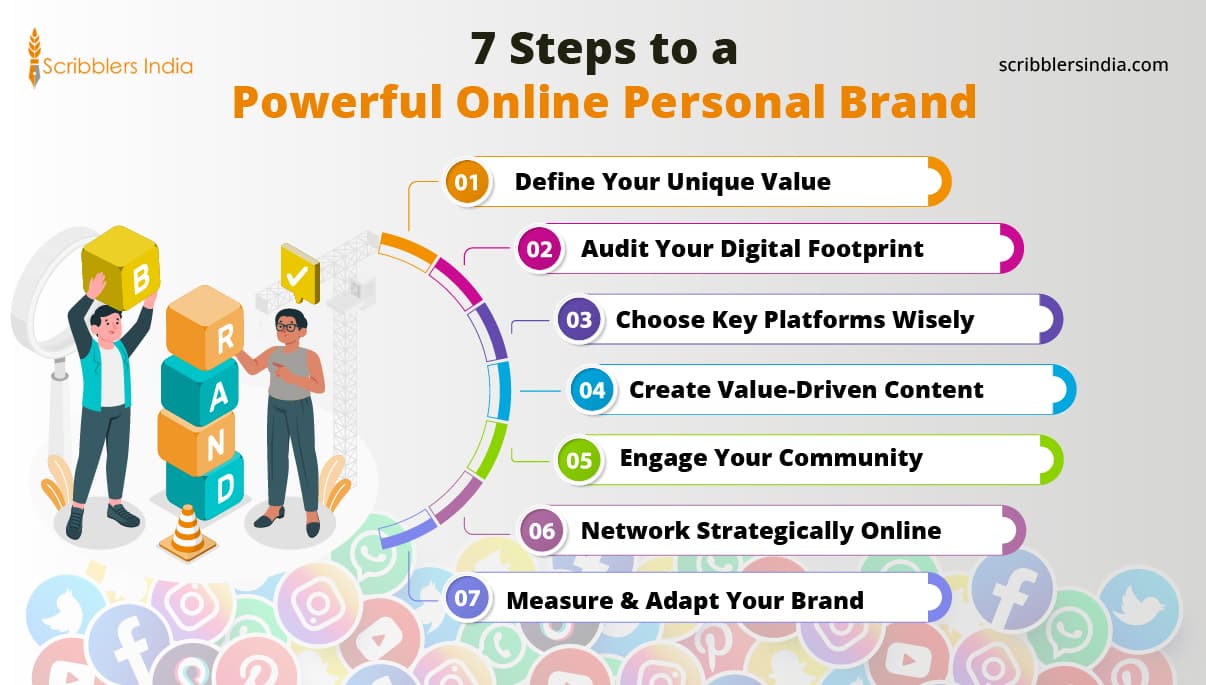
How to Build a Strong Personal Brand Online: A Comprehensive Guide
Did you know that 82% of people are more likely to trust a company when its senior executives have a strong personal brand online? This powerful connection between leadership presence and trust highlights the importance of knowing how to build personal brand online. Your personal brand is the unique combination of skills, experiences, and personality traits that you want the world to see. In the digital era, building your personal brand online has become essential for career advancement and professional growth. This guide will walk you through the essential steps on how to build personal brand online, from foundational planning to advanced strategies. This will help you craft an impactful online personal branding strategy that opens doors to new opportunities. What Is a Personal Brand and Why Does It Matter? A personal brand is the intentional representation of your professional identity, values, and expertise across digital channels. It goes beyond a simple social media presence to encompass your overall reputation and the perception others have of you in professional contexts. The concept of how to build a personal brand online has evolved dramatically in the digital age. What once required media connections or industry fame now simply needs strategic online presence. In fact, research indicates that 77% of consumers are more likely to engage with a business when the company leaders are active on social media. Strong online brands deliver tangible results: Professionals with optimized LinkedIn profiles are 40% more likely to receive opportunities through the platform 86% of consumers say authenticity is important when deciding which brands to support Consider figures like Gary Vaynerchuk, Brené Brown, or Mark Cuban. Each has distinct personal branding strategies that amplify their expertise. Without actively managing your online presence, you risk others defining your narrative or, worse, becoming professionally invisible. How to Prepare Before Building Your Online Personal Brand? Beginning your personal brand building journey requires establishing solid foundations before creating content for expanding your reach. Your first step toward understanding how to build personal brand online, is conducting a comprehensive personal brand audit. Search your name online, review your social profiles through an objective lens, and identify content that doesn’t align with your desired brand image. Identifying Your Unique Value Proposition Determine what makes you distinctive in your field. This could be specialized knowledge, unique experiences, or a particular approach to solving industry problems that others don’t offer. Defining Your Target Audience Clarity about whom you’re trying to reach is crucial. Research demographics, professional backgrounds, and online behaviors of your ideal audience to tailor your messaging effectively. Setting Clear Branding Goals Establish specific, measurable objectives for your personal brand. Whether it’s generating speaking opportunities, attracting clients, or positioning for advancement, these goals will guide your strategy. Creating Your Personal Brand Statement Develop a concise statement (1-2 sentences) that articulates who you are professionally, whom you serve, and the unique value you provide. This statement will guide all your online activities. What Are the Steps to Build Your Personal Brand Online? Building your personal brand online requires a systematic approach that moves from planning to execution to optimization. Follow these seven essential steps to create a strong professional presence that resonates with your target audience. Define Your Brand Purpose and Positioning Clarify your professional “why” and identify where you fit within your industry landscape. Your positioning should highlight your unique strengths while addressing specific audience needs. Audit and Clean Up Your Current Online Presence Search your name online and review all social profiles critically. Remove or update outdated content and ensure privacy settings align with your personal branding strategy. Optimize Your Primary Digital Platforms Select 2-3 key platforms based on your audience research. Create comprehensive profiles with professional photos, compelling bios, and consistent visual elements across all channels. Develop Your Content Strategy Create a strategy around what content types will showcase your expertise best. Create a sustainable publishing schedule that balances quality with consistency to build audience expectations. Build Strategic Professional Networks Connect intentionally with peers, industry leaders, and target audience members. Focus on quality over quantity, establishing meaningful relationships rather than collecting connections. Monitor and Manage Your Online Reputation Set up alerts to track mentions of your name and respond promptly to feedback. Address negative comments professionally and amplify positive feedback to strengthen your brand perception. Measure Results and Refine Your Approach Track engagement metrics, audience growth, and professional opportunities generated. Use data insights to adjust your strategy, doubling down on what works and revising what doesn’t. When learning how to build a personal brand online, following a proven framework increases your chances of success. These steps provide a roadmap that professionals across industries can adapt to their specific needs and goals. What Are the Core Elements of a Strong Online Personal Brand Strategy? A successful online personal branding strategy combines several essential elements that work together to create a cohesive professional identity. The foundation of your strategy for how to build personal brand online begins with your brand voice, the distinctive tone and style that reflects your personality while maintaining professionalism. This voice should remain consistent whether you are writing blog posts or responding to comments. Here are the core elements of a robust online personal branding strategy: Visual Branding Elements: Select consistent colors, typography, and imagery that reflect your personal brand attributes. Research shows people remember visual elements 65% more effectively than text alone. Content Pillars: Identify 3-5 core topics that showcase your expertise and align with audience interests. These content pillars will guide your content creation and establish topical authority in your field. Cross-Platform Consistency: Maintain cohesive messaging across platforms while adapting to each platform’s unique strengths. Your LinkedIn profile should connect thematically with your Twitter presence, even with different content formats. Authenticity vs. Curation: Finding the balance between showing your authentic self and maintaining professional standards is crucial. According to Stackla, 86% of consumers say authenticity is important when deciding which brands to support. Which Online Platforms Should You Use to Build Your Personal Brand? Platform
Did you know that 82% of people are more likely to trust a company when its senior executives have a strong personal brand online? This powerful connection between leadership presence and trust highlights the importance of knowing how to build personal brand online. Your personal brand is the unique combination of skills, experiences, and personality traits that you want the world to see. In the digital era, building your personal brand online has become essential for career advancement and professional growth. This guide will walk you through the essential steps on how to build personal brand online, from foundational planning to advanced strategies. This will help you craft an impactful online personal branding strategy that opens doors to new opportunities. What Is a Personal Brand and Why Does It Matter? A personal brand is the intentional representation of your professional identity, values, and expertise across digital channels. It goes beyond a simple social media presence to encompass your overall reputation and the perception others have of you in professional contexts. The concept of how to build a personal brand online has evolved dramatically in the digital age. What once required media connections or industry fame now simply needs strategic online presence. In fact, research indicates that 77% of consumers are more likely to engage with a business when the company leaders are active on social media. Strong online brands deliver tangible results: Professionals with optimized LinkedIn profiles are 40% more likely to receive opportunities through the platform 86% of consumers say authenticity is important when deciding which brands to support Consider figures like Gary Vaynerchuk, Brené Brown, or Mark Cuban. Each has distinct personal branding strategies that amplify their expertise. Without actively managing your online presence, you risk others defining your narrative or, worse, becoming professionally invisible. How to Prepare Before Building Your Online Personal Brand? Beginning your personal brand building journey requires establishing solid foundations before creating content for expanding your reach. Your first step toward understanding how to build personal brand online, is conducting a comprehensive personal brand audit. Search your name online, review your social profiles through an objective lens, and identify content that doesn’t align with your desired brand image. Identifying Your Unique Value Proposition Determine what makes you distinctive in your field. This could be specialized knowledge, unique experiences, or a particular approach to solving industry problems that others don’t offer. Defining Your Target Audience Clarity about whom you’re trying to reach is crucial. Research demographics, professional backgrounds, and online behaviors of your ideal audience to tailor your messaging effectively. Setting Clear Branding Goals Establish specific, measurable objectives for your personal brand. Whether it’s generating speaking opportunities, attracting clients, or positioning for advancement, these goals will guide your strategy. Creating Your Personal Brand Statement Develop a concise statement (1-2 sentences) that articulates who you are professionally, whom you serve, and the unique value you provide. This statement will guide all your online activities. What Are the Steps to Build Your Personal Brand Online? Building your personal brand online requires a systematic approach that moves from planning to execution to optimization. Follow these seven essential steps to create a strong professional presence that resonates with your target audience. Define Your Brand Purpose and Positioning Clarify your professional “why” and identify where you fit within your industry landscape. Your positioning should highlight your unique strengths while addressing specific audience needs. Audit and Clean Up Your Current Online Presence Search your name online and review all social profiles critically. Remove or update outdated content and ensure privacy settings align with your personal branding strategy. Optimize Your Primary Digital Platforms Select 2-3 key platforms based on your audience research. Create comprehensive profiles with professional photos, compelling bios, and consistent visual elements across all channels. Develop Your Content Strategy Create a strategy around what content types will showcase your expertise best. Create a sustainable publishing schedule that balances quality with consistency to build audience expectations. Build Strategic Professional Networks Connect intentionally with peers, industry leaders, and target audience members. Focus on quality over quantity, establishing meaningful relationships rather than collecting connections. Monitor and Manage Your Online Reputation Set up alerts to track mentions of your name and respond promptly to feedback. Address negative comments professionally and amplify positive feedback to strengthen your brand perception. Measure Results and Refine Your Approach Track engagement metrics, audience growth, and professional opportunities generated. Use data insights to adjust your strategy, doubling down on what works and revising what doesn’t. When learning how to build a personal brand online, following a proven framework increases your chances of success. These steps provide a roadmap that professionals across industries can adapt to their specific needs and goals. What Are the Core Elements of a Strong Online Personal Brand Strategy? A successful online personal branding strategy combines several essential elements that work together to create a cohesive professional identity. The foundation of your strategy for how to build personal brand online begins with your brand voice, the distinctive tone and style that reflects your personality while maintaining professionalism. This voice should remain consistent whether you are writing blog posts or responding to comments. Here are the core elements of a robust online personal branding strategy: Visual Branding Elements: Select consistent colors, typography, and imagery that reflect your personal brand attributes. Research shows people remember visual elements 65% more effectively than text alone. Content Pillars: Identify 3-5 core topics that showcase your expertise and align with audience interests. These content pillars will guide your content creation and establish topical authority in your field. Cross-Platform Consistency: Maintain cohesive messaging across platforms while adapting to each platform’s unique strengths. Your LinkedIn profile should connect thematically with your Twitter presence, even with different content formats. Authenticity vs. Curation: Finding the balance between showing your authentic self and maintaining professional standards is crucial. According to Stackla, 86% of consumers say authenticity is important when deciding which brands to support. Which Online Platforms Should You Use to Build Your Personal Brand? Platform
How to Create a B2B Social Media Strategy to Boost Brand Visibility?
A strong B2B social media strategy is essential for businesses seeking to expand their reach and impact. In today’s competitive digital landscape, merely existing on social platforms isn’t enough. You need a focused approach to connect with decision-makers, build credibility, and generate leads. This guide will walk you through crafting an effective strategy. It covers everything from boosting B2B brand awareness on social media to measuring your Social Media ROI for B2B. It will help ensure that your social content marketing efforts translate into tangible business growth. What is B2B Social Media Marketing? B2B social media marketing is the strategic use of social platforms to build relationships, generate leads, and establish thought leadership among other businesses that could become your clients. Unlike B2C, it focuses on addressing complex business challenges and longer sales cycles. It also helps in cultivating professional connections that drive long-term partnerships. In today’s digital ecosystem, B2B companies leverage platforms like LinkedIn, Twitter, and industry-specific forums to showcase expertise. They also share valuable insights and nurture potential clients through educational content. The approach prioritizes relationship-building over direct selling, recognizing that B2B purchase decisions typically involve multiple stakeholders and extensive research phases. A successful B2B social media strategy requires a deep understanding of industry pain points. Consistent delivery of solution-oriented content and strategic engagement with decision-makers is also crucial. When executed effectively, it transforms social platforms from mere communication channels into powerful business development tools that accelerate your company’s growth. What are the Benefits of a B2B Social Media Strategy? A well-crafted social media strategy provides a structured approach to achieve measurable business objectives. It ensures consistent brand messaging across all platforms. Moreover, it eliminates guesswork and transforms social media from a time-consuming task into a strategic business asset. Increased Brand Awareness A strategic approach ensures your content reaches the right audience consistently. Hence, it makes your brand recognizable among decision-makers in your target industries. It also establishes you as a familiar presence in their professional networks. Enhanced Thought Leadership Planned content calendars enable you to consistently share industry insights, original research, and expert perspectives that position your company as an authority in your field. They also help in earning trust before prospects even enter your sales funnel. Lead Generation Opportunities Strategic content distribution creates multiple touchpoints with potential clients. It gradually nurtures them from initial awareness to consideration through valuable content that addresses their specific business challenges and pain points. Competitive Advantage A documented strategy allows you to analyze competitor approaches, identify gaps in the market, and develop unique positioning that differentiates your brand in crowded digital spaces where B2B brand awareness matters most. Measurable ROI Unlike ad-hoc posting, a comprehensive social media strategy establishes clear KPIs aligned with business objectives. This alignment allows you to track performance and optimize tactics clearly. It also helps you demonstrate tangible returns on your social media investment. What are the Core Fundamentals of B2B Social Strategy? Creating an effective B2B social media strategy requires understanding key principles that drive meaningful business relationships and conversions in the professional landscape. 1. Align Your Goals to the Business Your social media objectives should directly support broader business goals like lead generation, market expansion, or customer retention. Map each campaign to specific business outcomes and establish relevant KPIs for each platform. Also, create reporting frameworks that demonstrate how social efforts contribute to company growth and revenue targets. 2. Adopt a Customer-Centric B2B Social Strategy Center your approach around solving customer problems rather than promoting products. Research the challenges facing your target companies, develop content that addresses these pain points specifically, and frame your expertise in terms of tangible business outcomes that matter to decision-makers within those organizations. 3. Prioritize Authenticity Modern B2B buyers value genuine relationships over polished marketing. Share behind-the-scenes content showing your company culture, and spotlight real team members who drive your solutions. Also, communicate transparently about industry challenges. Authenticity builds trust with potential clients who seek reliable partners, not just vendors. 4. Leverage Employee Advocacy Transform your workforce into powerful brand ambassadors across their professional networks. Develop clear guidelines and content libraries employees can easily share. Furthermore, recognize and reward active participation. Finally, provide training on effective professional social engagement that extends your brand reach organically through trusted individual connections. 5. Use Analytics Base strategy refinements on data, not assumptions. Track platform-specific metrics that align with business objectives, analyze content performance patterns to identify what resonates with your audience, and implement regular review cycles to adjust tactics based on engagement insights that drive continuous improvement. Beyond these strategies, you can also consider leveraging personal branding services for executives and key team members. This strategy would help position your leadership team as industry thought leaders, enhancing company credibility and expanding reach through professional profile optimization, content development, and strategic engagement methods. What are the Differences Between B2C vs B2B Social Media Marketing? While both B2B and B2C leverage social platforms to connect with audiences, they differ fundamentally in approach, content, and objectives based on their distinct customer journeys. Decision-Making Process B2B purchases involve multiple stakeholders and longer consideration cycles, requiring content that addresses complex business challenges with substantive information. On the other hand, B2C decisions are typically made by individuals based on emotional triggers. Therefore, B2C needs attention-grabbing, lifestyle-focused content that drives quick conversion actions. Platform Prioritization B2B strategies concentrate resources on professional networks like LinkedIn, where over 89% of B2B managers generate leads, creating industry-specific content for decision-makers. B2C approaches prioritize visually-driven platforms like Instagram and TikTok where consumer attention is highest, developing trend-responsive content that drives immediate engagement. Content Depth and Tone B2B content delivers in-depth industry insights, research findings, and solution frameworks using professional language that demonstrates expertise. B2C content creates emotional connections through entertaining, concise messaging with casual language that emphasizes lifestyle benefits and immediate gratification. Relationship Timeline B2B social strategies nurture relationships over months or years, gradually building trust through consistent value-adding content before conversion. B2C approaches focus on capturing immediate attention and driving quick purchase
A strong B2B social media strategy is essential for businesses seeking to expand their reach and impact. In today’s competitive digital landscape, merely existing on social platforms isn’t enough. You need a focused approach to connect with decision-makers, build credibility, and generate leads. This guide will walk you through crafting an effective strategy. It covers everything from boosting B2B brand awareness on social media to measuring your Social Media ROI for B2B. It will help ensure that your social content marketing efforts translate into tangible business growth. What is B2B Social Media Marketing? B2B social media marketing is the strategic use of social platforms to build relationships, generate leads, and establish thought leadership among other businesses that could become your clients. Unlike B2C, it focuses on addressing complex business challenges and longer sales cycles. It also helps in cultivating professional connections that drive long-term partnerships. In today’s digital ecosystem, B2B companies leverage platforms like LinkedIn, Twitter, and industry-specific forums to showcase expertise. They also share valuable insights and nurture potential clients through educational content. The approach prioritizes relationship-building over direct selling, recognizing that B2B purchase decisions typically involve multiple stakeholders and extensive research phases. A successful B2B social media strategy requires a deep understanding of industry pain points. Consistent delivery of solution-oriented content and strategic engagement with decision-makers is also crucial. When executed effectively, it transforms social platforms from mere communication channels into powerful business development tools that accelerate your company’s growth. What are the Benefits of a B2B Social Media Strategy? A well-crafted social media strategy provides a structured approach to achieve measurable business objectives. It ensures consistent brand messaging across all platforms. Moreover, it eliminates guesswork and transforms social media from a time-consuming task into a strategic business asset. Increased Brand Awareness A strategic approach ensures your content reaches the right audience consistently. Hence, it makes your brand recognizable among decision-makers in your target industries. It also establishes you as a familiar presence in their professional networks. Enhanced Thought Leadership Planned content calendars enable you to consistently share industry insights, original research, and expert perspectives that position your company as an authority in your field. They also help in earning trust before prospects even enter your sales funnel. Lead Generation Opportunities Strategic content distribution creates multiple touchpoints with potential clients. It gradually nurtures them from initial awareness to consideration through valuable content that addresses their specific business challenges and pain points. Competitive Advantage A documented strategy allows you to analyze competitor approaches, identify gaps in the market, and develop unique positioning that differentiates your brand in crowded digital spaces where B2B brand awareness matters most. Measurable ROI Unlike ad-hoc posting, a comprehensive social media strategy establishes clear KPIs aligned with business objectives. This alignment allows you to track performance and optimize tactics clearly. It also helps you demonstrate tangible returns on your social media investment. What are the Core Fundamentals of B2B Social Strategy? Creating an effective B2B social media strategy requires understanding key principles that drive meaningful business relationships and conversions in the professional landscape. 1. Align Your Goals to the Business Your social media objectives should directly support broader business goals like lead generation, market expansion, or customer retention. Map each campaign to specific business outcomes and establish relevant KPIs for each platform. Also, create reporting frameworks that demonstrate how social efforts contribute to company growth and revenue targets. 2. Adopt a Customer-Centric B2B Social Strategy Center your approach around solving customer problems rather than promoting products. Research the challenges facing your target companies, develop content that addresses these pain points specifically, and frame your expertise in terms of tangible business outcomes that matter to decision-makers within those organizations. 3. Prioritize Authenticity Modern B2B buyers value genuine relationships over polished marketing. Share behind-the-scenes content showing your company culture, and spotlight real team members who drive your solutions. Also, communicate transparently about industry challenges. Authenticity builds trust with potential clients who seek reliable partners, not just vendors. 4. Leverage Employee Advocacy Transform your workforce into powerful brand ambassadors across their professional networks. Develop clear guidelines and content libraries employees can easily share. Furthermore, recognize and reward active participation. Finally, provide training on effective professional social engagement that extends your brand reach organically through trusted individual connections. 5. Use Analytics Base strategy refinements on data, not assumptions. Track platform-specific metrics that align with business objectives, analyze content performance patterns to identify what resonates with your audience, and implement regular review cycles to adjust tactics based on engagement insights that drive continuous improvement. Beyond these strategies, you can also consider leveraging personal branding services for executives and key team members. This strategy would help position your leadership team as industry thought leaders, enhancing company credibility and expanding reach through professional profile optimization, content development, and strategic engagement methods. What are the Differences Between B2C vs B2B Social Media Marketing? While both B2B and B2C leverage social platforms to connect with audiences, they differ fundamentally in approach, content, and objectives based on their distinct customer journeys. Decision-Making Process B2B purchases involve multiple stakeholders and longer consideration cycles, requiring content that addresses complex business challenges with substantive information. On the other hand, B2C decisions are typically made by individuals based on emotional triggers. Therefore, B2C needs attention-grabbing, lifestyle-focused content that drives quick conversion actions. Platform Prioritization B2B strategies concentrate resources on professional networks like LinkedIn, where over 89% of B2B managers generate leads, creating industry-specific content for decision-makers. B2C approaches prioritize visually-driven platforms like Instagram and TikTok where consumer attention is highest, developing trend-responsive content that drives immediate engagement. Content Depth and Tone B2B content delivers in-depth industry insights, research findings, and solution frameworks using professional language that demonstrates expertise. B2C content creates emotional connections through entertaining, concise messaging with casual language that emphasizes lifestyle benefits and immediate gratification. Relationship Timeline B2B social strategies nurture relationships over months or years, gradually building trust through consistent value-adding content before conversion. B2C approaches focus on capturing immediate attention and driving quick purchase
TAGS
Ready to Elevate Your Digital Presence?
Partner with Scribblers India to craft compelling stories and data-driven strategies that drive real growth for your brand.
Start Your Project