
Personal Branding Posts
How Do Leaders Build a Personal Brand People Actually Trust?
Before a hiring decision, funding conversation, partnership request or sales call begins, people usually search online first. They check your LinkedIn profile, published articles, website bio, public opinions and search results. That is why you need a personal branding strategy that builds trust before the first conversation. A 2025 Aurora University study found that 50% of American professionals believe a strong personal brand matters more than a strong resume. The number rises to 61% among business executives. For founders, this shift matters because reputation now influences buyers, investors, talent and partners before direct interaction. This guide explains how to build a personal branding strategy in 2026 using positioning, LinkedIn, thought leadership, ghostwriting, AI search visibility and owned audience systems. If you need support turning your expertise into a structured visibility engine, Scribblers India’s personal branding services can help you build the foundation. TL;DR Start with positioning before publishing any content. Founder authority now affects AI search visibility. LinkedIn works best with focused content pillars. AI should support, not replace, original thinking. Thought leadership assets build durable authority. Owned audiences reduce social platform dependence. Metrics should track trust and business outcomes. Scribblers India builds strategy-led branding systems. Why You Need a Comprehensive Personal Branding Strategy in 2026? A comprehensive personal branding strategy in 2026 can help you become known, trusted, and discoverable across search, LinkedIn, AI platforms, and professional networks. It integrates your positioning, proof, publishing rhythm, audience ownership, and measurement into a single system, so your expertise builds trust before the first conversation begins. You cannot build a strong personal brand by posting randomly when time permits. You need to define what you want to be known for, who should remember you, and which content assets will continue to build authority when you are not actively online. If you are starting out without an audience, you can also read our guide to building a personal brand with zero followers. It explains how early authority can begin with positioning, profile clarity, and searchable content before audience size grows. A useful personal branding strategy should answer five questions before content creation begins. Strategic Question Why It Matters What should you be known for? It creates category recall around your expertise. Who should trust you? It keeps your content focused on the right audience. What proof supports your authority? It makes your expertise believable and specific. Where should you publish? It prevents platform overload and scattered visibility. What action should readers take? It connects visibility with business outcomes. Why Does Personal Branding Matter for AI Search Visibility? Personal branding matters for AI search visibility because AI systems increasingly summarize people, companies and service providers from multiple sources. If your positioning, author profiles, LinkedIn presence, and website content are consistent, you give AI systems stronger signals to understand and accurately describe your expertise. Your personal brand is no longer limited to social reach. Your name, company profile, website bio, service pages, articles, reports, guest posts and third-party mentions can influence how you appear across Google AI Overviews, ChatGPT, Perplexity, Gemini and other discovery surfaces. Google reported in 2026 that AI Overviews reached 2 billion monthly users across 200 countries and territories. OpenAI reported in 2026 that ChatGPT had 700 million weekly active users during its usage study. HubSpot reported in 2026 that nearly 24% of marketers are exploring SEO updates for generative AI search. A 2026 empirical study found that Google Search, Gemini and AI Overviews retrieve substantially different source sets. Scribblers India Takeaway: You should not treat personal branding as a LinkedIn-only activity. You need a connected authority footprint across your website, founder profile, long-form content, social presence and third-party mentions so humans and AI systems can understand your expertise consistently. Our GEO strategy guide can help you evaluate those gaps more clearly. What Are the Core Elements of a Founder Personal Brand? Your founder personal brand needs clear positioning, credible proof, focused content pillars, platform consistency and measurable business outcomes. Without these elements, your content becomes activity rather than strategy. The goal is to connect your expertise with the exact audience, problem and category you want to own. Here is what the Scribblers India founder authority framework looks like: Pillar What It Covers Why It Matters Positioning What you should be known for Creates recall and category association Proof Experience, stories, results and examples Makes expertise believable and specific Publishing LinkedIn, blogs, newsletters and videos Builds consistent visibility across platforms Search Visibility SEO, AEO, GEO and AI discoverability Helps AI systems understand your authority Owned Audience Newsletter, website and lead magnets Reduces dependence on rented platforms Measurement Profile visits, leads, mentions and branded search Shows whether authority is converting This framework keeps your personal branding strategy focused on business value. It prevents you from copying creators, chasing short-lived trends or publishing disconnected content that earns attention but does not build trust, recall or demand. Positioning: Define Your Authority Territory Your positioning should explain the exact area where your experience, audience need and market opportunity overlap. If you write about “business growth,” you blend into the crowd. If you write about “AI search visibility for B2B service firms,” you become easier to remember and recommend. Proof: Make Your Expertise Believable Your proof does not always need dramatic numbers. It can include client patterns, anonymized examples, lessons from execution, founder stories, frameworks, research notes and practical decision guides. The goal is to show how you think and why your perspective deserves attention. Consistency: Align Every Public Signal Your LinkedIn headline, About section, website bio, author profile, podcast introduction and guest article bio should reinforce the same authority territory. Readers and AI systems both need repeated signals before they associate your name with a specific area of expertise. How Should You Use LinkedIn for Personal Branding? You should use LinkedIn as a trust-building and demand-shaping channel, not only as a posting platform. A strong LinkedIn personal branding strategy connects your profile positioning, content pillars, founder opinions, comments,
Before a hiring decision, funding conversation, partnership request or sales call begins, people usually search online first. They check your LinkedIn profile, published articles, website bio, public opinions and search results. That is why you need a personal branding strategy that builds trust before the first conversation. A 2025 Aurora University study found that 50% of American professionals believe a strong personal brand matters more than a strong resume. The number rises to 61% among business executives. For founders, this shift matters because reputation now influences buyers, investors, talent and partners before direct interaction. This guide explains how to build a personal branding strategy in 2026 using positioning, LinkedIn, thought leadership, ghostwriting, AI search visibility and owned audience systems. If you need support turning your expertise into a structured visibility engine, Scribblers India’s personal branding services can help you build the foundation. TL;DR Start with positioning before publishing any content. Founder authority now affects AI search visibility. LinkedIn works best with focused content pillars. AI should support, not replace, original thinking. Thought leadership assets build durable authority. Owned audiences reduce social platform dependence. Metrics should track trust and business outcomes. Scribblers India builds strategy-led branding systems. Why You Need a Comprehensive Personal Branding Strategy in 2026? A comprehensive personal branding strategy in 2026 can help you become known, trusted, and discoverable across search, LinkedIn, AI platforms, and professional networks. It integrates your positioning, proof, publishing rhythm, audience ownership, and measurement into a single system, so your expertise builds trust before the first conversation begins. You cannot build a strong personal brand by posting randomly when time permits. You need to define what you want to be known for, who should remember you, and which content assets will continue to build authority when you are not actively online. If you are starting out without an audience, you can also read our guide to building a personal brand with zero followers. It explains how early authority can begin with positioning, profile clarity, and searchable content before audience size grows. A useful personal branding strategy should answer five questions before content creation begins. Strategic Question Why It Matters What should you be known for? It creates category recall around your expertise. Who should trust you? It keeps your content focused on the right audience. What proof supports your authority? It makes your expertise believable and specific. Where should you publish? It prevents platform overload and scattered visibility. What action should readers take? It connects visibility with business outcomes. Why Does Personal Branding Matter for AI Search Visibility? Personal branding matters for AI search visibility because AI systems increasingly summarize people, companies and service providers from multiple sources. If your positioning, author profiles, LinkedIn presence, and website content are consistent, you give AI systems stronger signals to understand and accurately describe your expertise. Your personal brand is no longer limited to social reach. Your name, company profile, website bio, service pages, articles, reports, guest posts and third-party mentions can influence how you appear across Google AI Overviews, ChatGPT, Perplexity, Gemini and other discovery surfaces. Google reported in 2026 that AI Overviews reached 2 billion monthly users across 200 countries and territories. OpenAI reported in 2026 that ChatGPT had 700 million weekly active users during its usage study. HubSpot reported in 2026 that nearly 24% of marketers are exploring SEO updates for generative AI search. A 2026 empirical study found that Google Search, Gemini and AI Overviews retrieve substantially different source sets. Scribblers India Takeaway: You should not treat personal branding as a LinkedIn-only activity. You need a connected authority footprint across your website, founder profile, long-form content, social presence and third-party mentions so humans and AI systems can understand your expertise consistently. Our GEO strategy guide can help you evaluate those gaps more clearly. What Are the Core Elements of a Founder Personal Brand? Your founder personal brand needs clear positioning, credible proof, focused content pillars, platform consistency and measurable business outcomes. Without these elements, your content becomes activity rather than strategy. The goal is to connect your expertise with the exact audience, problem and category you want to own. Here is what the Scribblers India founder authority framework looks like: Pillar What It Covers Why It Matters Positioning What you should be known for Creates recall and category association Proof Experience, stories, results and examples Makes expertise believable and specific Publishing LinkedIn, blogs, newsletters and videos Builds consistent visibility across platforms Search Visibility SEO, AEO, GEO and AI discoverability Helps AI systems understand your authority Owned Audience Newsletter, website and lead magnets Reduces dependence on rented platforms Measurement Profile visits, leads, mentions and branded search Shows whether authority is converting This framework keeps your personal branding strategy focused on business value. It prevents you from copying creators, chasing short-lived trends or publishing disconnected content that earns attention but does not build trust, recall or demand. Positioning: Define Your Authority Territory Your positioning should explain the exact area where your experience, audience need and market opportunity overlap. If you write about “business growth,” you blend into the crowd. If you write about “AI search visibility for B2B service firms,” you become easier to remember and recommend. Proof: Make Your Expertise Believable Your proof does not always need dramatic numbers. It can include client patterns, anonymized examples, lessons from execution, founder stories, frameworks, research notes and practical decision guides. The goal is to show how you think and why your perspective deserves attention. Consistency: Align Every Public Signal Your LinkedIn headline, About section, website bio, author profile, podcast introduction and guest article bio should reinforce the same authority territory. Readers and AI systems both need repeated signals before they associate your name with a specific area of expertise. How Should You Use LinkedIn for Personal Branding? You should use LinkedIn as a trust-building and demand-shaping channel, not only as a posting platform. A strong LinkedIn personal branding strategy connects your profile positioning, content pillars, founder opinions, comments,
How Does a LinkedIn Ghostwriting Agency Help You Build Thought Leadership?
You likely face the “content paradox” daily. You need to be active on LinkedIn to influence the market, yet you are too busy running your business to write about it. The result is silence. Inconsistency kills credibility faster than bad content. A dormant profile implies a dormant business. When investors or clients search for you and find a profile that hasn’t posted in six months, they assume you are out of touch. This is where a LinkedIn ghostwriting agency becomes a strategic asset rather than a luxury. It is about cloning your expertise rather than faking your voice. You remain the architect of the ideas while the agency handles the construction. In this guide, you will learn how to turn your raw insights into a scalable content engine. You will discover how to drive revenue, attract top talent, and build unshakeable trust without typing a single word yourself. What Does a LinkedIn Ghostwriting Agency Actually Do? A LinkedIn ghostwriting agency provides a comprehensive service that includes strategic audience analysis, narrative building, and asset creation. They interview you to extract unique insights and transform them into engaging posts, newsletters, and carousels while managing the initial engagement to trigger the algorithm effectively. Clarify that this is not about writing captions. It involves deep strategy, audience analysis, and narrative building. You are hiring a strategic partner who understands platform dynamics. Strategic Narrative: They build a long-term content arc that positions you as an expert rather than just posting random thoughts daily. This ensures that every piece of content effectively reinforces your core message and business goals. Audience Analysis: An experienced ghostwriting agency researches exactly who your ideal client is and what problems keep them up at night. This allows us to tailor your message so it resonates deeply and drives high-quality engagement. Profile Optimization: They overhaul your bio, headline, and about section to immediately convert visitors into followers. Your profile becomes a high-converting landing page that clearly communicates your value proposition to prospects. Visual Identity: An experienced agency like Scribblers India creates a consistent visual style for your carousels and images, making your brand instantly recognizable in the feed. This professional aesthetic builds trust and stops the scroll in a crowded timeline. The Information Extraction Process Agencies extract “gold” from a 30-minute call with a founder. You provide the raw ore, and the agency refines it into a polished diamond. Here is how a LinkedIn ghostwriting agency gets all the information necessary to build your thought leadership: The Discovery Call: They conduct a focused interview, asking probing questions to uncover your unique stories and contrarian viewpoints. This session extracts the raw material needed to fuel a month of high-quality content. Voice Mapping: The agency records your speech patterns to ensure the written content sounds exactly like you rather than a generic corporate bot. This preserves your authenticity and ensures the audience connects with your true personality. Insight Mining: Their team digs into your past experiences to uncover specific micro-stories that illustrate broader business lessons. These personal anecdotes distinguish your content from generic advice and build a deeper connection with readers. Approval Loop: You review a batch of posts once a week to ensure you maintain full control over what goes live. This efficient process saves you time while guaranteeing that every post aligns with your vision. Create Multiple Content Assets for LinkedIn A full-service LinkedIn ghostwriting agency creates a mix of formats to keep the audience engaged. Text Posts: They write short, punchy updates that spark debate and share quick insights to keep your profile active daily. These text-only posts are favored by the algorithm for their ability to start conversations. Carousel Decks: The agency design visually engaging slide decks that break down complex frameworks into digestible lessons for high save rates. Carousels are excellent for educating your audience and demonstrating deep subject matter expertise visually. Newsletters: A LinkedIn ghostwriting agency drafts deep-dive articles that establish substantive authority and nurture your most loyal followers over time. Newsletters allow you to explore complex topics in detail and own your audience outside the feed. Why Is Thought Leadership Critical for B2B Growth in 2026? In the “Trust Economy,” people buy from people rather than faceless logos. Thought leadership strategy for CEOs is critical because personal profiles often see 10x the reach of company pages. Consistently sharing knowledge shortens sales cycles by addressing objections up front and serves as a recruitment magnet for top talent. Buyers want to know the person behind the brand before they trust the company with their money. A strong LinkedIn ghostwriting agency helps you leverage this personal connection to drive business results. Many deals start because a CEO saw your post, even if they never clicked a link. Human Connection: Your personal stories make the corporate entity feel approachable and aligned with the customer’s values. Humans connect with humans, so seeing the face behind the logo builds immediate rapport and trust. Reach Multiplier: LinkedIn’s algorithm inherently suppresses company page posts while significantly boosting personal profile content. Leveraging your personal profile ensures your message reaches a much wider and more engaged audience than your brand page. Zero-Click Attribution: Many high-value deals originate simply because a decision-maker consistently sees your valuable content in their feed. They may never engage publicly, yet they reach out when they are ready to purchase. Why Thought Leadership Is a Magnet for Top Recruitment? Top talent wants to work for visionary leaders rather than just collecting a paycheck. Your content acts as your best job description. A strong personal branding strategy for founders automatically attracts A-players by showcasing your values, leadership style, and vision for your industry’s future. Cultural Signal: Your posts show prospective employees what you value and how you lead, which automatically filters for cultural fit. Candidates who align with your mission will be drawn to apply to your open roles. Passive Candidates: High performers are rarely actively looking for jobs, yet they follow inspiring leaders and will reach out when they
You likely face the “content paradox” daily. You need to be active on LinkedIn to influence the market, yet you are too busy running your business to write about it. The result is silence. Inconsistency kills credibility faster than bad content. A dormant profile implies a dormant business. When investors or clients search for you and find a profile that hasn’t posted in six months, they assume you are out of touch. This is where a LinkedIn ghostwriting agency becomes a strategic asset rather than a luxury. It is about cloning your expertise rather than faking your voice. You remain the architect of the ideas while the agency handles the construction. In this guide, you will learn how to turn your raw insights into a scalable content engine. You will discover how to drive revenue, attract top talent, and build unshakeable trust without typing a single word yourself. What Does a LinkedIn Ghostwriting Agency Actually Do? A LinkedIn ghostwriting agency provides a comprehensive service that includes strategic audience analysis, narrative building, and asset creation. They interview you to extract unique insights and transform them into engaging posts, newsletters, and carousels while managing the initial engagement to trigger the algorithm effectively. Clarify that this is not about writing captions. It involves deep strategy, audience analysis, and narrative building. You are hiring a strategic partner who understands platform dynamics. Strategic Narrative: They build a long-term content arc that positions you as an expert rather than just posting random thoughts daily. This ensures that every piece of content effectively reinforces your core message and business goals. Audience Analysis: An experienced ghostwriting agency researches exactly who your ideal client is and what problems keep them up at night. This allows us to tailor your message so it resonates deeply and drives high-quality engagement. Profile Optimization: They overhaul your bio, headline, and about section to immediately convert visitors into followers. Your profile becomes a high-converting landing page that clearly communicates your value proposition to prospects. Visual Identity: An experienced agency like Scribblers India creates a consistent visual style for your carousels and images, making your brand instantly recognizable in the feed. This professional aesthetic builds trust and stops the scroll in a crowded timeline. The Information Extraction Process Agencies extract “gold” from a 30-minute call with a founder. You provide the raw ore, and the agency refines it into a polished diamond. Here is how a LinkedIn ghostwriting agency gets all the information necessary to build your thought leadership: The Discovery Call: They conduct a focused interview, asking probing questions to uncover your unique stories and contrarian viewpoints. This session extracts the raw material needed to fuel a month of high-quality content. Voice Mapping: The agency records your speech patterns to ensure the written content sounds exactly like you rather than a generic corporate bot. This preserves your authenticity and ensures the audience connects with your true personality. Insight Mining: Their team digs into your past experiences to uncover specific micro-stories that illustrate broader business lessons. These personal anecdotes distinguish your content from generic advice and build a deeper connection with readers. Approval Loop: You review a batch of posts once a week to ensure you maintain full control over what goes live. This efficient process saves you time while guaranteeing that every post aligns with your vision. Create Multiple Content Assets for LinkedIn A full-service LinkedIn ghostwriting agency creates a mix of formats to keep the audience engaged. Text Posts: They write short, punchy updates that spark debate and share quick insights to keep your profile active daily. These text-only posts are favored by the algorithm for their ability to start conversations. Carousel Decks: The agency design visually engaging slide decks that break down complex frameworks into digestible lessons for high save rates. Carousels are excellent for educating your audience and demonstrating deep subject matter expertise visually. Newsletters: A LinkedIn ghostwriting agency drafts deep-dive articles that establish substantive authority and nurture your most loyal followers over time. Newsletters allow you to explore complex topics in detail and own your audience outside the feed. Why Is Thought Leadership Critical for B2B Growth in 2026? In the “Trust Economy,” people buy from people rather than faceless logos. Thought leadership strategy for CEOs is critical because personal profiles often see 10x the reach of company pages. Consistently sharing knowledge shortens sales cycles by addressing objections up front and serves as a recruitment magnet for top talent. Buyers want to know the person behind the brand before they trust the company with their money. A strong LinkedIn ghostwriting agency helps you leverage this personal connection to drive business results. Many deals start because a CEO saw your post, even if they never clicked a link. Human Connection: Your personal stories make the corporate entity feel approachable and aligned with the customer’s values. Humans connect with humans, so seeing the face behind the logo builds immediate rapport and trust. Reach Multiplier: LinkedIn’s algorithm inherently suppresses company page posts while significantly boosting personal profile content. Leveraging your personal profile ensures your message reaches a much wider and more engaged audience than your brand page. Zero-Click Attribution: Many high-value deals originate simply because a decision-maker consistently sees your valuable content in their feed. They may never engage publicly, yet they reach out when they are ready to purchase. Why Thought Leadership Is a Magnet for Top Recruitment? Top talent wants to work for visionary leaders rather than just collecting a paycheck. Your content acts as your best job description. A strong personal branding strategy for founders automatically attracts A-players by showcasing your values, leadership style, and vision for your industry’s future. Cultural Signal: Your posts show prospective employees what you value and how you lead, which automatically filters for cultural fit. Candidates who align with your mission will be drawn to apply to your open roles. Passive Candidates: High performers are rarely actively looking for jobs, yet they follow inspiring leaders and will reach out when they
How Personal Branding Turned a Quiet Profile Into a Discovery Engine
A study abroad consultant had a strong placement record and deep expertise in postgraduate applications. The challenge was visibility. This personal branding case study shows how our team at Scribblers India helped turn that expertise into a stronger discovery engine. The market made this harder. Generic agencies dominated the category with broad promises, free counseling offers, and attention-led messaging. Standing out required a clearer personal brand built around trust, specificity, and student-first guidance. Scribblers India built the personal branding strategy from the ground up. We created a positioning framework, platform-specific content system, and publishing engine designed for discovery. The client identity and performance details have been anonymized for confidentiality. What Challenges Did the Study Abroad Consultant Face? The consultant had strong experience, deep counseling insight, and proven student outcomes. Her online presence, however, did not clearly convey that authority. As a result, students rarely discovered her while comparing study abroad counselors. Students are no longer choosing advisors only for university names. They now compare career outcomes, ROI, job prospects, and practical guidance before making study abroad decisions. Students usually make this decision during a short, sensitive window. They research programs, compare costs, review outcomes, and choose one advisor. Trust shapes the conversation before pricing or process becomes important. The consultant needed content that felt like mentorship instead of marketing. It had to simplify decisions, reduce anxiety, and reach students beyond the existing follower base. The personal brand had to become a discovery channel for the right audience. Trust Gap: The consultant had strong advisory experience, yet the public profile did not show enough authority. Students needed practical guidance and proof of expertise before starting a serious conversation. Discovery Gap: The small existing audience limited organic reach. Instagram needed to attract new students with high study-abroad intent, rather than serving only current followers. Positioning Gap: The consultant needed a sharper voice that felt warm, direct, and informed. The brand had to sound like a trusted mentor, rather than another brochure-style advisory page. How Did Scribblers India Build the Personal Branding Strategy? Scribblers India treated this as a positioning challenge before a publishing challenge. We first defined who the consultant was on the page and how she should sound. This gave every post a clearer role. The voice needed to feel direct and warm. The consultant had to sound like a knowledgeable mentor who tells students what generic agencies avoid explaining. Specificity replaced broad motivational advice. We then mapped content to the study abroad calendar. Application deadlines, results season, and scholarship windows became active content pillars. This helped posts appear when students already had questions. Positioning Document: We defined the consultant’s core identity, unique angle, voice, and differentiation from volume-driven agencies. This gave the brand a strong strategic base before content production began. Voice Framework: The content used a direct, warm, and mentor-led tone. It focused on practical guidance, honest student advice, and clear decision support. Calendar-Led Content: We mapped themes to moments when student anxiety peaks. Deadlines, scholarship windows, and application decisions became timely content opportunities. Platform-Specific Goals: Instagram handled top-funnel discovery through reels. LinkedIn supported mid-funnel trust with advisory posts and a structured publishing cadence. Content Engine: We built multiple content series and a prompt bank for long-term publishing. This gave the consultant enough direction for months of consistent content. What Results Did the Personal Branding Campaign Achieve? This personal branding case study shows how a focused content system improved discovery, audience quality, and profile-level interest. The results below cover a single 30-day reporting window. Metric Result Account reach Grew by over 640% compared to the prior month Content views from non-followers Over 92% of all views Interactions from non-followers Nearly 80% of all interactions Follower growth Increased by nearly 27% with zero unfollows Profile visits Increased by over 135% Profile activity Rose by over 140% Reel share of views Nearly 90% of all content views Breakout reel Over 5,700% more plays than the previous five reels combined The discovery signal was clear. The content reached new prospective students rather than recycling visibility among existing followers. Audience geography confirmed that top engagement came from major metro cities in the consultant’s target market. What Made This Personal Branding Strategy Work? The strategy worked because it treated personal branding as a funnel, not a posting habit. Instagram created discovery, while LinkedIn supported considered decisions. Every content asset played a defined role within the larger system. Positioning Before Publishing: Our team first clarified the consultant’s identity, voice, and audience promise. This helped the content sound distinct and recognizable. Reel-Led Discovery: Instagram Reels served as the top-of-funnel discovery channel. Reels were a logical discovery format as they account for 46% of time spent on Instagram and are shared more than 4.5 billion times daily. Calendar-Led Relevance: Content themes followed the study abroad cycle. Scholarship windows, admissions anxiety, and results season shaped timely topics. Mentor-Led Voice: The consultant sounded direct, warm, and specific. This positioned the brand as a knowledgeable guide in a crowded advisory market. Funnel-Based Thinking: Instagram and LinkedIn had separate jobs. Instagram expanded reach, while LinkedIn personal branding supported serious inquiries What Other Professionals Can Learn From This Case Study? This personal branding case study shows that consultants do not need to act like influencers to build visibility. They need a clear voice, useful content, and a system that reaches the right audience. Personal branding for consultants works when expertise becomes easy to discover. Specificity builds more trust than broad advice. Consultants should share decision points, mistakes, timelines, and field-based observations. These details show experience without making the content sound sales-heavy. Channel clarity also matters. One platform can attract attention, while another supports serious inquiries. A strong system separates discovery from conversion and measures both with the right signals. How Can Scribblers India Help with Personal Branding Services? Scribblers India helps consultants and service professionals turn expertise into a clear personal brand. Our personal branding services combine positioning, content strategy, LinkedIn ghostwriting, and thought leadership content. We focus
A study abroad consultant had a strong placement record and deep expertise in postgraduate applications. The challenge was visibility. This personal branding case study shows how our team at Scribblers India helped turn that expertise into a stronger discovery engine. The market made this harder. Generic agencies dominated the category with broad promises, free counseling offers, and attention-led messaging. Standing out required a clearer personal brand built around trust, specificity, and student-first guidance. Scribblers India built the personal branding strategy from the ground up. We created a positioning framework, platform-specific content system, and publishing engine designed for discovery. The client identity and performance details have been anonymized for confidentiality. What Challenges Did the Study Abroad Consultant Face? The consultant had strong experience, deep counseling insight, and proven student outcomes. Her online presence, however, did not clearly convey that authority. As a result, students rarely discovered her while comparing study abroad counselors. Students are no longer choosing advisors only for university names. They now compare career outcomes, ROI, job prospects, and practical guidance before making study abroad decisions. Students usually make this decision during a short, sensitive window. They research programs, compare costs, review outcomes, and choose one advisor. Trust shapes the conversation before pricing or process becomes important. The consultant needed content that felt like mentorship instead of marketing. It had to simplify decisions, reduce anxiety, and reach students beyond the existing follower base. The personal brand had to become a discovery channel for the right audience. Trust Gap: The consultant had strong advisory experience, yet the public profile did not show enough authority. Students needed practical guidance and proof of expertise before starting a serious conversation. Discovery Gap: The small existing audience limited organic reach. Instagram needed to attract new students with high study-abroad intent, rather than serving only current followers. Positioning Gap: The consultant needed a sharper voice that felt warm, direct, and informed. The brand had to sound like a trusted mentor, rather than another brochure-style advisory page. How Did Scribblers India Build the Personal Branding Strategy? Scribblers India treated this as a positioning challenge before a publishing challenge. We first defined who the consultant was on the page and how she should sound. This gave every post a clearer role. The voice needed to feel direct and warm. The consultant had to sound like a knowledgeable mentor who tells students what generic agencies avoid explaining. Specificity replaced broad motivational advice. We then mapped content to the study abroad calendar. Application deadlines, results season, and scholarship windows became active content pillars. This helped posts appear when students already had questions. Positioning Document: We defined the consultant’s core identity, unique angle, voice, and differentiation from volume-driven agencies. This gave the brand a strong strategic base before content production began. Voice Framework: The content used a direct, warm, and mentor-led tone. It focused on practical guidance, honest student advice, and clear decision support. Calendar-Led Content: We mapped themes to moments when student anxiety peaks. Deadlines, scholarship windows, and application decisions became timely content opportunities. Platform-Specific Goals: Instagram handled top-funnel discovery through reels. LinkedIn supported mid-funnel trust with advisory posts and a structured publishing cadence. Content Engine: We built multiple content series and a prompt bank for long-term publishing. This gave the consultant enough direction for months of consistent content. What Results Did the Personal Branding Campaign Achieve? This personal branding case study shows how a focused content system improved discovery, audience quality, and profile-level interest. The results below cover a single 30-day reporting window. Metric Result Account reach Grew by over 640% compared to the prior month Content views from non-followers Over 92% of all views Interactions from non-followers Nearly 80% of all interactions Follower growth Increased by nearly 27% with zero unfollows Profile visits Increased by over 135% Profile activity Rose by over 140% Reel share of views Nearly 90% of all content views Breakout reel Over 5,700% more plays than the previous five reels combined The discovery signal was clear. The content reached new prospective students rather than recycling visibility among existing followers. Audience geography confirmed that top engagement came from major metro cities in the consultant’s target market. What Made This Personal Branding Strategy Work? The strategy worked because it treated personal branding as a funnel, not a posting habit. Instagram created discovery, while LinkedIn supported considered decisions. Every content asset played a defined role within the larger system. Positioning Before Publishing: Our team first clarified the consultant’s identity, voice, and audience promise. This helped the content sound distinct and recognizable. Reel-Led Discovery: Instagram Reels served as the top-of-funnel discovery channel. Reels were a logical discovery format as they account for 46% of time spent on Instagram and are shared more than 4.5 billion times daily. Calendar-Led Relevance: Content themes followed the study abroad cycle. Scholarship windows, admissions anxiety, and results season shaped timely topics. Mentor-Led Voice: The consultant sounded direct, warm, and specific. This positioned the brand as a knowledgeable guide in a crowded advisory market. Funnel-Based Thinking: Instagram and LinkedIn had separate jobs. Instagram expanded reach, while LinkedIn personal branding supported serious inquiries What Other Professionals Can Learn From This Case Study? This personal branding case study shows that consultants do not need to act like influencers to build visibility. They need a clear voice, useful content, and a system that reaches the right audience. Personal branding for consultants works when expertise becomes easy to discover. Specificity builds more trust than broad advice. Consultants should share decision points, mistakes, timelines, and field-based observations. These details show experience without making the content sound sales-heavy. Channel clarity also matters. One platform can attract attention, while another supports serious inquiries. A strong system separates discovery from conversion and measures both with the right signals. How Can Scribblers India Help with Personal Branding Services? Scribblers India helps consultants and service professionals turn expertise into a clear personal brand. Our personal branding services combine positioning, content strategy, LinkedIn ghostwriting, and thought leadership content. We focus
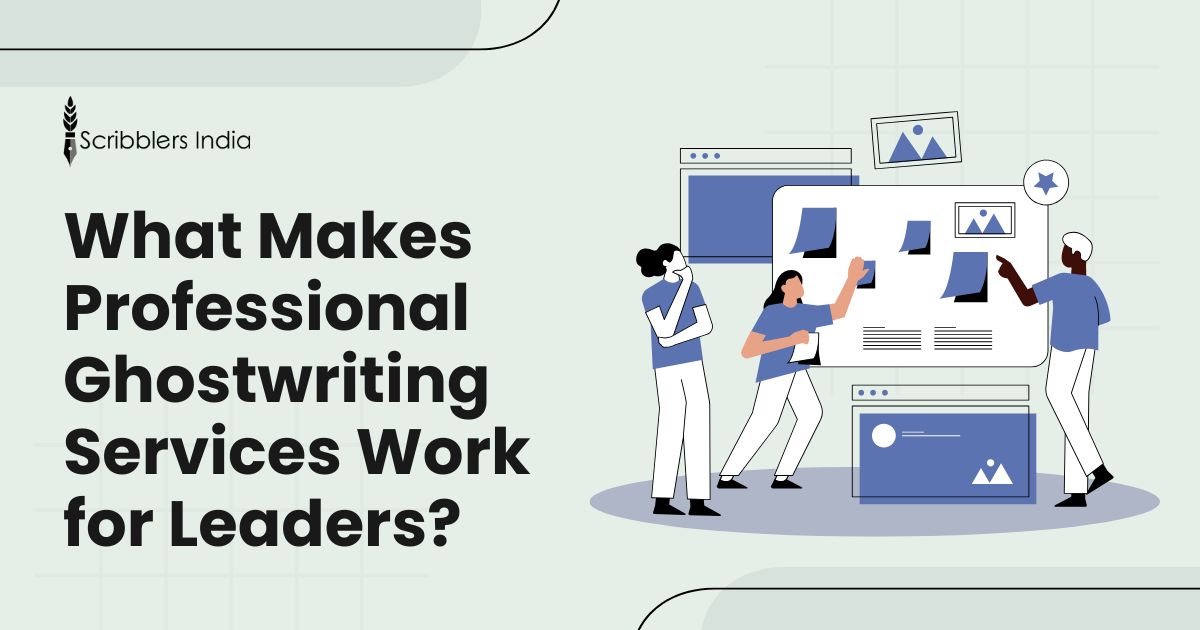
Why Business Leaders and Executives Require the Best Ghostwriting Services in 2026
You have built something meaningful. You have solved problems others could not, developed frameworks that deliver results, and accumulated insights that deserve a wider audience. The challenge is that writing about all of it takes time you do not have. Professional ghostwriting services in India solve exactly that problem. A skilled ghostwriter captures your ideas, your voice, and your perspective, then transforms them into polished content that you publish under your own name. The ghostwriter stays behind the scenes. The authority, the credibility, and every benefit of authorship belong entirely to you. The demand for a reliable ghostwriting agency in India has accelerated sharply. In fact, the global ghostwriting market is projected to reach $2.23 billion by 2031, driven by business leaders, executives, and entrepreneurs who recognize that published expertise is a competitive advantage. According to one of our ghostwriters with over nine years of experience working with founders, “An estimated 60% to 80% of business and self-help nonfiction books published today involve the help of a professional collaborator.” Understanding how this works and what it delivers is the first step toward using it strategically. What Do Professional Ghostwriting Services Include? Professional ghostwriting services in India cover a broad range of written content types, all produced by a skilled writer who remains uncredited while the client retains full authorship rights and ownership. Business ghostwriting services include the following core deliverables: Business Books and Full-Length Manuscripts This is the most recognized application of professional ghostwriting services. A ghostwriter works with a founder, executive, or subject-matter expert to produce a full-length business book that codifies their methodology, leadership philosophy, or career experience. The process typically requires six to nine months, a series of recorded interviews, and multiple revision rounds to produce a manuscript that genuinely sounds like the client. Thought Leadership Articles and LinkedIn Content For executives who want consistent visibility on LinkedIn or in industry publications, business ghostwriting services in India cover regularly published articles, opinion pieces, and LinkedIn posts. The ghostwriter conducts monthly or bi-weekly sessions with the client to capture fresh ideas and perspectives, then produces polished content at a frequency the client could not sustain alone. Speeches, Keynotes, and Presentation Scripts Many senior leaders rely on professional ghostwriting services for the written foundation of their public speaking presence. A ghostwriter who understands an executive’s voice and positioning produces speech scripts, conference keynotes, and panel presentation outlines that communicate with precision under the pressure of a live audience setting. White Papers, Reports, and Long-Form Thought Leadership Business ghostwriting services for organizations frequently include white papers that establish authority in a specific domain, annual reports that tell the company’s story compellingly, and research-backed reports that generate media attention and lead generation for the business. Newsletters and Ongoing Content Programs Many executives and consultants maintain regular newsletters and content programs that position them as authoritative sources in their field. A ghostwriting partner manages the entire production process: ideation, writing, editing, and publication, while the client focuses on the conversations and decisions their role demands. What are the Benefits of Professional Ghostwriting Services for Business Leaders and Executives? A professional ghostwriting agency in India meets a specific and practical need. Executives have the expertise worth publishing, but rarely have the time to write it. A published business book or a consistent stream of thought leadership content represents months of focused writing effort that a leadership role almost never allows. The value is concrete and well-documented: Thought leadership content drives inbound business: According to a leading B2B Thought Leadership Impact Report, more than 75% of decision-makers say that a piece of thought leadership content has led them to research a product or service they were not previously considering. Professional ghostwriting services turn your expertise into a continuous source of inbound commercial interest by establishing your personal brand. A published book changes your professional position permanently: A book with your name on it becomes a credential that no website, social media following, or business card can replicate. Executives who avail ghostwriting services in India and internationally report that a published business book consistently generates speaking invitations, media coverage, consulting contracts, and partnership opportunities that would not otherwise exist. Consistent content builds compounding authority: A single article is published once. A regular content program sustained by business ghostwriting services, builds an audience that grows and compounds over months and years. This reduces client acquisition costs and strengthens pricing power simultaneously. Your time has a high cost: For a CEO or founder whose time is valued at several thousand dollars per hour, spending 40 hours writing a single chapter makes no financial sense. Delegating that writing to a skilled professional while contributing two hours of interview time produces the same intellectual output at a fraction of the true cost. What Is the Step-by-Step Process for Writing a Business Book with a Professional Ghostwriter? Writing a business book with a professional ghostwriting agency in India follows a structured, collaborative process. Most projects move through seven defined phases from discovery to final manuscript delivery. This requires approximately two hours of client time per week. Phase One: Discovery and Project Scoping The engagement begins with a 60-to-90-minute discovery session. The ghostwriter and client discuss the book’s purpose, target audience, key messages, desired outcomes, and publication timeline. This session also determines the overall scope, word count range, and payment structure before any writing begins. Phase Two: NDA Signing and Contract Execution Before any proprietary information is shared, both parties sign a non-disclosure agreement and a formal contract. The contract specifies ownership of the manuscript, payment milestones, revision rounds included in the fee, and the ghostwriter’s commitment to confidentiality. You retain full intellectual property rights to the finished work. Phase Three: Deep-Dive Interview Sessions This is the most important phase of any ghostwriting engagement. The ghostwriter conducts a series of recorded interviews — typically eight to fifteen hours of conversation spread across multiple sessions. These sessions are not simple Q&A exchanges. A skilled ghostwriter uses
You have built something meaningful. You have solved problems others could not, developed frameworks that deliver results, and accumulated insights that deserve a wider audience. The challenge is that writing about all of it takes time you do not have. Professional ghostwriting services in India solve exactly that problem. A skilled ghostwriter captures your ideas, your voice, and your perspective, then transforms them into polished content that you publish under your own name. The ghostwriter stays behind the scenes. The authority, the credibility, and every benefit of authorship belong entirely to you. The demand for a reliable ghostwriting agency in India has accelerated sharply. In fact, the global ghostwriting market is projected to reach $2.23 billion by 2031, driven by business leaders, executives, and entrepreneurs who recognize that published expertise is a competitive advantage. According to one of our ghostwriters with over nine years of experience working with founders, “An estimated 60% to 80% of business and self-help nonfiction books published today involve the help of a professional collaborator.” Understanding how this works and what it delivers is the first step toward using it strategically. What Do Professional Ghostwriting Services Include? Professional ghostwriting services in India cover a broad range of written content types, all produced by a skilled writer who remains uncredited while the client retains full authorship rights and ownership. Business ghostwriting services include the following core deliverables: Business Books and Full-Length Manuscripts This is the most recognized application of professional ghostwriting services. A ghostwriter works with a founder, executive, or subject-matter expert to produce a full-length business book that codifies their methodology, leadership philosophy, or career experience. The process typically requires six to nine months, a series of recorded interviews, and multiple revision rounds to produce a manuscript that genuinely sounds like the client. Thought Leadership Articles and LinkedIn Content For executives who want consistent visibility on LinkedIn or in industry publications, business ghostwriting services in India cover regularly published articles, opinion pieces, and LinkedIn posts. The ghostwriter conducts monthly or bi-weekly sessions with the client to capture fresh ideas and perspectives, then produces polished content at a frequency the client could not sustain alone. Speeches, Keynotes, and Presentation Scripts Many senior leaders rely on professional ghostwriting services for the written foundation of their public speaking presence. A ghostwriter who understands an executive’s voice and positioning produces speech scripts, conference keynotes, and panel presentation outlines that communicate with precision under the pressure of a live audience setting. White Papers, Reports, and Long-Form Thought Leadership Business ghostwriting services for organizations frequently include white papers that establish authority in a specific domain, annual reports that tell the company’s story compellingly, and research-backed reports that generate media attention and lead generation for the business. Newsletters and Ongoing Content Programs Many executives and consultants maintain regular newsletters and content programs that position them as authoritative sources in their field. A ghostwriting partner manages the entire production process: ideation, writing, editing, and publication, while the client focuses on the conversations and decisions their role demands. What are the Benefits of Professional Ghostwriting Services for Business Leaders and Executives? A professional ghostwriting agency in India meets a specific and practical need. Executives have the expertise worth publishing, but rarely have the time to write it. A published business book or a consistent stream of thought leadership content represents months of focused writing effort that a leadership role almost never allows. The value is concrete and well-documented: Thought leadership content drives inbound business: According to a leading B2B Thought Leadership Impact Report, more than 75% of decision-makers say that a piece of thought leadership content has led them to research a product or service they were not previously considering. Professional ghostwriting services turn your expertise into a continuous source of inbound commercial interest by establishing your personal brand. A published book changes your professional position permanently: A book with your name on it becomes a credential that no website, social media following, or business card can replicate. Executives who avail ghostwriting services in India and internationally report that a published business book consistently generates speaking invitations, media coverage, consulting contracts, and partnership opportunities that would not otherwise exist. Consistent content builds compounding authority: A single article is published once. A regular content program sustained by business ghostwriting services, builds an audience that grows and compounds over months and years. This reduces client acquisition costs and strengthens pricing power simultaneously. Your time has a high cost: For a CEO or founder whose time is valued at several thousand dollars per hour, spending 40 hours writing a single chapter makes no financial sense. Delegating that writing to a skilled professional while contributing two hours of interview time produces the same intellectual output at a fraction of the true cost. What Is the Step-by-Step Process for Writing a Business Book with a Professional Ghostwriter? Writing a business book with a professional ghostwriting agency in India follows a structured, collaborative process. Most projects move through seven defined phases from discovery to final manuscript delivery. This requires approximately two hours of client time per week. Phase One: Discovery and Project Scoping The engagement begins with a 60-to-90-minute discovery session. The ghostwriter and client discuss the book’s purpose, target audience, key messages, desired outcomes, and publication timeline. This session also determines the overall scope, word count range, and payment structure before any writing begins. Phase Two: NDA Signing and Contract Execution Before any proprietary information is shared, both parties sign a non-disclosure agreement and a formal contract. The contract specifies ownership of the manuscript, payment milestones, revision rounds included in the fee, and the ghostwriter’s commitment to confidentiality. You retain full intellectual property rights to the finished work. Phase Three: Deep-Dive Interview Sessions This is the most important phase of any ghostwriting engagement. The ghostwriter conducts a series of recorded interviews — typically eight to fifteen hours of conversation spread across multiple sessions. These sessions are not simple Q&A exchanges. A skilled ghostwriter uses
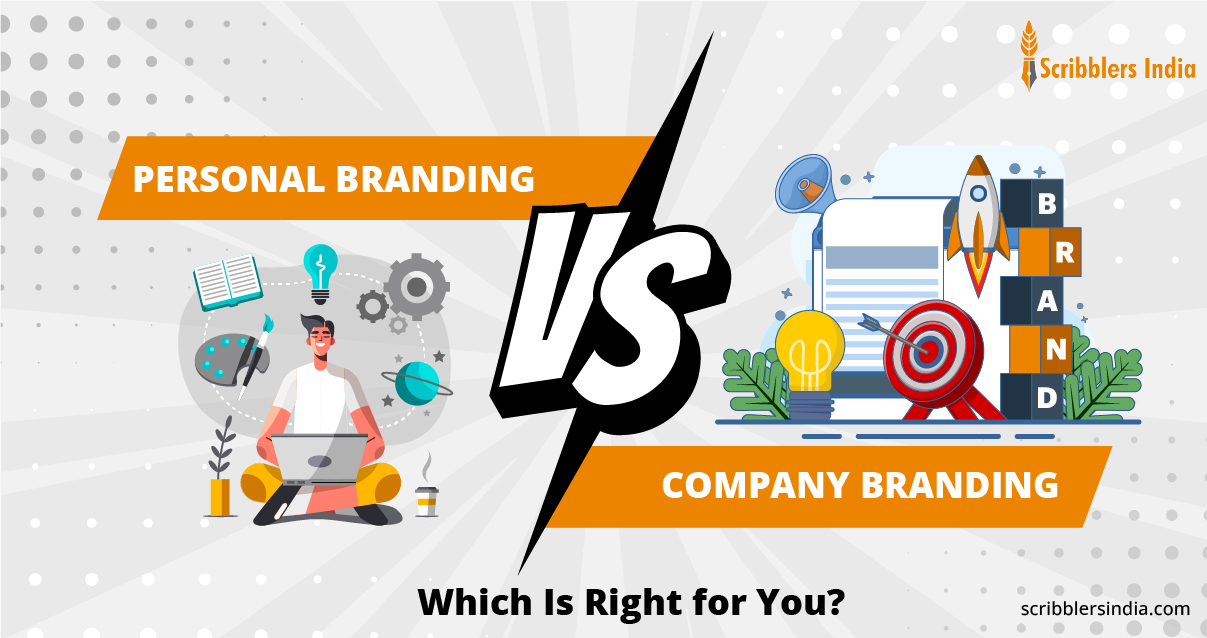
Personal Branding vs. Company Branding: Which One is More Effective?
Is Elon Musk’s brand Tesla’s brand, or is it his own? When you think of Virgin, do you picture the logo or Richard Branson’s adventurous smile? This brings up a common point of confusion in our digital-first world. Many people mix up personal branding and company branding, yet they are two distinct and powerful tools in your strategic arsenal. A personal brand is the unique story and reputation of an individual. A company brand represents the collective identity of an organization. Understanding the difference between a personal and corporate brand is crucial for success. This blog will demystify the personal branding vs company branding debate. We will explore the unique power of each, their symbiotic relationship, and how you can use both strategically. This is especially vital for entrepreneurs, freelancers, and experts who are often both the face of their work and the business itself. What is the Real Difference Between Personal Branding vs Company Branding? The fundamental difference between personal branding vs company branding is focus. A personal brand centers on an individual’s unique identity, skills, and values. In contrast, a company brand is built around the organization’s collective mission, its products or services, and its overall corporate identity, designed to exist beyond any one person. Defining Personal Branding Your personal brand is the intentional cultivation of your public reputation. It is how the world perceives your unique combination of skills, experiences, and personality. Your personal brand is your story, expertise, and values rolled into one authentic package. Individual Focus: It is fundamentally about you as a distinct professional entity. Your name is the brand name. Showcases Expertise: It highlights your specific knowledge and authority within a niche. Builds Relationships: It leverages your personality to build direct connections and a loyal following. Prime Examples: This is the realm of thought leaders, coaches, artists, and specialized freelancers. Defining Company Branding A company brand, or corporate brand, is the identity of a business. It encompasses the organization’s mission, vision, and core values. It is communicated through its name, logo, customer service, and the entire customer experience. Organizational Focus: It represents the collective, not a single person’s identity. Promotes Offerings: It is built around the products or services the business provides to the market. Creates Consistency: It ensures a uniform and predictable experience for all customers and stakeholders. Prime Examples: Think of large corporations like Apple, startups like Notion, or any e-commerce business. Key Distinctions at a Glance: Comparing Personal Branding vs Company Branding Distinction Personal Brand Company Brand Primary Focus Individual identity, expertise, and relationships Organizational identity, products/services, and market positioning Target Audience Professional network, followers, and direct clients Customers, investors, partners, and the broader market Communication Style Often more authentic, conversational, and personality-driven Typically more consistent, professional, and strategically crafted Flexibility Can pivot quickly based on individual growth and interests Changes require more strategic planning and stakeholder buy-in Longevity Usually tied to your career lifespan or personal presence Designed for long-term scalability and potential transition of ownership Why Do People Trust Personal Brands More Than Company Brands? People fundamentally trust other people more than they trust faceless corporations. A personal brand cuts through the noise of corporate advertising by creating a genuine, human-to-human connection that feels more authentic and relatable, fostering a deeper level of trust and loyalty. This preference for the personal touch is backed by data. A recent report highlights that 88% of consumers trust recommendations from individuals over branded content, even if they do not know them personally. This statistic reveals a powerful truth about modern consumer psychology. Authenticity and Relatability: Personal brands can share real stories, including struggles and successes. This vulnerability makes them more relatable than a polished corporate message. Direct Engagement: It is easier to have a one-on-one conversation with an individual on social media than it is with a large company, building real relationships. Overcoming Skepticism: In an era saturated with ads, consumers are skeptical. A recommendation from a trusted individual carries more weight than a corporate promise. The Human Connection: We are wired to connect with faces, voices, and stories. A strong personal brand provides a human anchor in a digital world. What are the Main Benefits of Having a Strong Personal Brand? A strong personal brand creates immense opportunities for both individuals and the businesses they lead. Individuals can establish authority and attract better career prospects. Businesses can humanize their company by building a bridge of trust and loyalty with customers through personal connections. For Individuals: Building Your Professional Equity Developing your personal brand is an investment in your own professional future. It separates you from the competition and makes you a magnet for new opportunities. Boosts Visibility: A clear brand makes you more recognizable and memorable in your field. Establishes Authority: You become the go-to expert, building credibility and trust. Attracts Opportunities: This leads to speaking gigs, media features, and collaborations. Enhances Networking: Your brand acts as a conversation starter, drawing like-minded professionals to you. For Businesses: The Human-Centered Advantage The benefits of a personal brand for businesses are significant, especially in a market where consumers crave authenticity. The founder’s or CEO’s personal brand can become a powerful asset. Humanizes the Company: It provides a relatable face and a human story behind the logo. Builds Customer Loyalty: Customers who trust you are more likely to be loyal to your company. Acts as a Marketing Channel: A leader’s influential social media presence can drive significant sales. Attracts Top Talent: People want to work for leaders they admire and respect. Is a Company Brand Still Important if I Have a Strong Personal Brand? Absolutely, when you compare personal branding vs company branding, it becomes clear that a company brand is essential for long-term growth, scalability, and creating an entity that can thrive independently of you. While your personal brand can provide the initial spark, a company brand builds the sustainable fire that can outlast any single individual’s involvement. Relying solely on an individual branding vs business
Is Elon Musk’s brand Tesla’s brand, or is it his own? When you think of Virgin, do you picture the logo or Richard Branson’s adventurous smile? This brings up a common point of confusion in our digital-first world. Many people mix up personal branding and company branding, yet they are two distinct and powerful tools in your strategic arsenal. A personal brand is the unique story and reputation of an individual. A company brand represents the collective identity of an organization. Understanding the difference between a personal and corporate brand is crucial for success. This blog will demystify the personal branding vs company branding debate. We will explore the unique power of each, their symbiotic relationship, and how you can use both strategically. This is especially vital for entrepreneurs, freelancers, and experts who are often both the face of their work and the business itself. What is the Real Difference Between Personal Branding vs Company Branding? The fundamental difference between personal branding vs company branding is focus. A personal brand centers on an individual’s unique identity, skills, and values. In contrast, a company brand is built around the organization’s collective mission, its products or services, and its overall corporate identity, designed to exist beyond any one person. Defining Personal Branding Your personal brand is the intentional cultivation of your public reputation. It is how the world perceives your unique combination of skills, experiences, and personality. Your personal brand is your story, expertise, and values rolled into one authentic package. Individual Focus: It is fundamentally about you as a distinct professional entity. Your name is the brand name. Showcases Expertise: It highlights your specific knowledge and authority within a niche. Builds Relationships: It leverages your personality to build direct connections and a loyal following. Prime Examples: This is the realm of thought leaders, coaches, artists, and specialized freelancers. Defining Company Branding A company brand, or corporate brand, is the identity of a business. It encompasses the organization’s mission, vision, and core values. It is communicated through its name, logo, customer service, and the entire customer experience. Organizational Focus: It represents the collective, not a single person’s identity. Promotes Offerings: It is built around the products or services the business provides to the market. Creates Consistency: It ensures a uniform and predictable experience for all customers and stakeholders. Prime Examples: Think of large corporations like Apple, startups like Notion, or any e-commerce business. Key Distinctions at a Glance: Comparing Personal Branding vs Company Branding Distinction Personal Brand Company Brand Primary Focus Individual identity, expertise, and relationships Organizational identity, products/services, and market positioning Target Audience Professional network, followers, and direct clients Customers, investors, partners, and the broader market Communication Style Often more authentic, conversational, and personality-driven Typically more consistent, professional, and strategically crafted Flexibility Can pivot quickly based on individual growth and interests Changes require more strategic planning and stakeholder buy-in Longevity Usually tied to your career lifespan or personal presence Designed for long-term scalability and potential transition of ownership Why Do People Trust Personal Brands More Than Company Brands? People fundamentally trust other people more than they trust faceless corporations. A personal brand cuts through the noise of corporate advertising by creating a genuine, human-to-human connection that feels more authentic and relatable, fostering a deeper level of trust and loyalty. This preference for the personal touch is backed by data. A recent report highlights that 88% of consumers trust recommendations from individuals over branded content, even if they do not know them personally. This statistic reveals a powerful truth about modern consumer psychology. Authenticity and Relatability: Personal brands can share real stories, including struggles and successes. This vulnerability makes them more relatable than a polished corporate message. Direct Engagement: It is easier to have a one-on-one conversation with an individual on social media than it is with a large company, building real relationships. Overcoming Skepticism: In an era saturated with ads, consumers are skeptical. A recommendation from a trusted individual carries more weight than a corporate promise. The Human Connection: We are wired to connect with faces, voices, and stories. A strong personal brand provides a human anchor in a digital world. What are the Main Benefits of Having a Strong Personal Brand? A strong personal brand creates immense opportunities for both individuals and the businesses they lead. Individuals can establish authority and attract better career prospects. Businesses can humanize their company by building a bridge of trust and loyalty with customers through personal connections. For Individuals: Building Your Professional Equity Developing your personal brand is an investment in your own professional future. It separates you from the competition and makes you a magnet for new opportunities. Boosts Visibility: A clear brand makes you more recognizable and memorable in your field. Establishes Authority: You become the go-to expert, building credibility and trust. Attracts Opportunities: This leads to speaking gigs, media features, and collaborations. Enhances Networking: Your brand acts as a conversation starter, drawing like-minded professionals to you. For Businesses: The Human-Centered Advantage The benefits of a personal brand for businesses are significant, especially in a market where consumers crave authenticity. The founder’s or CEO’s personal brand can become a powerful asset. Humanizes the Company: It provides a relatable face and a human story behind the logo. Builds Customer Loyalty: Customers who trust you are more likely to be loyal to your company. Acts as a Marketing Channel: A leader’s influential social media presence can drive significant sales. Attracts Top Talent: People want to work for leaders they admire and respect. Is a Company Brand Still Important if I Have a Strong Personal Brand? Absolutely, when you compare personal branding vs company branding, it becomes clear that a company brand is essential for long-term growth, scalability, and creating an entity that can thrive independently of you. While your personal brand can provide the initial spark, a company brand builds the sustainable fire that can outlast any single individual’s involvement. Relying solely on an individual branding vs business

Online Reputation Management
Every search result, review, social media post, and news article that mentions a brand or professional contributes to how the world perceives them. Online Reputation Management plays a crucial role in controlling that digital narrative. When that body of digital content tells the right story, it attracts clients, partners, and opportunities. When it tells the wrong story, it costs them. Online reputation management (ORM) is the practice of monitoring, influencing, and improving how a brand or individual appears across digital platforms. In 2025, with over 93% of consumers reading online reviews before making a purchase, ORM has moved from a reactive crisis tool to a proactive, ongoing strategic priority for every organization and professional with a digital presence. What Is Online Reputation Management and How Does It Work? Online reputation management is the process of building, monitoring, and influencing how a person or organization is perceived across search engines, social media platforms, review sites, and news coverage. It encompasses both the positive content a brand actively creates and the negative or neutral content it must address, suppress, or counterbalance. ORM works across three parallel tracks. Proactive ORM involves publishing high-quality content, gathering positive reviews, and building a strong digital presence before any reputational challenge arises. Reactive ORM involves responding to negative feedback, correcting misinformation, and managing the narrative during a reputational crisis. Monitoring bridges both tracks by providing continuous visibility into what is being always said across all channels. The practice recognizes that digital perception shapes real-world decisions. A company with strong ratings, a responsive presence, and consistent positive messaging attracts more clients and talent than an equally capable competitor with a neglected or damaged online profile. Why Is Online Reputation Management Critical for Brands and Professionals? Online reputation management directly influences every commercial outcome that matters: customer acquisition, talent recruitment, investor confidence, and partnership development. Each of these outcomes depends on trust, and trust depends on what people find when they search. Research reveals that 68% of consumers check online reviews before engaging with a local business, and 85% actively avoid businesses with recent negative reviews. These figures make ORM a revenue-critical function, not a peripheral marketing concern. Search engine visibility: Google factors review ratings, engagement signals, and online sentiment into search rankings, making a well-managed reputation a direct driver of organic discoverability. Trust and conversion rates: Potential clients who find consistent positive information about an organization progress through the decision process faster and convert at higher rates than those who encounter conflicting or negative signals. Talent attraction and retention: Candidates research leadership and company culture extensively before applying or accepting offers, making the organization’s online reputation a front-line recruitment tool. Crisis damage limitation: Organizations that maintain a strong positive reputation baseline recover from reputational incidents faster than those who have neglected their digital presence prior to the crisis event. What Are the Core Components of an Online Reputation Management Strategy? An effective ORM strategy integrates content creation, review management, social media engagement, search optimization, and crisis response into a unified, ongoing program rather than treating each as a separate activity. The foundation of any ORM strategy is a thorough audit of the current digital footprint. This means reviewing the first two pages of search results for the brand name, assessing review platform ratings across Google, Yelp, and industry-specific directories, and evaluating social media sentiment systematically. Content creation and publishing: A steady stream of authoritative content marketing output in the form of blog posts, expert articles, case studies, and original research fills the search landscape with positive and credible brand signals. This pushes less favorable content further down the results page. Review management: Actively requesting reviews from satisfied clients, responding professionally to all reviews (positive and negative), and addressing recurring concerns demonstrates responsiveness and builds trust with both existing and prospective clients. Social media engagement: A consistent, professional, and responsive social media presence allows a brand to control its narrative in real time, address concerns publicly before they escalate, and build the audience relationships that generate organic advocacy. Search optimization: Strategic SEO applied to owned media such as websites, blog content, press releases, and thought leadership articles, helps positive content rank higher for brand-name searches, reducing the visibility of negative or outdated results. How Does Online Reputation Management Differ from SEO and PR? ORM, SEO, and PR share overlapping tactics but address fundamentally different strategic objectives. Understanding the distinction helps organizations allocate the right resources to each discipline. SEO focuses on ranking content for specific keywords to drive traffic to a website. PR focuses on earning media coverage and managing relationships with journalists and industry publications. ORM focuses specifically on the overall digital perception of a brand or individual across every platform where audiences form judgments, regardless of traffic or coverage volume. Primary objective distinction: SEO aims to drive traffic through keyword rankings. ORM aims to improve the overall quality and sentiment of what an audience finds when they search for a brand name or individual. Content focus: SEO content targets search queries for products, services, and topics. ORM content targets the brand name itself and the narratives that form around it in reviews, forums, news, and social platforms. Success metrics: SEO measures rankings, traffic, and conversions. ORM measures review ratings, sentiment scores, share of positive search results, and brand mention volume across platforms. Crisis response scope: PR handles media narratives and relationships with journalists during a crisis. ORM addresses the broader digital footprint, including review platforms, social comments, forum posts, and search results that PR activities alone do not reach. Audience relationship management: ORM involves direct engagement with customer feedback, public comments, and community mentions in a way that SEO and PR campaigns typically do not. This makes it the most audience-interactive of the three disciplines. What Strategies Drive the Most Effective Online Reputation Management? The most effective ORM strategies combine proactive content investment with responsive engagement protocols and systematic monitoring systems. They treat reputation as an ongoing asset to build rather
Every search result, review, social media post, and news article that mentions a brand or professional contributes to how the world perceives them. Online Reputation Management plays a crucial role in controlling that digital narrative. When that body of digital content tells the right story, it attracts clients, partners, and opportunities. When it tells the wrong story, it costs them. Online reputation management (ORM) is the practice of monitoring, influencing, and improving how a brand or individual appears across digital platforms. In 2025, with over 93% of consumers reading online reviews before making a purchase, ORM has moved from a reactive crisis tool to a proactive, ongoing strategic priority for every organization and professional with a digital presence. What Is Online Reputation Management and How Does It Work? Online reputation management is the process of building, monitoring, and influencing how a person or organization is perceived across search engines, social media platforms, review sites, and news coverage. It encompasses both the positive content a brand actively creates and the negative or neutral content it must address, suppress, or counterbalance. ORM works across three parallel tracks. Proactive ORM involves publishing high-quality content, gathering positive reviews, and building a strong digital presence before any reputational challenge arises. Reactive ORM involves responding to negative feedback, correcting misinformation, and managing the narrative during a reputational crisis. Monitoring bridges both tracks by providing continuous visibility into what is being always said across all channels. The practice recognizes that digital perception shapes real-world decisions. A company with strong ratings, a responsive presence, and consistent positive messaging attracts more clients and talent than an equally capable competitor with a neglected or damaged online profile. Why Is Online Reputation Management Critical for Brands and Professionals? Online reputation management directly influences every commercial outcome that matters: customer acquisition, talent recruitment, investor confidence, and partnership development. Each of these outcomes depends on trust, and trust depends on what people find when they search. Research reveals that 68% of consumers check online reviews before engaging with a local business, and 85% actively avoid businesses with recent negative reviews. These figures make ORM a revenue-critical function, not a peripheral marketing concern. Search engine visibility: Google factors review ratings, engagement signals, and online sentiment into search rankings, making a well-managed reputation a direct driver of organic discoverability. Trust and conversion rates: Potential clients who find consistent positive information about an organization progress through the decision process faster and convert at higher rates than those who encounter conflicting or negative signals. Talent attraction and retention: Candidates research leadership and company culture extensively before applying or accepting offers, making the organization’s online reputation a front-line recruitment tool. Crisis damage limitation: Organizations that maintain a strong positive reputation baseline recover from reputational incidents faster than those who have neglected their digital presence prior to the crisis event. What Are the Core Components of an Online Reputation Management Strategy? An effective ORM strategy integrates content creation, review management, social media engagement, search optimization, and crisis response into a unified, ongoing program rather than treating each as a separate activity. The foundation of any ORM strategy is a thorough audit of the current digital footprint. This means reviewing the first two pages of search results for the brand name, assessing review platform ratings across Google, Yelp, and industry-specific directories, and evaluating social media sentiment systematically. Content creation and publishing: A steady stream of authoritative content marketing output in the form of blog posts, expert articles, case studies, and original research fills the search landscape with positive and credible brand signals. This pushes less favorable content further down the results page. Review management: Actively requesting reviews from satisfied clients, responding professionally to all reviews (positive and negative), and addressing recurring concerns demonstrates responsiveness and builds trust with both existing and prospective clients. Social media engagement: A consistent, professional, and responsive social media presence allows a brand to control its narrative in real time, address concerns publicly before they escalate, and build the audience relationships that generate organic advocacy. Search optimization: Strategic SEO applied to owned media such as websites, blog content, press releases, and thought leadership articles, helps positive content rank higher for brand-name searches, reducing the visibility of negative or outdated results. How Does Online Reputation Management Differ from SEO and PR? ORM, SEO, and PR share overlapping tactics but address fundamentally different strategic objectives. Understanding the distinction helps organizations allocate the right resources to each discipline. SEO focuses on ranking content for specific keywords to drive traffic to a website. PR focuses on earning media coverage and managing relationships with journalists and industry publications. ORM focuses specifically on the overall digital perception of a brand or individual across every platform where audiences form judgments, regardless of traffic or coverage volume. Primary objective distinction: SEO aims to drive traffic through keyword rankings. ORM aims to improve the overall quality and sentiment of what an audience finds when they search for a brand name or individual. Content focus: SEO content targets search queries for products, services, and topics. ORM content targets the brand name itself and the narratives that form around it in reviews, forums, news, and social platforms. Success metrics: SEO measures rankings, traffic, and conversions. ORM measures review ratings, sentiment scores, share of positive search results, and brand mention volume across platforms. Crisis response scope: PR handles media narratives and relationships with journalists during a crisis. ORM addresses the broader digital footprint, including review platforms, social comments, forum posts, and search results that PR activities alone do not reach. Audience relationship management: ORM involves direct engagement with customer feedback, public comments, and community mentions in a way that SEO and PR campaigns typically do not. This makes it the most audience-interactive of the three disciplines. What Strategies Drive the Most Effective Online Reputation Management? The most effective ORM strategies combine proactive content investment with responsive engagement protocols and systematic monitoring systems. They treat reputation as an ongoing asset to build rather

Personal Brand Audit
A professional can spend years building a reputation without ever pausing to assess whether that reputation reflects who they have become today. Conducting a Personal Brand Audit is an important step because skills evolve, career focus shifts, and audiences change, which means the brand a person built two years ago may quietly be sending the wrong signals right now. A personal brand audit provides the clarity that ongoing brand-building work cannot. It reveals the gap between how a professional intends to be perceived and how they are actually being found, understood, and remembered by the audiences that matter most to their goals. What Is a Personal Brand Audit and What Does It Reveal? A personal brand audit is a structured evaluation of how a professional’s current online presence, messaging, and content reflect their professional identity and career goals. Harvard Business School Professor Jill Avery describes it as “A systematic assessment of your brand as it exists now, to determine how well or poorly your current brand supports your vision and sense of self.” The audit reveals the current gap between intention and perception. A professional may believe their brand communicates innovation and expertise, while their digital footprint shows an outdated LinkedIn profile, inconsistent messaging across platforms, and search results that reflect roles they held years ago. This gap in personal branding costs opportunities. Recruiters, clients, and collaborators form judgments based on what they find, not on what the professional intends them to find. A personal brand audit surfaces those gaps with enough specificity to act on them directly. When Should a Professional Conduct a Personal Brand Audit? A personal brand audit delivers the most value at specific inflection points in a professional’s career. Conducting one proactively prevents the kind of brand drift that accumulates gradually and only becomes visible when opportunities start going elsewhere. Most brand audit experts recommend conducting a formal audit every six to twelve months as standard practice. Professionals should also trigger an audit whenever a significant career development makes the current brand positioning potentially outdated or misaligned. Career transition or role change: Moving into a new industry, function, or seniority level requires the existing brand to be updated before the professional begins networking in their new context. Launch of a new business or service: When a professional enters a new market or starts a new venture, an audit ensures the brand signals credibility and relevance to the new audience they want to reach. Declining inbound opportunities: When the volume or quality of inbound connection requests, referrals, and inquiries drops, an audit often reveals messaging or visibility issues at the root of the decline. Preparation for a media or speaking opportunity: Before a professional appears in a major publication or at an industry event, an audit ensures that every platform a new audience might visit reflects consistent, current, and compelling positioning. What Are the Key Steps in a Personal Brand Audit? A thorough personal brand audit follows a structured sequence that moves from assessing external perception to clarifying internal positioning. Each step builds on the previous one to produce a complete picture of where the brand currently stands. The first step involves searching one’s own name on Google and reviewing the first page of results with fresh eyes, as a potential client or collaborator would see it. The results reveal what first impression the professional currently makes on anyone who searches before initiating contact. Google search review: The professional should search their name and note what appears on the first page. This helps determine whether the results are accurate, current, and represent the strong personal brand they want to project. Social media profile consistency check: Check every professional platform, such as LinkedIn, professional Instagram, personal website, and industry directories. They should carry the same core message, tone, and visual identity. Content audit: A review of all published articles, posts, and media appearances reveals whether the professional’s published content consistently reinforces their brand positioning or contradicts it across channels. Third-party perception gathering: Asking trusted colleagues and clients how they would describe the professional’s expertise in three words often reveals perception gaps that self-assessment alone cannot identify. Competitive positioning analysis: Reviewing how peers and competitors in the same space present themselves reveals differentiation opportunities the professional can deliberately address in their repositioned brand. What Metrics Should a Personal Brand Audit Measure? A personal brand audit measures both qualitative and quantitative signals. Together, these signals provide a complete picture of brand health across awareness, perception, consistency, and conversion. Quantitative metrics include: Views on LinkedIn profile Post engagement rates Search ranking for the professional’s name Website traffic from branded search Inbound inquiry volume Growth rate of a professional newsletter or content platform These numbers establish a performance baseline for comparison after brand improvements are made. Qualitative signals include the accuracy of search results, the consistency of messaging across platforms, the sentiment in recommendations and testimonials, and the degree to which the professional’s content reflects their current focus areas rather than past roles or outdated positioning. How Does a Personal Brand Audit Improve Online Visibility? The insights from a personal brand audit directly improve a professional’s visibility in both traditional and AI-powered search. Platforms like Google, LinkedIn, and Perplexity retrieve information about a professional from what currently exists online. This makes an outdated or inconsistent digital footprint a direct obstacle to discovery. Updating LinkedIn profiles with current positioning and keywords, publishing fresh content on priority topics, and removing or deprioritizing outdated profiles from search results all strengthen the professional’s digital footprint following an audit. These improvements benefit online reputation management in direct and measurable ways. Professionals who conduct regular personal brand audits and act on their findings consistently maintain stronger search presence, higher content engagement, and more relevant inbound opportunities than those who build their brand once and never revisit it with fresh assessment. What Happens After a Personal Brand Audit Is Completed? A personal brand audit produces value only when the professional acts on its findings.
A professional can spend years building a reputation without ever pausing to assess whether that reputation reflects who they have become today. Conducting a Personal Brand Audit is an important step because skills evolve, career focus shifts, and audiences change, which means the brand a person built two years ago may quietly be sending the wrong signals right now. A personal brand audit provides the clarity that ongoing brand-building work cannot. It reveals the gap between how a professional intends to be perceived and how they are actually being found, understood, and remembered by the audiences that matter most to their goals. What Is a Personal Brand Audit and What Does It Reveal? A personal brand audit is a structured evaluation of how a professional’s current online presence, messaging, and content reflect their professional identity and career goals. Harvard Business School Professor Jill Avery describes it as “A systematic assessment of your brand as it exists now, to determine how well or poorly your current brand supports your vision and sense of self.” The audit reveals the current gap between intention and perception. A professional may believe their brand communicates innovation and expertise, while their digital footprint shows an outdated LinkedIn profile, inconsistent messaging across platforms, and search results that reflect roles they held years ago. This gap in personal branding costs opportunities. Recruiters, clients, and collaborators form judgments based on what they find, not on what the professional intends them to find. A personal brand audit surfaces those gaps with enough specificity to act on them directly. When Should a Professional Conduct a Personal Brand Audit? A personal brand audit delivers the most value at specific inflection points in a professional’s career. Conducting one proactively prevents the kind of brand drift that accumulates gradually and only becomes visible when opportunities start going elsewhere. Most brand audit experts recommend conducting a formal audit every six to twelve months as standard practice. Professionals should also trigger an audit whenever a significant career development makes the current brand positioning potentially outdated or misaligned. Career transition or role change: Moving into a new industry, function, or seniority level requires the existing brand to be updated before the professional begins networking in their new context. Launch of a new business or service: When a professional enters a new market or starts a new venture, an audit ensures the brand signals credibility and relevance to the new audience they want to reach. Declining inbound opportunities: When the volume or quality of inbound connection requests, referrals, and inquiries drops, an audit often reveals messaging or visibility issues at the root of the decline. Preparation for a media or speaking opportunity: Before a professional appears in a major publication or at an industry event, an audit ensures that every platform a new audience might visit reflects consistent, current, and compelling positioning. What Are the Key Steps in a Personal Brand Audit? A thorough personal brand audit follows a structured sequence that moves from assessing external perception to clarifying internal positioning. Each step builds on the previous one to produce a complete picture of where the brand currently stands. The first step involves searching one’s own name on Google and reviewing the first page of results with fresh eyes, as a potential client or collaborator would see it. The results reveal what first impression the professional currently makes on anyone who searches before initiating contact. Google search review: The professional should search their name and note what appears on the first page. This helps determine whether the results are accurate, current, and represent the strong personal brand they want to project. Social media profile consistency check: Check every professional platform, such as LinkedIn, professional Instagram, personal website, and industry directories. They should carry the same core message, tone, and visual identity. Content audit: A review of all published articles, posts, and media appearances reveals whether the professional’s published content consistently reinforces their brand positioning or contradicts it across channels. Third-party perception gathering: Asking trusted colleagues and clients how they would describe the professional’s expertise in three words often reveals perception gaps that self-assessment alone cannot identify. Competitive positioning analysis: Reviewing how peers and competitors in the same space present themselves reveals differentiation opportunities the professional can deliberately address in their repositioned brand. What Metrics Should a Personal Brand Audit Measure? A personal brand audit measures both qualitative and quantitative signals. Together, these signals provide a complete picture of brand health across awareness, perception, consistency, and conversion. Quantitative metrics include: Views on LinkedIn profile Post engagement rates Search ranking for the professional’s name Website traffic from branded search Inbound inquiry volume Growth rate of a professional newsletter or content platform These numbers establish a performance baseline for comparison after brand improvements are made. Qualitative signals include the accuracy of search results, the consistency of messaging across platforms, the sentiment in recommendations and testimonials, and the degree to which the professional’s content reflects their current focus areas rather than past roles or outdated positioning. How Does a Personal Brand Audit Improve Online Visibility? The insights from a personal brand audit directly improve a professional’s visibility in both traditional and AI-powered search. Platforms like Google, LinkedIn, and Perplexity retrieve information about a professional from what currently exists online. This makes an outdated or inconsistent digital footprint a direct obstacle to discovery. Updating LinkedIn profiles with current positioning and keywords, publishing fresh content on priority topics, and removing or deprioritizing outdated profiles from search results all strengthen the professional’s digital footprint following an audit. These improvements benefit online reputation management in direct and measurable ways. Professionals who conduct regular personal brand audits and act on their findings consistently maintain stronger search presence, higher content engagement, and more relevant inbound opportunities than those who build their brand once and never revisit it with fresh assessment. What Happens After a Personal Brand Audit Is Completed? A personal brand audit produces value only when the professional acts on its findings.
LinkedIn Personal Branding
With over one billion users on the platform, LinkedIn has become the most consequential professional discovery tool in the world. When a potential client, investor, or hiring manager wants to understand who someone is, LinkedIn is where they go first. In the modern competitive landscape, mastering LinkedIn Personal Branding is more important than ever. LinkedIn personal branding is the practice of deliberately shaping how a professional appears, communicates, and engages on the platform. A strong LinkedIn presence transforms a profile from a static credential list into a living, credible demonstration of expertise, values, and professional identity. What Is LinkedIn Personal Branding and Why Does It Matter Now? LinkedIn personal branding is the strategic process of optimizing a professional’s LinkedIn presence to communicate their unique value, attract the right opportunities, and build sustained authority in their field. A strong personal brand encompasses profile optimization, content strategy, network engagement, and consistent positioning. The platform’s scale makes this practice increasingly important. LinkedIn data from 2025 shows 2.5 applicants per job posting, up from 1.5 in 2022. The platform now functions as the primary B2B discovery channel for clients, partners, and investors who research professionals before initiating any conversation. Professionals who invest in LinkedIn personal branding consistently report stronger inbound leads, faster trust with new contacts, and better visibility in both traditional and AI-powered search environments. How Does a Strong LinkedIn Profile Support Personal Branding? A LinkedIn profile is the infrastructure of a professional’s personal brand on the platform. Every element of the profile, from the photo to the headline to the About section, contributes to the first impression a visitor forms within the first few seconds of landing on the page. The profile must communicate expertise immediately and clearly. A visitor should understand exactly what the professional does, who they serve, and why their perspective matters within ten seconds of arriving on the profile page. Professional headshot: Profiles with high-quality photos receive up to 21x more views than those without. The photo should feel approachable while clearly representing the professional’s industry and level of seniority. Positioning-led headline: The headline should describe the professional’s expertise and audience in one line, rather than simply listing a job title that any competitor could hold. Strategic About section: A well-written About section tells the professional’s story, communicates their value proposition, and invites the reader to take a specific next action. Featured section content: Publishing case studies, articles, testimonials, or media appearances in the Featured section provides social proof that reinforces the professional’s authority and credibility. Recommendations and skills: Specific, outcome-focused recommendations from clients, managers, and collaborators build third-party credibility that a self-written profile alone cannot establish. What Content Strategy Builds a Strong LinkedIn Personal Brand? Content is the engine of LinkedIn personal branding. A well-optimized profile attracts visitors, but consistent, valuable content keeps a professional visible, relevant, and top of mind with their target audience over time. Professionals who publish regularly on LinkedIn build algorithmic visibility alongside audience trust. The platform rewards consistency, engagement, and specificity. It favors professionals who publish focused, valuable content over those who post occasionally or broadly. Original insights and expert perspectives demonstrate that the professional thinks independently and adds genuine value to industry conversations, rather than simply redistributing content others have already created. Experience-based storytelling connects professional achievements and lessons to practical takeaways that the audience can apply directly, making the content memorable and shareable across the network. Industry trend commentary positions the professional as a current, credible voice by demonstrating active engagement with the most relevant developments in their field and adjacent areas. Carousel and visual posts earn stronger engagement rates on the platform than text-only updates, making them an effective format for presenting frameworks, data, and step-by-step guidance. Consistent publishing schedule signals reliability to both the LinkedIn algorithm and the audience, building the familiarity and trust that eventually drives inbound messages and connection requests. How Does LinkedIn Personal Branding Support Thought Leadership? LinkedIn is the primary distribution channel for thought leadership content in the professional services and B2B world. Professionals who use the platform to share genuine expertise consistently build the kind of authority that influences decisions before any direct conversation occurs. Thought leadership on LinkedIn works best when it combines personal perspective with specific, applicable knowledge. Content that offers a unique point of view on a familiar challenge consistently outperforms generic “tips” content that any number of competitors could have published. Publishing LinkedIn articles, newsletters, and long-form posts alongside regular short-form updates creates a layered content presence. Short posts maintain visibility in the daily feed. Articles and newsletters build depth, demonstrate expertise, and attract search traffic from professionals researching specific topics. What Are the Key Mistakes Professionals Make with LinkedIn Personal Branding? Many professionals create LinkedIn profiles that communicate their past rather than their positioning. They list previous roles in reverse chronological order without ever communicating what they currently stand for and what unique value they offer their audience today. A second common mistake involves inconsistency between a person’s profile and the content they publish. A headline that claims expertise in one area while the content focuses on unrelated topics creates confusion and weakens the professional’s authority in their target field. Generic headlines: Using a default job title instead of a positioning-led description means the profile misses the opportunity to communicate expertise immediately to visitors who arrive with a specific need. Neglecting the About section: A blank or minimal About section signals to visitors that the professional has not invested in their own presence, reducing confidence in their attention to detail and communication skills. Sporadic posting without strategy: Publishing without a defined content pillar framework makes the overall presence feel scattered, preventing the consistent topic association that builds long-term authority. Passive network engagement: Failing to comment, respond, and engage on others’ content reduces visibility within the feed algorithm and limits the organic network growth that active participation generates. How Does LinkedIn Branding Connect to a Professional’s Overall Digital Presence? LinkedIn personal branding does
With over one billion users on the platform, LinkedIn has become the most consequential professional discovery tool in the world. When a potential client, investor, or hiring manager wants to understand who someone is, LinkedIn is where they go first. In the modern competitive landscape, mastering LinkedIn Personal Branding is more important than ever. LinkedIn personal branding is the practice of deliberately shaping how a professional appears, communicates, and engages on the platform. A strong LinkedIn presence transforms a profile from a static credential list into a living, credible demonstration of expertise, values, and professional identity. What Is LinkedIn Personal Branding and Why Does It Matter Now? LinkedIn personal branding is the strategic process of optimizing a professional’s LinkedIn presence to communicate their unique value, attract the right opportunities, and build sustained authority in their field. A strong personal brand encompasses profile optimization, content strategy, network engagement, and consistent positioning. The platform’s scale makes this practice increasingly important. LinkedIn data from 2025 shows 2.5 applicants per job posting, up from 1.5 in 2022. The platform now functions as the primary B2B discovery channel for clients, partners, and investors who research professionals before initiating any conversation. Professionals who invest in LinkedIn personal branding consistently report stronger inbound leads, faster trust with new contacts, and better visibility in both traditional and AI-powered search environments. How Does a Strong LinkedIn Profile Support Personal Branding? A LinkedIn profile is the infrastructure of a professional’s personal brand on the platform. Every element of the profile, from the photo to the headline to the About section, contributes to the first impression a visitor forms within the first few seconds of landing on the page. The profile must communicate expertise immediately and clearly. A visitor should understand exactly what the professional does, who they serve, and why their perspective matters within ten seconds of arriving on the profile page. Professional headshot: Profiles with high-quality photos receive up to 21x more views than those without. The photo should feel approachable while clearly representing the professional’s industry and level of seniority. Positioning-led headline: The headline should describe the professional’s expertise and audience in one line, rather than simply listing a job title that any competitor could hold. Strategic About section: A well-written About section tells the professional’s story, communicates their value proposition, and invites the reader to take a specific next action. Featured section content: Publishing case studies, articles, testimonials, or media appearances in the Featured section provides social proof that reinforces the professional’s authority and credibility. Recommendations and skills: Specific, outcome-focused recommendations from clients, managers, and collaborators build third-party credibility that a self-written profile alone cannot establish. What Content Strategy Builds a Strong LinkedIn Personal Brand? Content is the engine of LinkedIn personal branding. A well-optimized profile attracts visitors, but consistent, valuable content keeps a professional visible, relevant, and top of mind with their target audience over time. Professionals who publish regularly on LinkedIn build algorithmic visibility alongside audience trust. The platform rewards consistency, engagement, and specificity. It favors professionals who publish focused, valuable content over those who post occasionally or broadly. Original insights and expert perspectives demonstrate that the professional thinks independently and adds genuine value to industry conversations, rather than simply redistributing content others have already created. Experience-based storytelling connects professional achievements and lessons to practical takeaways that the audience can apply directly, making the content memorable and shareable across the network. Industry trend commentary positions the professional as a current, credible voice by demonstrating active engagement with the most relevant developments in their field and adjacent areas. Carousel and visual posts earn stronger engagement rates on the platform than text-only updates, making them an effective format for presenting frameworks, data, and step-by-step guidance. Consistent publishing schedule signals reliability to both the LinkedIn algorithm and the audience, building the familiarity and trust that eventually drives inbound messages and connection requests. How Does LinkedIn Personal Branding Support Thought Leadership? LinkedIn is the primary distribution channel for thought leadership content in the professional services and B2B world. Professionals who use the platform to share genuine expertise consistently build the kind of authority that influences decisions before any direct conversation occurs. Thought leadership on LinkedIn works best when it combines personal perspective with specific, applicable knowledge. Content that offers a unique point of view on a familiar challenge consistently outperforms generic “tips” content that any number of competitors could have published. Publishing LinkedIn articles, newsletters, and long-form posts alongside regular short-form updates creates a layered content presence. Short posts maintain visibility in the daily feed. Articles and newsletters build depth, demonstrate expertise, and attract search traffic from professionals researching specific topics. What Are the Key Mistakes Professionals Make with LinkedIn Personal Branding? Many professionals create LinkedIn profiles that communicate their past rather than their positioning. They list previous roles in reverse chronological order without ever communicating what they currently stand for and what unique value they offer their audience today. A second common mistake involves inconsistency between a person’s profile and the content they publish. A headline that claims expertise in one area while the content focuses on unrelated topics creates confusion and weakens the professional’s authority in their target field. Generic headlines: Using a default job title instead of a positioning-led description means the profile misses the opportunity to communicate expertise immediately to visitors who arrive with a specific need. Neglecting the About section: A blank or minimal About section signals to visitors that the professional has not invested in their own presence, reducing confidence in their attention to detail and communication skills. Sporadic posting without strategy: Publishing without a defined content pillar framework makes the overall presence feel scattered, preventing the consistent topic association that builds long-term authority. Passive network engagement: Failing to comment, respond, and engage on others’ content reduces visibility within the feed algorithm and limits the organic network growth that active participation generates. How Does LinkedIn Branding Connect to a Professional’s Overall Digital Presence? LinkedIn personal branding does
Executive Branding
The reputation of a company does not live solely in its logo, product, or advertising. Instead, it lives in the perception of the people who lead it. Executive branding is essential for leaders who want to build a deliberate, visible professional identity. Additionally, it gives their organizations a powerful competitive advantage that paid media alone cannot create. Executive branding is the strategic practice of shaping how a senior leader is perceived by clients, investors, employees, and industry peers. When done consistently, it amplifies the organization’s credibility and attracts top talent. It also accelerates business opportunities across every channel where audiences pay attention. What Is Executive Branding and Who Does It Apply To? Executive branding, also called CEO branding or C-suite personal branding, is the deliberate process of building and communicating a senior leader’s professional identity, values, and expertise across digital platforms. This process applies to founders, CEOs, managing directors, and any senior-level professional whose visibility influences business outcomes. The practice goes well past occasional social media posts or media appearances. Instead, it involves defining what a leader stands for and how they communicate their expertise. Furthermore, it includes how they align their public presence with the organization’s mission and values. Research consistently shows the impact of this work. Up to 82% of people report greater trust in companies whose leaders are visible and authentic online. Executive branding creates that visibility with purpose and consistency. Why Does Executive Branding Matter for Business Growth? Executive branding directly influences business outcomes at every level of an organization. With visible, credible leaders, organizations generate trust faster and attract stronger talent. As a result, they close deals with less friction than organizations where leadership remains invisible. The data support this clearly. Up to 44% of a company’s market value ties directly to the CEO’s reputation. Prospects and partners research leadership before engaging with a company. Therefore, an executive’s online presence becomes a critical part of the sales and partnership funnel. Trust acceleration: A leader with a clear, consistent public presence reduces the skepticism that new clients and partners bring to early conversations, shortening the time required to build confidence. Talent attraction: Research shows that 78% of professionals prefer working for organizations whose leaders are active and transparent on social media, making executive visibility a direct recruiting tool. Market differentiation: In crowded industries, a leader’s distinctive voice and perspective sets the organization apart from competitors whose leadership remains faceless and undifferentiated. Crisis resilience: An executive with an established positive reputation has significant credibility reserves to draw on when the organization faces public scrutiny or reputational challenges. How Does Executive Branding Differ from General Personal Branding? Executive branding and general personal branding share the same foundation. However, they differ in scope, stakes, and strategic intent. General personal branding focuses primarily on the individual’s career advancement, visibility, and professional identity. Yet, executive branding extends that focus to encompass the organization’s reputation, market positioning, and stakeholder trust simultaneously. Organizational alignment: Executive branding requires the leader’s personal narrative to align deliberately with the company’s mission, values, and strategic goals rather than existing as a separate professional identity. Stakeholder audience complexity: Executives communicate simultaneously with investors, clients, employees, media, and industry peers, each of whom requires different messaging within a unified brand framework. Scale of impact: An executive’s personal brand statement and public content directly influence how thousands or millions of people perceive the entire organization, not just the individual leader themselves. Crisis communication responsibility: When the organization faces a reputational challenge, the executive’s brand becomes a primary vehicle for managing the narrative and restoring stakeholder confidence publicly. Long-term legacy building: Executive branding builds industry authority and thought leadership that outlasts individual roles, creating a professional legacy that continues to generate opportunities across career transitions. What Are the Core Pillars of a Strong Executive Brand? An effective executive brand builds on four interlocking pillars that work together to create a consistent, credible, and compelling leadership presence across all channels. The first pillar is a defined point of view. An executive must stand for something specific and communicate that perspective consistently. In addition, leaders who share original insights, challenge conventional thinking, and demonstrate a distinct worldview earn recognition as thought leaders in their industry. Professional narrative: A clear, authentic story about the executive’s journey, values, and mission creates a human connection point that purely credential-based positioning cannot. Content and publishing strategy: Regular, valuable content, whether articles, social posts, or interviews, keeps the executive visible and relevant in the conversations their audience follows. Digital presence optimization: A professional LinkedIn profile, consistent social media activity, and a well-positioned personal website form the infrastructure through which the executive brand reaches and engages its audience. Network and speaking presence: Participation in industry events, podcasts, panel discussions, and collaborative content extends the executive’s reach and credibility into communities where their target audience actively gathers. What Role Does LinkedIn Play in Executive Branding? LinkedIn functions as the primary platform for executive branding in the B2B and professional services world. When investors, clients, and recruits want to understand a leader, LinkedIn is the first place they look. An executive’s LinkedIn profile serves as their permanent professional storefront. It features a professional headshot and a compelling headline that reflects genuine expertise rather than a job title. Besides that, an About section built around the leader’s values and vision works to create a strong first impression. Content published on LinkedIn builds visibility over time. Executives who share original insights, comment on industry developments, and engage authentically with their audience consistently grow their authority and inbound opportunities. As a result, this is where a focused LinkedIn personal branding approach pays compounding dividends over time. How Do Executives Build Thought Leadership Through Content? Thought leadership content is the most powerful tool an executive has for building sustained industry authority. It transforms expertise into visibility and credibility into business opportunities. Effective executive thought leadership content does not simply describe what a leader does. Instead, it teaches, challenges,
The reputation of a company does not live solely in its logo, product, or advertising. Instead, it lives in the perception of the people who lead it. Executive branding is essential for leaders who want to build a deliberate, visible professional identity. Additionally, it gives their organizations a powerful competitive advantage that paid media alone cannot create. Executive branding is the strategic practice of shaping how a senior leader is perceived by clients, investors, employees, and industry peers. When done consistently, it amplifies the organization’s credibility and attracts top talent. It also accelerates business opportunities across every channel where audiences pay attention. What Is Executive Branding and Who Does It Apply To? Executive branding, also called CEO branding or C-suite personal branding, is the deliberate process of building and communicating a senior leader’s professional identity, values, and expertise across digital platforms. This process applies to founders, CEOs, managing directors, and any senior-level professional whose visibility influences business outcomes. The practice goes well past occasional social media posts or media appearances. Instead, it involves defining what a leader stands for and how they communicate their expertise. Furthermore, it includes how they align their public presence with the organization’s mission and values. Research consistently shows the impact of this work. Up to 82% of people report greater trust in companies whose leaders are visible and authentic online. Executive branding creates that visibility with purpose and consistency. Why Does Executive Branding Matter for Business Growth? Executive branding directly influences business outcomes at every level of an organization. With visible, credible leaders, organizations generate trust faster and attract stronger talent. As a result, they close deals with less friction than organizations where leadership remains invisible. The data support this clearly. Up to 44% of a company’s market value ties directly to the CEO’s reputation. Prospects and partners research leadership before engaging with a company. Therefore, an executive’s online presence becomes a critical part of the sales and partnership funnel. Trust acceleration: A leader with a clear, consistent public presence reduces the skepticism that new clients and partners bring to early conversations, shortening the time required to build confidence. Talent attraction: Research shows that 78% of professionals prefer working for organizations whose leaders are active and transparent on social media, making executive visibility a direct recruiting tool. Market differentiation: In crowded industries, a leader’s distinctive voice and perspective sets the organization apart from competitors whose leadership remains faceless and undifferentiated. Crisis resilience: An executive with an established positive reputation has significant credibility reserves to draw on when the organization faces public scrutiny or reputational challenges. How Does Executive Branding Differ from General Personal Branding? Executive branding and general personal branding share the same foundation. However, they differ in scope, stakes, and strategic intent. General personal branding focuses primarily on the individual’s career advancement, visibility, and professional identity. Yet, executive branding extends that focus to encompass the organization’s reputation, market positioning, and stakeholder trust simultaneously. Organizational alignment: Executive branding requires the leader’s personal narrative to align deliberately with the company’s mission, values, and strategic goals rather than existing as a separate professional identity. Stakeholder audience complexity: Executives communicate simultaneously with investors, clients, employees, media, and industry peers, each of whom requires different messaging within a unified brand framework. Scale of impact: An executive’s personal brand statement and public content directly influence how thousands or millions of people perceive the entire organization, not just the individual leader themselves. Crisis communication responsibility: When the organization faces a reputational challenge, the executive’s brand becomes a primary vehicle for managing the narrative and restoring stakeholder confidence publicly. Long-term legacy building: Executive branding builds industry authority and thought leadership that outlasts individual roles, creating a professional legacy that continues to generate opportunities across career transitions. What Are the Core Pillars of a Strong Executive Brand? An effective executive brand builds on four interlocking pillars that work together to create a consistent, credible, and compelling leadership presence across all channels. The first pillar is a defined point of view. An executive must stand for something specific and communicate that perspective consistently. In addition, leaders who share original insights, challenge conventional thinking, and demonstrate a distinct worldview earn recognition as thought leaders in their industry. Professional narrative: A clear, authentic story about the executive’s journey, values, and mission creates a human connection point that purely credential-based positioning cannot. Content and publishing strategy: Regular, valuable content, whether articles, social posts, or interviews, keeps the executive visible and relevant in the conversations their audience follows. Digital presence optimization: A professional LinkedIn profile, consistent social media activity, and a well-positioned personal website form the infrastructure through which the executive brand reaches and engages its audience. Network and speaking presence: Participation in industry events, podcasts, panel discussions, and collaborative content extends the executive’s reach and credibility into communities where their target audience actively gathers. What Role Does LinkedIn Play in Executive Branding? LinkedIn functions as the primary platform for executive branding in the B2B and professional services world. When investors, clients, and recruits want to understand a leader, LinkedIn is the first place they look. An executive’s LinkedIn profile serves as their permanent professional storefront. It features a professional headshot and a compelling headline that reflects genuine expertise rather than a job title. Besides that, an About section built around the leader’s values and vision works to create a strong first impression. Content published on LinkedIn builds visibility over time. Executives who share original insights, comment on industry developments, and engage authentically with their audience consistently grow their authority and inbound opportunities. As a result, this is where a focused LinkedIn personal branding approach pays compounding dividends over time. How Do Executives Build Thought Leadership Through Content? Thought leadership content is the most powerful tool an executive has for building sustained industry authority. It transforms expertise into visibility and credibility into business opportunities. Effective executive thought leadership content does not simply describe what a leader does. Instead, it teaches, challenges,

Personal Brand Statement
Every professional leaves an impression before they speak a single word. A personal brand statement deliberately shapes that impression. It communicates who a person is and what unique value they bring to their audience. For executives, founders, and creative professionals alike, a well-crafted personal brand statement anchors every public-facing message. Moreover, it informs how a person writes their LinkedIn bio and introduces themselves at industry events. It also positions their work across digital platforms. What Is a Personal Brand Statement and Why Does It Matter? A personal brand statement is a short, powerful declaration of who a professional is, what they do, and what makes them distinctly valuable. Most effective statements run between 1 and 3 sentences. In fact, they appear on LinkedIn profiles, resumes, website bios, and speaking introductions. The statement works as a professional filter. It helps the right clients, employers, and collaborators quickly recognize the right person. In crowded markets and algorithm-driven feeds, a clear and confident personal branding statement removes ambiguity and builds immediate recognition. Without a defined statement, professionals leave their reputation to interpretation. A strong personal brand statement ensures that others consistently perceive a professional the way that professional intends to be seen. What Are the Core Elements of a Strong Personal Brand Statement? A strong personal brand statement answers three essential questions for the reader. It tells them who the person is, what they do, and what measurable or meaningful value they deliver to their specific audience. These three elements combine to create a professional tagline that travels with a person across every channel and context. When all three are present and precise, the statement becomes the thread connecting a person’s content, presence, and reputation. Professional identity defines the role clearly and specifically, going beyond a generic job title to describe how the person wants their expertise perceived by their target audience. Target audience clarity identifies exactly who the professional serves, whether that means a specific industry, seniority level, company size, or type of problem. Unique value proposition states the tangible outcome or distinct perspective the professional delivers that no generic description could capture. Tone and personality ensure the statement feels authentic and memorable, reflecting whether a person is analytical, creative, empathetic, or visionary in their approach. How Does a Personal Brand Statement Support a Broader Branding Strategy? A personal brand statement does not exist in isolation. Instead, it functions as the foundation for every other element of a professional’s personal branding strategy, from their LinkedIn headline and About section to their thought leadership content and speaking biography. When a professional publishes consistent content, the brand statement provides the strategic direction that keeps each piece of content aligned with their core positioning. This consistency builds audience trust over time, making the professional more recognizable and more sought after in their field. LinkedIn profile alignment: The personal brand statement shapes the headline, the summary section, and the featured content that a professional’s audience sees first on the platform. Content strategy direction: Every article, post, and thought leadership content a professional publishes should reinforce the core message that their brand statement establishes. Event and speaking introductions: Conference organizers, podcast hosts, and media professionals use the personal brand statement as the basis for introducing the person to their audiences. Business development conversations: A clear personal brand statement gives professionals a confident, repeatable answer to the question “What do you do?” that creates curiosity and opens conversations naturally. How to Write an Effective Personal Brand Statement? Writing an effective brand statement for a thought leader begins with self-assessment rather than with a blank page. A professional must first define what they want to be known for and who they serve. Then, they should clarify what specific outcome they reliably deliver before writing a single word. The most effective statements avoid generic language. Phrases like “results-driven professional” or “passionate leader” appear in millions of profiles and fail to differentiate anyone. Instead, specific roles, named audiences, and measurable outcomes create statements that stand apart and stick in the reader’s memory. Start with strengths inventory: A professional should list their top skills, the problems they solve best, and the outcomes their work consistently produces for the people they serve. Define the target audience precisely: A statement designed for “marketing leaders at SaaS companies” communicates more sharply than one written for “businesses” or “organizations.” Draft multiple versions: Writing three to five versions of the statement and testing each one in different contexts reveals which phrasing resonates most naturally and clearly. Test for specificity and recall: If a stranger cannot explain what the person does after reading the statement once, the statement needs simplification and sharpening before publication. Where Should a Personal Brand Statement Appear for Maximum Impact? A personal brand statement creates maximum impact when it appears consistently across every platform and touchpoint where a professional is discoverable. In addition, consistency across channels reinforces the professional’s positioning with every new interaction. LinkedIn headline and About section give the personal brand statement its highest-visibility placement, reaching recruiters, potential clients, and collaborators who discover the profile through search. Personal website homepage positions the statement as the first thing a visitor reads, setting the tone for every other piece of thought leadership content on the site. Resume and portfolio introductions give hiring managers and prospective clients an immediate understanding of the professional’s identity and value before reviewing credentials. Speaker bios and media profiles help event organizers, journalists, and podcast hosts accurately and memorably introduce professionals to new audiences. Email signatures and digital business cards extend the branding statement into every professional communication the person sends, reinforcing recognition at every touchpoint. What Are Common Mistakes Professionals Make with Personal Brand Statements? Many professionals write personal brand statements that are either too generic to differentiate themselves or too complex to be memorable. Both errors undermine the purpose of having a statement at all. The most common mistake is using inflated language that sounds impressive but communicates nothing specific. Words
Every professional leaves an impression before they speak a single word. A personal brand statement deliberately shapes that impression. It communicates who a person is and what unique value they bring to their audience. For executives, founders, and creative professionals alike, a well-crafted personal brand statement anchors every public-facing message. Moreover, it informs how a person writes their LinkedIn bio and introduces themselves at industry events. It also positions their work across digital platforms. What Is a Personal Brand Statement and Why Does It Matter? A personal brand statement is a short, powerful declaration of who a professional is, what they do, and what makes them distinctly valuable. Most effective statements run between 1 and 3 sentences. In fact, they appear on LinkedIn profiles, resumes, website bios, and speaking introductions. The statement works as a professional filter. It helps the right clients, employers, and collaborators quickly recognize the right person. In crowded markets and algorithm-driven feeds, a clear and confident personal branding statement removes ambiguity and builds immediate recognition. Without a defined statement, professionals leave their reputation to interpretation. A strong personal brand statement ensures that others consistently perceive a professional the way that professional intends to be seen. What Are the Core Elements of a Strong Personal Brand Statement? A strong personal brand statement answers three essential questions for the reader. It tells them who the person is, what they do, and what measurable or meaningful value they deliver to their specific audience. These three elements combine to create a professional tagline that travels with a person across every channel and context. When all three are present and precise, the statement becomes the thread connecting a person’s content, presence, and reputation. Professional identity defines the role clearly and specifically, going beyond a generic job title to describe how the person wants their expertise perceived by their target audience. Target audience clarity identifies exactly who the professional serves, whether that means a specific industry, seniority level, company size, or type of problem. Unique value proposition states the tangible outcome or distinct perspective the professional delivers that no generic description could capture. Tone and personality ensure the statement feels authentic and memorable, reflecting whether a person is analytical, creative, empathetic, or visionary in their approach. How Does a Personal Brand Statement Support a Broader Branding Strategy? A personal brand statement does not exist in isolation. Instead, it functions as the foundation for every other element of a professional’s personal branding strategy, from their LinkedIn headline and About section to their thought leadership content and speaking biography. When a professional publishes consistent content, the brand statement provides the strategic direction that keeps each piece of content aligned with their core positioning. This consistency builds audience trust over time, making the professional more recognizable and more sought after in their field. LinkedIn profile alignment: The personal brand statement shapes the headline, the summary section, and the featured content that a professional’s audience sees first on the platform. Content strategy direction: Every article, post, and thought leadership content a professional publishes should reinforce the core message that their brand statement establishes. Event and speaking introductions: Conference organizers, podcast hosts, and media professionals use the personal brand statement as the basis for introducing the person to their audiences. Business development conversations: A clear personal brand statement gives professionals a confident, repeatable answer to the question “What do you do?” that creates curiosity and opens conversations naturally. How to Write an Effective Personal Brand Statement? Writing an effective brand statement for a thought leader begins with self-assessment rather than with a blank page. A professional must first define what they want to be known for and who they serve. Then, they should clarify what specific outcome they reliably deliver before writing a single word. The most effective statements avoid generic language. Phrases like “results-driven professional” or “passionate leader” appear in millions of profiles and fail to differentiate anyone. Instead, specific roles, named audiences, and measurable outcomes create statements that stand apart and stick in the reader’s memory. Start with strengths inventory: A professional should list their top skills, the problems they solve best, and the outcomes their work consistently produces for the people they serve. Define the target audience precisely: A statement designed for “marketing leaders at SaaS companies” communicates more sharply than one written for “businesses” or “organizations.” Draft multiple versions: Writing three to five versions of the statement and testing each one in different contexts reveals which phrasing resonates most naturally and clearly. Test for specificity and recall: If a stranger cannot explain what the person does after reading the statement once, the statement needs simplification and sharpening before publication. Where Should a Personal Brand Statement Appear for Maximum Impact? A personal brand statement creates maximum impact when it appears consistently across every platform and touchpoint where a professional is discoverable. In addition, consistency across channels reinforces the professional’s positioning with every new interaction. LinkedIn headline and About section give the personal brand statement its highest-visibility placement, reaching recruiters, potential clients, and collaborators who discover the profile through search. Personal website homepage positions the statement as the first thing a visitor reads, setting the tone for every other piece of thought leadership content on the site. Resume and portfolio introductions give hiring managers and prospective clients an immediate understanding of the professional’s identity and value before reviewing credentials. Speaker bios and media profiles help event organizers, journalists, and podcast hosts accurately and memorably introduce professionals to new audiences. Email signatures and digital business cards extend the branding statement into every professional communication the person sends, reinforcing recognition at every touchpoint. What Are Common Mistakes Professionals Make with Personal Brand Statements? Many professionals write personal brand statements that are either too generic to differentiate themselves or too complex to be memorable. Both errors undermine the purpose of having a statement at all. The most common mistake is using inflated language that sounds impressive but communicates nothing specific. Words
Are You Missing Any of These 7 Core Elements of a Personal Brand?
You have decided to stop being the industry’s best-kept secret. Smart move. You know your work delivers value, but do your audience, prospects, and search results know that? The right elements of personal brand help make that visibility intentional. Random posts, occasional updates, and borrowed opinions do not build authority. A strong personal brand needs clarity, consistency, and proof. It should help people understand what you stand for, why your voice matters, and why they should trust you. This guide breaks down the 7 core elements that shape a personal brand with real influence. These pillars help you move from being another professional online to a recognized authority who earns attention, respect, and business opportunities. TL;DR Personal branding needs clarity, consistency, and proof. Your UVP must define specific value clearly. Authentic storytelling builds deeper audience trust. Defined audiences make brand messaging sharper. Consistent visuals improve recognition across platforms. Strategic content proves expertise before conversations. SEO controls how people discover you. Networking amplifies reach, credibility, and opportunities. What Defines a Strong Personal Brand in 2026? A strong personal brand is not just about having a pretty logo or a viral post. It is the cumulative result of trust, reputation, and visibility working in perfect harmony. It is the difference between chasing clients and having them chase you. To achieve this level of influence, you must intentionally design and master the core elements of a personal brand rather than leaving your reputation to chance. Here are the seven pillars we will cover: Unique Value Proposition (UVP): Defining exactly what you bring to the table. Authentic Brand Story: Connecting your history to your future mission. Defined Target Audience: Knowing exactly who you serve and ignoring the rest. Visual and Verbal Identity: Creating a consistent look and voice across platforms. Strategic Content Engine: Delivering value that proves your expertise daily. Digital Footprint and SEO: Controlling what Google says about you. Strategic Networking: Leveraging relationships to amplify your reach. Now that you see the blueprint, we will discuss each of these in detail to help you implement them effectively. 1. Define a Unique Value Proposition Your Unique Value Proposition (UVP) is the specific promise of value you deliver to your audience. It clarifies what you do, who you do it for, and why you do it better than anyone else. A strong UVP is one of the most critical elements of a personal brand because it immediately differentiates you. You cannot simply say you are a “consultant” because that is far too broad to be effective. You must drill down into the specific problem you solve, creating a sharp hook that captures the attention of the exact people willing to pay for your solution. The Formula: Structure your UVP using the formula: “I help [Target Audience] achieve [Result] by [Methodology].” This simple sentence instantly communicates your value and filters out unqualified leads who do not fit your specific client profile. The Differentiator: Identify the one thing you do that competitors ignore or do poorly. Highlighting this unique gap in the market positions you as a specialist rather than a generalist, allowing you to charge premium rates. The Emotional Hook: You must explain to the client, on a personal level, why this matters. Connecting your service to their internal desires, such as status or security, makes your proposition far more compelling than logic alone. The Tangible Outcome: Define the specific metric or change you deliver to the client. Promising concrete results, such as revenue growth or time saved, makes your value proposition measurable and much easier for clients to justify buying. 2. Create an Authentic Brand Story Authenticity means aligning your online persona with your offline reality. It is the heart of the core elements of a personal brand because humans connect with humans, not curated robots. Faking a persona creates a disconnect that audiences can sense immediately, leading to a loss of trust and engagement. If you hate wearing suits, do not wear a suit in your profile picture just to impress others. You will look uncomfortable, and we can all tell. Authenticity is about comfort in your own skin, which translates into confidence that attracts the right opportunities. Vulnerability: You should share your failures because they make your successes look more attainable and real. Vulnerability creates a deep emotional bond with your audience, showing them that you are a resilient human being rather than a perfect image. Voice Consistency: Ensure you sound the same in emails as on LinkedIn. A disjointed voice confuses your audience, while a consistent tone reinforces your personality and makes your brand instantly recognizable across platforms. Values Alignment: You must speak up about issues that matter to you to attract like-minded peers. Taking a stand on relevant topics acts as a filter, repelling those who don’t fit and magnetically attracting your ideal tribe. Behind the Scenes: You should show the messy process of your work, not just the polished result. Documenting your journey demonstrates transparency and allows your audience to appreciate the hard work and skill that goes into your final product. 3. Identify Your Target Audience Your target audience is the group most likely to benefit from your expertise. Defining this group is essential to a personal brand’s core elements because trying to appeal to everyone results in appealing to no one. You need to niche down to scale up. You might fear missing out on business by narrowing your focus, yet the opposite is true. Specialists get paid more than generalists because they solve specific, expensive problems. Knowing exactly who you serve allows you to tailor every piece of content to their specific needs. Demographics: Define their age, location, title, and industry to target them effectively. Understanding these basic parameters helps you choose the right platforms and language to reach the decision-makers who can actually hire you. Psychographics: Understand their fears and daily frustrations to write compelling copy. Digging into their internal motivations allows you to craft messages that resonate on an
You have decided to stop being the industry’s best-kept secret. Smart move. You know your work delivers value, but do your audience, prospects, and search results know that? The right elements of personal brand help make that visibility intentional. Random posts, occasional updates, and borrowed opinions do not build authority. A strong personal brand needs clarity, consistency, and proof. It should help people understand what you stand for, why your voice matters, and why they should trust you. This guide breaks down the 7 core elements that shape a personal brand with real influence. These pillars help you move from being another professional online to a recognized authority who earns attention, respect, and business opportunities. TL;DR Personal branding needs clarity, consistency, and proof. Your UVP must define specific value clearly. Authentic storytelling builds deeper audience trust. Defined audiences make brand messaging sharper. Consistent visuals improve recognition across platforms. Strategic content proves expertise before conversations. SEO controls how people discover you. Networking amplifies reach, credibility, and opportunities. What Defines a Strong Personal Brand in 2026? A strong personal brand is not just about having a pretty logo or a viral post. It is the cumulative result of trust, reputation, and visibility working in perfect harmony. It is the difference between chasing clients and having them chase you. To achieve this level of influence, you must intentionally design and master the core elements of a personal brand rather than leaving your reputation to chance. Here are the seven pillars we will cover: Unique Value Proposition (UVP): Defining exactly what you bring to the table. Authentic Brand Story: Connecting your history to your future mission. Defined Target Audience: Knowing exactly who you serve and ignoring the rest. Visual and Verbal Identity: Creating a consistent look and voice across platforms. Strategic Content Engine: Delivering value that proves your expertise daily. Digital Footprint and SEO: Controlling what Google says about you. Strategic Networking: Leveraging relationships to amplify your reach. Now that you see the blueprint, we will discuss each of these in detail to help you implement them effectively. 1. Define a Unique Value Proposition Your Unique Value Proposition (UVP) is the specific promise of value you deliver to your audience. It clarifies what you do, who you do it for, and why you do it better than anyone else. A strong UVP is one of the most critical elements of a personal brand because it immediately differentiates you. You cannot simply say you are a “consultant” because that is far too broad to be effective. You must drill down into the specific problem you solve, creating a sharp hook that captures the attention of the exact people willing to pay for your solution. The Formula: Structure your UVP using the formula: “I help [Target Audience] achieve [Result] by [Methodology].” This simple sentence instantly communicates your value and filters out unqualified leads who do not fit your specific client profile. The Differentiator: Identify the one thing you do that competitors ignore or do poorly. Highlighting this unique gap in the market positions you as a specialist rather than a generalist, allowing you to charge premium rates. The Emotional Hook: You must explain to the client, on a personal level, why this matters. Connecting your service to their internal desires, such as status or security, makes your proposition far more compelling than logic alone. The Tangible Outcome: Define the specific metric or change you deliver to the client. Promising concrete results, such as revenue growth or time saved, makes your value proposition measurable and much easier for clients to justify buying. 2. Create an Authentic Brand Story Authenticity means aligning your online persona with your offline reality. It is the heart of the core elements of a personal brand because humans connect with humans, not curated robots. Faking a persona creates a disconnect that audiences can sense immediately, leading to a loss of trust and engagement. If you hate wearing suits, do not wear a suit in your profile picture just to impress others. You will look uncomfortable, and we can all tell. Authenticity is about comfort in your own skin, which translates into confidence that attracts the right opportunities. Vulnerability: You should share your failures because they make your successes look more attainable and real. Vulnerability creates a deep emotional bond with your audience, showing them that you are a resilient human being rather than a perfect image. Voice Consistency: Ensure you sound the same in emails as on LinkedIn. A disjointed voice confuses your audience, while a consistent tone reinforces your personality and makes your brand instantly recognizable across platforms. Values Alignment: You must speak up about issues that matter to you to attract like-minded peers. Taking a stand on relevant topics acts as a filter, repelling those who don’t fit and magnetically attracting your ideal tribe. Behind the Scenes: You should show the messy process of your work, not just the polished result. Documenting your journey demonstrates transparency and allows your audience to appreciate the hard work and skill that goes into your final product. 3. Identify Your Target Audience Your target audience is the group most likely to benefit from your expertise. Defining this group is essential to a personal brand’s core elements because trying to appeal to everyone results in appealing to no one. You need to niche down to scale up. You might fear missing out on business by narrowing your focus, yet the opposite is true. Specialists get paid more than generalists because they solve specific, expensive problems. Knowing exactly who you serve allows you to tailor every piece of content to their specific needs. Demographics: Define their age, location, title, and industry to target them effectively. Understanding these basic parameters helps you choose the right platforms and language to reach the decision-makers who can actually hire you. Psychographics: Understand their fears and daily frustrations to write compelling copy. Digging into their internal motivations allows you to craft messages that resonate on an
What is the Cost of Personal Branding Services: A Complete Pricing Guide
In today’s competitive digital landscape, your personal brand is your most valuable career asset. It is what people say about you when you are not in the room. While everyone talks about importance of personal branding, few are transparent about the personal branding services cost required to build one professionally. This lack of clarity makes it difficult for professionals and entrepreneurs to budget and make informed decisions about their growth. The truth is, the investment in personal branding can vary wildly. This guide will demystify the personal branding services cost for you. We will break down every factor that influences pricing, provide realistic price ranges, and help you understand how to invest wisely in your professional future. A clear understanding of the potential personal branding services cost is the first step toward building a powerful and authentic professional identity. What Is Personal Branding? Personal branding is the conscious and intentional effort to create and influence the public perception of an individual. It involves positioning yourself as an authority in your industry, elevating your credibility, and differentiating yourself from the competition to advance your career or business goals. A clear brand helps you communicate your unique value effectively. A strong personal brand is a cohesive narrative built from your values, skills, and passions. Research from LinkedIn shows that professionals with a strong online brand are more likely to be contacted by recruiters. It includes your online presence, the content you create, and your professional reputation. Considering the cost of personal branding services is equivalent to making an investment in this powerful asset. What Factors Influence the Cost of Personal Branding? The personal branding services cost is influenced by four main factors: the scope of services, the consultant’s experience, the specific deliverables included, and the project’s duration. There is no single price because every professional’s needs are unique. Understanding these variables will help you assess quotes accurately. A C-suite executive preparing for a board position will have different needs than a recent graduate looking to optimize their LinkedIn profile. Acknowledging this helps clarify why the personal branding services cost fluctuates so much. Let’s break down the key variables that determine the final personal branding services charges. The Scope of Services: The depth of the engagement is the biggest cost driver. A one-time strategy session will be far less expensive than a long-term partnership that includes content creation, media outreach, and ongoing management. A larger scope means a higher personal branding services cost. The Consultant’s Experience: A highly experienced personal branding consultant with a proven track record will command a premium price. A newer consultant may offer more accessible rates. Expertise and past results are significant factors in the overall personal branding services cost. The Specific Deliverables: The tangible assets you receive directly impact the final price. A simple messaging guide is one thing. A full suite of deliverables, like a new website, professional photography, social media content, and AEO and GEO personal branding optimization, will naturally increase the service charges. The Project Duration: The length of the engagement matters. A short-term, three-month brand-building sprint will have a different price structure than a 12-month retainer for ongoing brand management. Longer commitments often affect the monthly personal branding services cost. What Are the Typical Price Ranges for Personal Branding Packages? Personal branding packages vary widely based on the factors we have discussed. Foundational strategy packages can range from $1,500 to $5,000. Comprehensive packages that include implementation often fall between $5,000 and $15,000. Premium, ongoing retainer services typically start at $2,000 per month and can exceed $10,000. To give you a clearer picture, let’s explore what you can generally expect at different investment levels. According to a report, 57% of employers are less likely to interview a candidate they cannot find online. This shows the importance of investing in a professional presence. Remember, these are industry estimates; the final personal branding services cost will vary. Foundational Packages (Strategy & Audit): $1,500 – $5,000: This is often the starting point for professionals who need clarity and a strategic roadmap. These personal branding packages typically include brand discovery sessions, an audit of your current online presence, audience analysis, and the development of core brand messaging. Comprehensive Packages (Strategy & Implementation): $5,000 – $15,000 This level is for those who need both the strategy and the initial assets to bring it to life. It includes everything from the foundational package, plus deliverables like new website copy, complete LinkedIn profile optimization, and a professional bio. Premium Retainer Services (Ongoing Management): $2,000 – $10,000+ per month This is for established leaders or entrepreneurs who want to actively grow their brand over the long term. This service acts as an outsourced marketing team, often including regular content creation, social media management, and PR outreach. This ongoing support reflects a higher personal branding services cost. What Are the Hidden Costs of Personal Branding? Beyond the agency or consultant fees, the total investment in your brand can include other essential costs. These are the tools and assets needed to execute your strategy effectively, for instance, building a community-led personal brand will likely cost more than a thought-leadership personal brand. Factoring these into your budget provides a more realistic picture of the complete personal branding services cost. A powerful personal branding strategy is only as good as its implementation. While your consultant will create the plan, you may need to invest in external assets to bring your brand to life visually and digitally. These additional expenses are an important part of the total personal branding services cost. Professional Photography and Videography: Your online image matters. Using generic stock photos or poor-quality selfies can undermine your brand. Budgeting for a professional photoshoot, including headshots and lifestyle images, as well as video content for social media, is a critical and often separate expense. Website Development and Hosting: Your personal brand needs a home. While a service may provide website copy and design guidance, the costs for domain registration, annual web hosting, and premium website themes
In today’s competitive digital landscape, your personal brand is your most valuable career asset. It is what people say about you when you are not in the room. While everyone talks about importance of personal branding, few are transparent about the personal branding services cost required to build one professionally. This lack of clarity makes it difficult for professionals and entrepreneurs to budget and make informed decisions about their growth. The truth is, the investment in personal branding can vary wildly. This guide will demystify the personal branding services cost for you. We will break down every factor that influences pricing, provide realistic price ranges, and help you understand how to invest wisely in your professional future. A clear understanding of the potential personal branding services cost is the first step toward building a powerful and authentic professional identity. What Is Personal Branding? Personal branding is the conscious and intentional effort to create and influence the public perception of an individual. It involves positioning yourself as an authority in your industry, elevating your credibility, and differentiating yourself from the competition to advance your career or business goals. A clear brand helps you communicate your unique value effectively. A strong personal brand is a cohesive narrative built from your values, skills, and passions. Research from LinkedIn shows that professionals with a strong online brand are more likely to be contacted by recruiters. It includes your online presence, the content you create, and your professional reputation. Considering the cost of personal branding services is equivalent to making an investment in this powerful asset. What Factors Influence the Cost of Personal Branding? The personal branding services cost is influenced by four main factors: the scope of services, the consultant’s experience, the specific deliverables included, and the project’s duration. There is no single price because every professional’s needs are unique. Understanding these variables will help you assess quotes accurately. A C-suite executive preparing for a board position will have different needs than a recent graduate looking to optimize their LinkedIn profile. Acknowledging this helps clarify why the personal branding services cost fluctuates so much. Let’s break down the key variables that determine the final personal branding services charges. The Scope of Services: The depth of the engagement is the biggest cost driver. A one-time strategy session will be far less expensive than a long-term partnership that includes content creation, media outreach, and ongoing management. A larger scope means a higher personal branding services cost. The Consultant’s Experience: A highly experienced personal branding consultant with a proven track record will command a premium price. A newer consultant may offer more accessible rates. Expertise and past results are significant factors in the overall personal branding services cost. The Specific Deliverables: The tangible assets you receive directly impact the final price. A simple messaging guide is one thing. A full suite of deliverables, like a new website, professional photography, social media content, and AEO and GEO personal branding optimization, will naturally increase the service charges. The Project Duration: The length of the engagement matters. A short-term, three-month brand-building sprint will have a different price structure than a 12-month retainer for ongoing brand management. Longer commitments often affect the monthly personal branding services cost. What Are the Typical Price Ranges for Personal Branding Packages? Personal branding packages vary widely based on the factors we have discussed. Foundational strategy packages can range from $1,500 to $5,000. Comprehensive packages that include implementation often fall between $5,000 and $15,000. Premium, ongoing retainer services typically start at $2,000 per month and can exceed $10,000. To give you a clearer picture, let’s explore what you can generally expect at different investment levels. According to a report, 57% of employers are less likely to interview a candidate they cannot find online. This shows the importance of investing in a professional presence. Remember, these are industry estimates; the final personal branding services cost will vary. Foundational Packages (Strategy & Audit): $1,500 – $5,000: This is often the starting point for professionals who need clarity and a strategic roadmap. These personal branding packages typically include brand discovery sessions, an audit of your current online presence, audience analysis, and the development of core brand messaging. Comprehensive Packages (Strategy & Implementation): $5,000 – $15,000 This level is for those who need both the strategy and the initial assets to bring it to life. It includes everything from the foundational package, plus deliverables like new website copy, complete LinkedIn profile optimization, and a professional bio. Premium Retainer Services (Ongoing Management): $2,000 – $10,000+ per month This is for established leaders or entrepreneurs who want to actively grow their brand over the long term. This service acts as an outsourced marketing team, often including regular content creation, social media management, and PR outreach. This ongoing support reflects a higher personal branding services cost. What Are the Hidden Costs of Personal Branding? Beyond the agency or consultant fees, the total investment in your brand can include other essential costs. These are the tools and assets needed to execute your strategy effectively, for instance, building a community-led personal brand will likely cost more than a thought-leadership personal brand. Factoring these into your budget provides a more realistic picture of the complete personal branding services cost. A powerful personal branding strategy is only as good as its implementation. While your consultant will create the plan, you may need to invest in external assets to bring your brand to life visually and digitally. These additional expenses are an important part of the total personal branding services cost. Professional Photography and Videography: Your online image matters. Using generic stock photos or poor-quality selfies can undermine your brand. Budgeting for a professional photoshoot, including headshots and lifestyle images, as well as video content for social media, is a critical and often separate expense. Website Development and Hosting: Your personal brand needs a home. While a service may provide website copy and design guidance, the costs for domain registration, annual web hosting, and premium website themes